
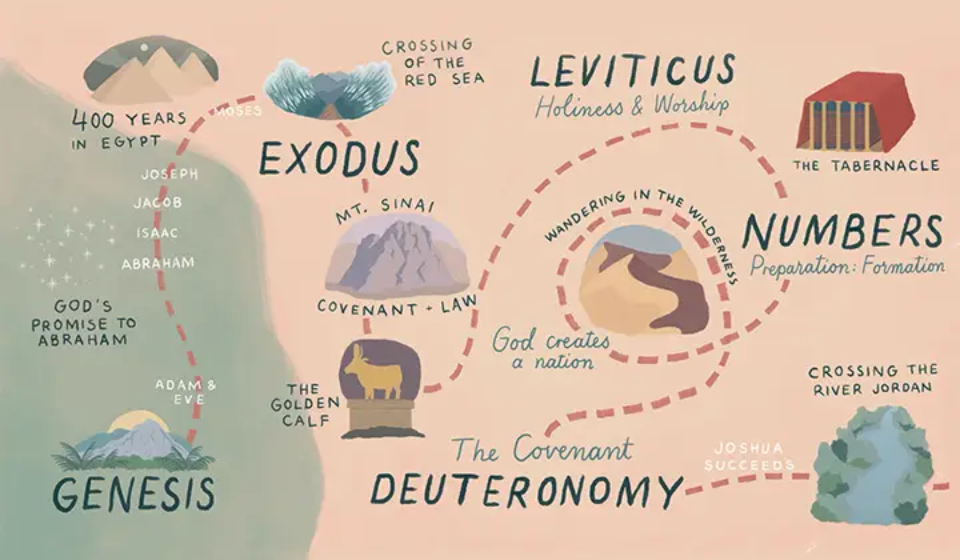









An inmate with a jail issued cross inside the segregation unit at Pitchess Honor Rancho, one of the ten different units that comprise the sprawling Los Angeles County Jail system which houses 21,000 inmates, the world's largest jail population.

A Fresh Look at Jesus’ Final Judgment Parable

Bob EkbladBob Ekblad has spent 25 years in international mission and is particularly passionate about working with the poor and ethnic minorities, as well as teaching on Mission and Social Justice.

To read more from Bob and to find out about his work, visit his website here.

A judgment parable…

Jesus’ parable of the judgment of the nations is often presented in ways that associate our treatment of anyone who is hungry, thirsty, a foreigner, naked, sick and imprisoned as synonymous with how we treat Jesus. Many Scriptures clearly call us to care for the poor, excluded, immigrants and prisoners. But numerous details in this parable suggest a different interpretation.

Jesus here teaches on the future judgment of non-Jews (the nations=ethnos), whom he commissions his disciples to evangelize and make disciples of before he departs (see Matthew 28:18-20). This parable is not about the judgment of nation states as institutions (though they will be judged), but about Jesus’ future response to how people treat his followers who go out spreading the word.

In this parable the King, who is also a Son of the Father in Heaven, returns and is enthroned. He calls non-Jews together and like a shepherd he separates sheep from goats. He says to the sheep, identifying himself as their shepherd:

“Come, you who are blessed of my Father, inherit the kingdom prepared for you from the foundation of the world.”

“For I was hungry… thirsty… a stranger… naked… sick… imprisoned” and “you gave me food… drink… hospitality… prison visits.”

These “righteous” don’t understand when they had done this for him, this Son of Man– the shepherd King. They hadn’t recognized him or made the associations he names.

“The King will answer and say to them, ‘Truly I say to you, to the extent that you did it to one of these brothers of mine, even the least of them, you did it to me’ (Matt 25:40).

Who exactly are the King’s “brothers” and also “the least of these” in this parable?

For most of my ministry I read this as referring to anyone in the category of hungry, sick, naked, a foreigner, or prisoner. This interpretation puts permanent pressure on all non-Jews to serve everyonewho fits into these categories—or else you will be accursed and sent into “the eternal fire which has been prepared for the devil and his angels” (25:42).

Is this the motivation Jesus is suggesting we should have as we minister to the poor, immigrants, refugees and prisoners? I don’t think so. God’s abundant and tender love for the poor and excluded is the only sustainable motivation.
I think that this parable is about God’s judgment of non-Jews who receive or reject followers of Jesus as they go to fulfill Jesus’ commission to make disciples, baptize and teach.

The King states “to the extent that you did it to one of these brothers of mine, even the least of them,you did it to me.”

In Matthew Jesus consistently refers to his disciples as his brothers distinct from blood brothers/sisters (see Matt 12:48; 28:10).

A key Scripture is Matthew 10:40-42, where Jesus says to his disciples:

“The one who receives you receives me,” and “whoever in the name of a disciple gives to one of these little ones even a cup of cold water to drink… shall not lose his reward.”

Jesus also calls fellow believers to treat one another as brothers and sisters (Matt 18:15 35; 23:8) of our common Father in heaven.

Western Christians may find identifying Jesus’ followers as the hungry, thirsty, naked, foreigners, imprisoned of this parable difficult due to our distance from the ragged and persecuted state of early Christ followers and today’s persecuted believers and precarious ministry workers. Yet Christians today are marginalized, persecuted and martyred like never before in history in many places throughout the world—including inside our prison system.

Jesus’ disciples who carry on his mission were sent out in vulnerability, without money, extra clothes or even sandals (Matt 10:10), as persecuted “sheep in the midst of wolves”—a big challenge to us now. They were often strangers and even foreigners as they went from village to village and to foreign lands, fleeing persecution (Matt 10:16-23). They were dependent upon people’s hospitality (those people of peace who received them). But they were often rejected, persecuted, imprisoned and martyred (Matt 5:10-12).

In Jesus’ parable on judgment, receiving them equals receiving him—a total identification. Jesus’ identifying himself, the King with the “least of these” represents his deliberate inclusion of the humblest of his recruits who go out on mission. When we receive a humble disciple of Jesus, Jesus says we are receiving the King, the Son of the Father himself.

May we welcome, provide for, care for and advocate for those who minister in Jesus’ name. May we intercede for the persecuted church worldwide, and be inspired ourselves to join the company of Jesus’ brothers and sisters—even the “least of these,” knowing that even if the world does not always receive us, Jesus has our back.


Share on Social:
By Turbulent Force
http://bit.ly/2lPpnqy

A Time for Minor Chords (Part II): Protest at the Divine Court

Time to Protest?

In my previous post I discussed the continued lack of lament in contemporary worship (of the ‘worship band’ variety). My point was that there’s been very little appreciable movement toward lament in the past decades among the major producers of the songs listed on the CCLI lists and the like. Because of that, the average small seeker-type church—which tends to draw heavily from the CCLI top 100—plays 99% praise, with the occasional (awkward) cry for help. I find this astonishing, especially given the tendency for said churches to read books like The Emotionally Healthy Church/Leader/Woman/Etc (http://www.emotionallyhealthy.org/).

I don’t have enough perspective to evaluate the current level of discontent with the persistent optimism and cheerfulness of contemporary worship music. But if I were to sit down with the chief strategists for Contemporary Worship, Inc., I’d suggest that something in the order of Nirvana’s 1990 flannel and grunge revolution needs to take place in worship music, a clearing of air for the raw and abrasive songs of lament (and protest).[1]

I don’t like to idealise lament. Some studies I’ve seen urge lament on the grounds that it’s psychologically and emotionally healthy. This may be true, and it’s probably healthier than repression. But it must be admitted that time also heals wounds, if not all of them. So, not lamenting might leave lamenters and non-lamenters in an emotionally similar place, at least 10-20 years on. I don’t think selling lament (exclusively) on its personal benefits is what the church needs. The point is not self-expression or psychological benefit, as good as those might be.

Lament as Persuasion

The greatest benefit to our worshipping communities is a reclaiming of genuine relationship with God. For all our emphasis on ‘relationship’—and perhaps that word is past its sell-by date—worship often reflects a belief that ‘the chief end of man [sic]’ (glorifying God) is the ‘only end of man.’[2] Our worship often portrays a God who only permits praise, and will not allow objections. Brueggemann writes,

A community of faith which negates laments soon concludes that the hard issues of justice are improper questions to pose at the throne, because the throne seems to be only a place of praise.[3]

Treating the throne room as a place for praise alone ignores the fact that the divine palace is also a (supreme) court, a place where citizens of the kingdom press their case with confidence that the divine judge hears, listens, and responds.

 A Rich Biblical Tradition of Protest

The biblical tradition is rife with examples of God’s people pressing their case, either against God or against societal injustice. God seems to invite his people into the courtroom for that very reason, from Genesis onward.

After choosing Abraham ‘to accomplish righteousness and justice,’ God unveils his plans to destroy Sodom and Gomorrah. This provokes Abraham’s protest:

Far be it from you to do such a thing — to kill the righteous with the wicked, treating the righteous and the wicked alike! Far be it from you! Will not the Judge of all the earth do right? (Gen. 18:25)

This bold approach to the throne seems to be just what God expects—and wants. Through dialogue and debate, Abraham challenges God to ensure justice for the few potential victims of God’s judgement. Put another way, Abraham urges God to limit his severity, and he does so by protesting his actions. Though God does rain down sulphur on Sodom (and some suggest Abraham could have pushed God even further), God rescues Lot and his family and preserves another small town (19:20-21) that was otherwise due for destruction. God is still God, but Abraham’s protest effected some mercy.

Protest within the divine-human relationship is not unusual in the Old Testament. In fact, one of the purposes of prayer and yes, even worship, is to ask God to limit his severity. For reasons unavailable to us, God constructed the divine-human relationship so that our pleadings persuade God to set limits on his justified use of wrath. Put another way, God invites humans into the process of fostering and exercising divine mercy. Covenant partners are not only passive recipients of mercy, but active agents in its implementation.

The next major occasion where God’s servant protests God’s actions takes place right after the golden calf (Ex 33-34), when Israel breaks the first and second commandments and nullifies the covenant that God had just made with them. God was so angered that he proposed wiping out the nation to start anew with Moses.

But Moses intervened by appealing to God’s reputation:

Why should the Egyptians say, ‘It was with evil intent that he brought them out to kill them in the mountains …’ Turn from your fierce wrath; change your mind and do not bring disaster on your people! (Exod 32:12)

God did not reprimand Moses. Instead,

The LORD changed his mind about the disaster he planned to bring on his people (32:14).

And he did so on multiple occasions where Moses protests divine action and calls God to be just, or to turn from his wrath (e.g., Exod 33:12-16; Num 11:10-15; 12:13ff; 14:13; 16:46ff; 21:7ff).

The tradition of protest continues in the words and actions of prophets like Habakkuk (1:3-4) and Jeremiah (11:18-20; 12:1-6), the psalmist (e.g., Ps 10), and the non-Israelite Job.

In sum, in failing to lament, we fail to exercise our covenant responsibility to bring matters of justice and righteousness before the divine judge. We fail in our civic duty.

Opening the Torah Ark

Jewish novelist Chaim Potak discusses a tradition of lament during the Shabbat service:

There used to be a tradition, which may still be in existence in some Jewish communities, where if you had a complaint against God you stopped the service on Saturday. You went up to the ark, you opened the [Torah] ark, and you stood there shouting at God until the rabbi finally led you away.

Potak goes on,

You shout out of faith, not because you don’t have any faith. If you don’t have faith, you don’t have anyone to shout at.[4]

What if we saw our worship music as a means of leading people to the ark? Or the courtroom? There’s something enormously dignifying and freeing in telling people that their disputes and complaints will be heard in this court. They may feel themselves without power in the halls of human political power,[5] but not in the divine court.

Let us find the chords to bring them there, and let us enter His court with protests.

See here for Part 3.

[1] Perhaps this risks an unnecessary pendulum swing, but I’d be thrilled to have the conversation.

[2] Brueggemann, ‘The Costly Loss of Lament,’

[3] Brueggemann, ‘The Costly Loss of Lament,’ 64.

[4] ‘Giving Shape to Turmoil: A Conversation with Chaim Potok,’ Mars Hill Review (Winter/Spring 1997), http://potok.lasierra.edu/Potok.interviews.MHR.html, accessed 30/03/2017.

[5] Bruegggemann sees the two inextricably linked (‘The Costly Loss of Lament,’ 62ff).

Share on Social:
Follow WTC Theology's TheoMisc Blog:
Follow TheoMisc on WordPress.com
Public Domain, https://commons.wikimedia.org/w/index.php?curid=50453

Thorns, Sweat, and Pain in the Garden of Eden

Readers of Genesis may be forgiven for assuming that the ‘curse’ in Genesis 3 introduced all forms of discomfort, pain, and trouble that exist within the created order. The woman would experience birth pains and the man would sweat while trying to uproot thorns from the ground. Reading back from the curses of Genesis 3 leads one to imagine a Garden of Eden full of blissful perfection. Adam and Eve waltzed through the garden effortlessly plucking fruit off (the right) trees and plucking roses from thornless bushes.

Craig Keener WTCLive!

Craig Keener – The Mind of the Spirit


The Mind of the Spirit

In this WTCLive episode, hosted by Dr. Lucy Peppiatt, New Testament scholar Craig Keener discusses his recent book The Mind of the Spirit: Paul’s Approach to Transformed Thinking (Baker Publishing Group, 2016) in which he looks at how the Holy Spirit functions from Paul’s perspective in the New Testament. Keener also discusses how the Holy Spirit has impacted his own life in a very personal way.


Guest:

Craig KeenerCraig Keener
Asbury Theological Seminary

Dr. Craig S. Keener (PhD, Duke University) is a professor of the New Testament at Asbury Theological Seminary. He is especially known for his work as a New Testament scholar on Bible background (commentaries on the New Testament in its early Jewish and Greco-Roman settings). His popular-level IVP Bible Background Commentary: New Testament (now available in a number of languages) has sold over half a million copies.

Craig has authored 18 books, four of which have won awards in Christianity Today. His recent books include Miracles: The Credibility of the New Testament Accounts (Baker Academic, 2011); The Historical Jesus of the Gospels (Eerdmans, 2009); The Gospel of Matthew: A Socio-Rhetorical Commentary (Eerdmans, 2009); Romans (Cascade, 2009); 1-2 Corinthians (Cambridge, 2005); The Gospel of John: A Commentary (Hendrickson/Baker Academic, 2003).


Buy the book here:

The Mind of the Spirit

Share on Social: