Levison Holy Spirit

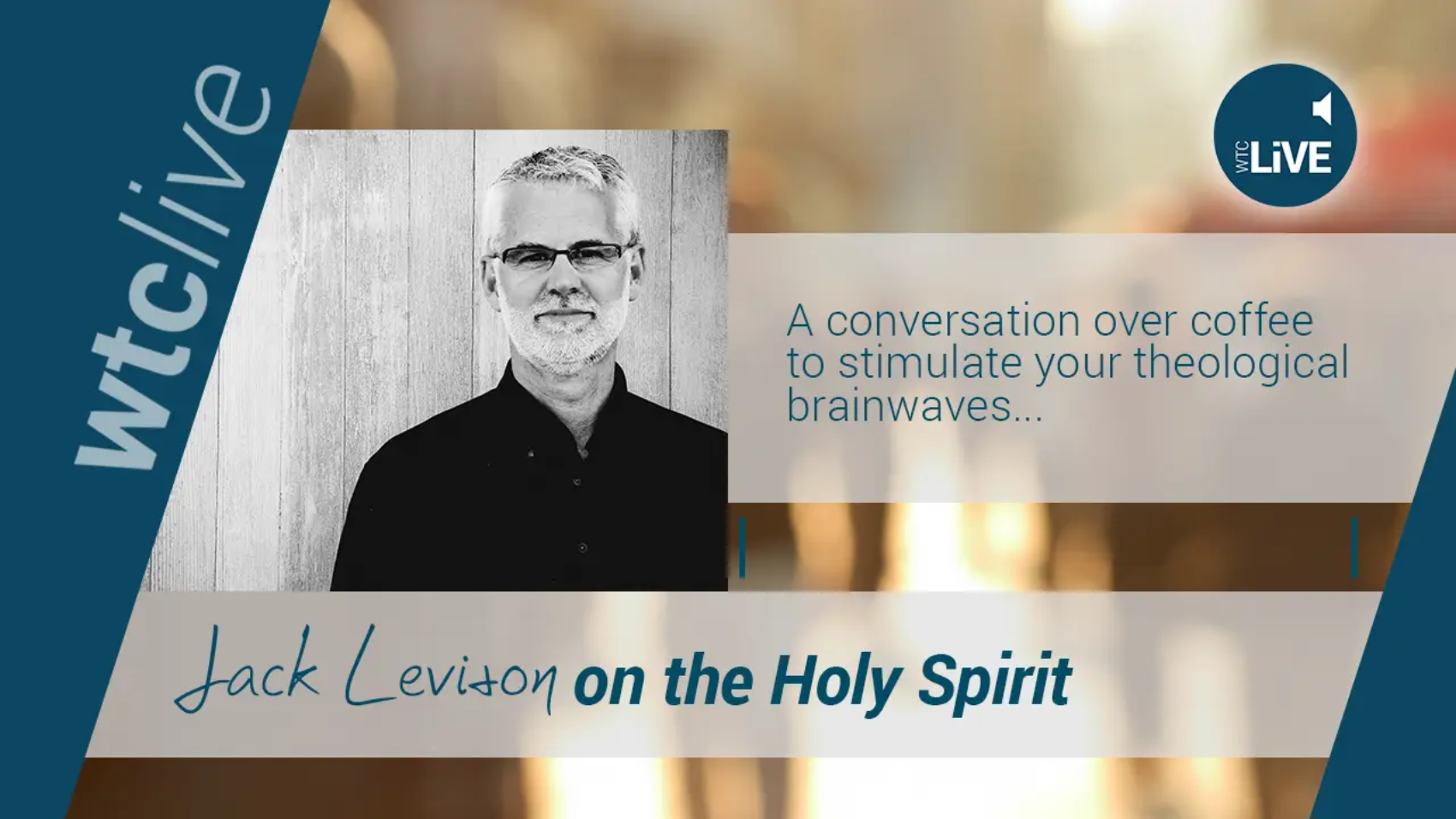
Jack Levison on the Holy Spirit

In this WTCLive episode, hosted by Dr. Matt Lynch, Dr. Lucy Peppiatt, and Nick Crawley in a coffee shop in Bristol Old Testament scholar Jack Levison discusses his own journey in discovering more about the Bible and the Holy Spirit.

Guest:

Jack LevisonJack Levison
Southern Methodist University

Jack holds the W. J. A. Power Chair of Old Testament Interpretation and Biblical Hebrew at Perkins School of TheologySouthern Methodist University. Raised in a small tract house in Levittown, New York, Jack left to attend Wheaton College, where his Greek professor regaled him with stories of Cambridge University. At Christ’s College, Cambridge, Jack received the Fitzpatrick Prize for theology and was awarded a College Scholarship. When he returned from England to pursue doctoral studies at Duke University, Jack fell in love with a divinity student, Priscilla Pope, alongside of whom he now works at SMU.

Jack is an internationally recognized scholar, whose books have received wide acclaim. Scot McKnight, author of The Jesus Creed, characterized Filled with the Spirit as “the benchmark and starting point for all future studies of the Spirit.” Walter Brueggemann hailed it as “inspired.” Eugene Peterson called Fresh Air: the Holy Spirit for an Inspired Life “a rare and remarkable achievement.” Phyllis Tickle calls him “a brilliant and spirited theologian,” and N. T. Wright notes that Jack’s “account of the holy spirit–and what the spirit can do for whole churches, not just individuals!–is mature, seasoned, challenging, and wise.”

Jack has received many fellowships and grants from the National Humanities Center, the Lilly Fellows Program, the Louisville Institute, the Alexander von Humboldt Foundation, the Rotary Foundation, the International Catacomb Society, and the National Endowment for the Humanities. He recently directed, with Jörg Frey, an interdisciplinary, international research project on The Historical Roots of the Holy Spirit and is founding editor of a scholarly book series, Ekstasis: Religious Experience from Antiquity to the Middle Ages.

Jack’s books and teaching have a global reach. He has lectured around the States, as well as in Belgium, Canada, England, Germany, and Scotland. He has been an Honorary Visiting Lecturer at the University of St. Andrews, Scotland, and a Von Humboldt Fellow at Ludwig Maximilians Universität in Munich, Germany. Several of his books have been translated into Spanish, Korean, and German.

Share on Social:
reading-3088491_1920

From a Female Principal & Pastor-Theologian…

Female Theologians…

I recently attended a really enjoyable theology conference in LA. I listened to thought-provoking papers and presentations, met some interesting new people, gave a paper myself on a topic I love, and had some good conversations. I also attended a lunch hosted by Logia, a new initiative launched by the Logos Institute, ‘which seeks to support current female students and staff and encourage women to pursue divinity disciplines at the postgraduate level.’ ( http://logos.wp.st-andrews.ac.uk/logia/ ) Forty-five women attended. I gather this number astonished and pleased the organizers.

As a result of attending the conference and the few things that happened afterwards, I felt prompted to write this post.

After I left LA I found I had some time to finish reading the thesis of my good friend, Rev Dr Kate Coleman, on the experiences of black Christian women in the UK.[1] In it I read this, which I made a note of,

Mercy Amba Oduyoye concurs, “My experience is that it has always taken women to ensure the representation and voice of women, at least in the Church and other related bodies.”[2] Audre Lorde stresses the importance of such a development: For it is not difference which immobilises us, but silence. And there are so many silences to be broken.[3]

Just as I finished Kate’s thesis, another female friend of mine (a NT scholar) posted an article of an interview with John Piper where he states very clearly his conviction that women should not teach men in seminary in preparation for ministry as, in his view, the Bible prohibits this. I read (skim-read to be honest) the article. As familiar as I am with the stance, it never ceases to appall me.

My first thought was I’m so glad that I have a contract with IVP Academic to write a book called Freedom to Lead. In this, I’ll explain why I (and so many others) think that the Bible does the opposite. I’m due to write this in the next few months.

Secondly, I felt beyond sad and frustrated. I’m always rendered momentarily speechless when I see opinions like that in print. I’m a theological educator and the principal of a non-denominational seminary style theological college (which specializes in spiritual formation for life, leadership, and ministry). I have had a teaching and preaching ministry in the church for over twenty years, and I’m a mother of four sons whom I, and my husband, have nurtured in the Christian faith.

So thirdly, everything coming in the space of a few days made me want to put my own something in print—something that I hope will strengthen the mettle of other women to pursue theological education at a higher level, to hang in there, and to become the women teachers, preachers, and leaders that the world and the church needs.

Women ensure the representation and voice of women

What women often do for one another is just to share their stories, and as we do, we give one another a sense of relief that ‘it’s not just me,’ which somehow helps us all out. Frances Young spoke about this in her paper in LA. Here is a bit of my story for those women who are thinking about going into academic theology.

I came in late to systematic theology at a post-grad level having studied for a bachelor’s degree in theology on my own in my 30s. I was in my 40s and have always only ever been a part-time theologian. I only studied theology to begin with because I wanted to be a better preacher and pastor. I studied, led a church with my husband, and managed a houseful of boys. Now I’m the principal of a college, I still lead a small church, and I do research and writing in any time I can get. I absolutely love theology.

When I started my MA in systematic theology, I noticed straight away that systematic theology is dominated by male voices. This baffled me slightly. It wasn’t until I began to realize the way that systematic theology is done at a higher level that it made more sense to me. That is not to say that the men I met were not respectful and encouraging to women—quite the opposite in my experience—just that the academic world is quite hard-hitting for anyone who ventures into the field. If you start under-confident, it’s going to be a greater challenge to stay in there.

In recent years, I have certainly found some women that I admire in the field and I’ve enjoyed reading and meeting some great female theologians. But a further realization dawned on me as I went on to do a PhD. There were so few evangelical (and even fewer evangelical charismatic) women in systematic theology. I discovered a similar pattern in NT. I cited John Piper above and I have my own thoughts as to why this is the case, but that is not for this post. Here, I’d like to address those women who have just launched out into academic theology or are maybe thinking about it, identify some of the hurdles that you might encounter, and encourage you to keep going or take some first steps if this is for you.

At MA level I made friends with a young woman ahead of me who encouraged me at an early stage at King’s to keep going with academic theology. She had finished her PhD and had just started teaching at King’s. I’m grateful for her encouragement and friendship. Apart from that I had no other women academics in my life, and certainly no female professors, and that went on for years. The rest of my encouragers and mentors were men. By and large, it was the men who ensured that I found a voice and I am greatly indebted to them.

Despite help and encouragement, it was never ‘easy.’ It was always very hard work, intellectually, emotionally, and spiritually. I don’t think it’s ever easy for anyone—male or female—but women have more to overcome.

Whenever I go from my normal day job and normal life into a full-on academic environment I experience the same pattern of thoughts and emotions which are something like this: It’s so great to be here…I absolutely love this stuff…Why on earth am I here?… What am I doing here? I’d so rather be at home…I’m so glad I came…I have no idea what the speaker is going on about…Everyone else is cleverer/more knowledgeable/more confident than I am…Wow, that was so interesting. I love that idea…How on earth do we make this real for people on the ground?…I’d love to ask x or x… No, that’ll sound stupid… I’m glad I didn’t…I wish I had…

I could go on, but you get the picture. I often used to feel sick, panicky, and tongue-tied in academic settings—not a state I ever got into anywhere else and very unusual for me. Thankfully, I no longer feel that, but it did last for a very long time. The most familiar feeling of all is my little friend, the imposter syndrome, who just creeps in and snuggles up. I’m so used to it now that it’s boring and my best bet is just to try and keep it quiet.

Now, in the fourteen years since I started my MA, I’ve had enough conversations with women to know that this is all normal. It’s not just me. There are things you get used to and need to accept, and things you need to fight against.

Here’s my advice to women considering going into academic theology, even if it’s only ever part-time.

Listen to those around you

If you have an ability for learning, writing, and teaching theology, and other people identify that in you, then consider pursuing a higher degree. Thankfully, you don’t decide on your own whether you are able to become an academic theologian. It’s in the hands of your teachers and mentors. If they are good and they are for you, and they encourage you to do it, then first of all, trust them! They are not setting you up to fail. They see potential in you and they know what they’re doing. In other words, don’t drown in your own under-confidence.

Learn to persevere

Even though it makes all the difference in the world, their confidence won’t actually become yours. You have to find your own. This may take years and years. You may have to fight through chronic feelings of inadequacy and stupidity, crippling fears, and all the anxiety that accompanies that, to get to the point where you really believe that you might have something to contribute after all. I know for sure that this can happen to men as well. It’s just worse for women.

(I really hope one day that this changes. I absolutely love seeing confident younger women just getting up and having a go. It’s delightful.)

Decide not to be intimidated

Find your level so that you’re happy with what you are able to do and say rather than trying to emulate someone who is just nothing like you. You have to find your own voice and learn not to be intimidated by those who are ‘better’ at this than you. If someone is playing a power game, you should probably just keep away from him or her. In general, however, most people don’t actually want to intimidate you. My advice is just get used to feeling ignorant and stupid. You will never know enough. Ask lots of questions and enjoy the fact that there is always more to learn. Apparently, Colin Gunton used to say that it takes twenty years to be formed as a systematic theologian. As a part-time one, that means I’ll arrive when I’m 80 years old!

Get used to picking yourself up

I know I’m going to sound like a charismatic here (no apologies), but don’t underestimate that there is a spiritual battle (however you understand that—I know what I mean by it) over women in theology and leadership. So pray, pray, pray, and get others to pray for you as you study. If you decide you want to do this, get used to feeling knocked—it will happen. If other people have put faith in you, pick yourself up, and carry on. This was one of the best pieces of advice I ever received.

Focus on God

Finally, focus on why you want to do it. I was inspired to do theology just through my own reading and then meeting other theologians who had a passion for their subject (learning and speaking about God) and a deep sense of privilege that we are able to serve the church. If I’m flagging, thinking why bother with academic theology (which I frequently think), I look at the Gospels again, get back in touch with Jesus, worship, re-read a great theologian, and thank God that I get to play a part.

There are powerful voices ranged against women who feel drawn to academic theology. They come from without and within. They don’t have to be the loudest ones. I hope, if you’re thinking of studying and it’s the right thing for you, that you have a champion, or a few, who will cheer you on, open doors for you, pray for you, and delight in your successes, however big or small.

Don’t for one second imagine it will be easy. It won’t. But it could quite well be the best and most rewarding thing you ever get to do. It certainly has been for me.

[1] Coleman, Kate Owusua, “Exploring Métissage: A Theological Anthropology of Black Women’s Subjectivities in Postcolonial Britain.” PhD Thesis, 2005.

[2] Oduyoye, Mercy Amba, “Reflections from a Third World Woman‟s Perspective: Women‟s Experience and Liberation Theologies,” in King, Ursula (ed.), Feminist Theology from the Third World: A Reader (London and Maryknoll, NY: SPCK/Orbis books, 1994), p.24.

[3] Lorde, Audre, Sister outsider: Essays and Speeches (New York: The Crossing Press, 1984), p.44.

Share on Social:
Follow WTC Theology's TheoMisc Blog:
Follow TheoMisc on WordPress.com
Bible for Life

Bible For Life

Nick CrawleyBy Nick Crawley, MA – Church Leader, founder and director of Bible for Life.

Nick is an Anglican clergyman with over 25 years experience of church leadership in London, Harare (Zimbabwe), Sheffield, and Bristol. He is a qualified Banker and Investment Analyst and was awarded an MA with merit in Christian Theology from the University of Bristol. He is married to Dr. Lucy Peppiatt the systematic theologian and author, and current Principal of Westminster Theological Centre. They have four sons.

What is Bible for Life?

William Tyndale translated the Bible into English in order that ‘the boy who drives a plough (would) know more of the scriptures’. And he was executed for it!Today, almost 500 years after his death, it’s easy enough to pick up an English Bible, but our secular C21st society seems to know next to nothing about what it actually says.

One of the reasons for this is that the Bible is in practice a difficult book to understand.

I love the Bible. I’ve never found any book remotely like it. It describes the life of the most remarkable man who ever lived and who has influenced human history and life more than anyone other human being. It also has what has been called a ‘ring of truth’ about it – a deep resonance that it is communicating the most genuine truth a person can ever encounter.

Over the past ten years I have been working at finding ways to make both the books of the Bible and its message more accessible for interested, but busy people.

Bible for Life, (BfL), is a ministry that helps genuine enquirers get to the heart of the message of the different Bible books. It is built on a number of principles.

1) Studying a whole book at a time

First, the majority of Christians seem to read the Bible like a newspaper, turning to their favourite sections and not reading much else. While this is better than nothing it almost always misses the author’s main point. BfL approaches each book as a unit, written by an author in a specific context to recipients in a different context. The context is crucial because it directly influences the meaning of the text. Every sentence has been written for a reason and contributes directly to the meaning of the book and its application.

2) Using the resources available on the internet

Second, since our lives, (and especially the lives of those under thirty), are now completely orientated around the internet, Bible teachers must find new ways and media for communicating Biblical truth directly to smart phones, laptops and tablets.

3) Catering for different levels of engagement

This leads to the third feature of BfL; The Menu. The material on the site is presented for the visitor to engage with the material in different levels. Using a meal format the visitor can have a 5 minute ‘Taster Course’, through watching a short video, studying an image, reading a summary or engaging with questions. A deeper engagement through other ‘products’ is available in the ‘Starter Course’, while in the ‘Main Course’ there is a “commentary” and a serious study of the imperatives of the book for the committed disciple of Jesus. The ‘Dessert Course’ is more open-ended touching on academic issues, special studies, prayers and tools for the church pastor. At the end of each course there are questions relating the key issues in the book to contemporary C21st life and issues.

4) A varied approach to suit different personalities

The fourth BfL feature is the variety of learning approaches to suit the different ways we engage with and respond to texts. As well as visual, audio and textual media there are different ways of responding what we encounter such as ‘challenge’, ‘enquiry’, ‘inter-reaction’ and ‘response’. BfL works to provide these, and this is where the related discipleship coaching is important.

5) A coaching and mentoring tool

I engage with a number of people on a monthly basis coaching them in their engagement with the Bible. The strategy throughout is to coach them to engage with the Bible for themselves. A month seems to be the right period of time for a person to engage at a deep level with one book of the Bible. As Jesus said, “The measure you use is measured to you.” Those that engage most, get most.

6) Completely free!

I look forward to the day when there are hundreds of different internet based strategies and tools for helping apprentices of Jesus unlock the dynamic of Scripture. BfL is one such tool. All the material is completely free. I hope you find it helpful. Why not visit the site now and see for yourself.

Share on Social:
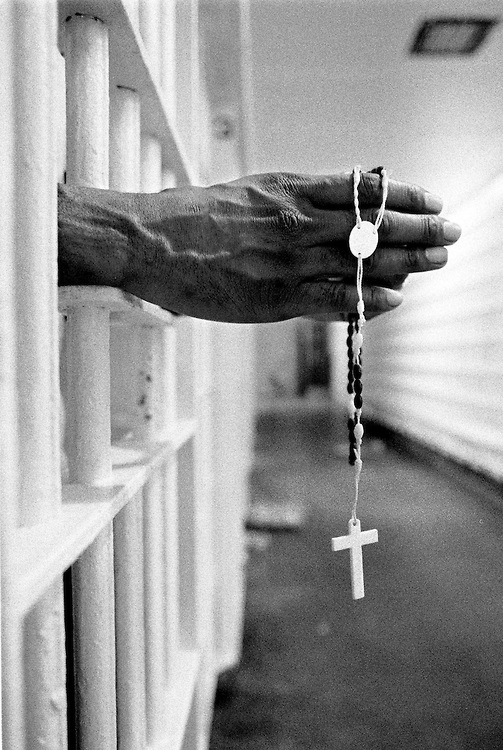
An inmate with a jail issued cross inside the segregation unit at Pitchess Honor Rancho, one of the ten different units that comprise the sprawling Los Angeles County Jail system which houses 21,000 inmates, the world's largest jail population.

A Fresh Look at Jesus’ Final Judgment Parable

Bob EkbladBob Ekblad has spent 25 years in international mission and is particularly passionate about working with the poor and ethnic minorities, as well as teaching on Mission and Social Justice.

To read more from Bob and to find out about his work, visit his website here.

A judgment parable…

Jesus’ parable of the judgment of the nations is often presented in ways that associate our treatment of anyone who is hungry, thirsty, a foreigner, naked, sick and imprisoned as synonymous with how we treat Jesus. Many Scriptures clearly call us to care for the poor, excluded, immigrants and prisoners. But numerous details in this parable suggest a different interpretation.

Jesus here teaches on the future judgment of non-Jews (the nations=ethnos), whom he commissions his disciples to evangelize and make disciples of before he departs (see Matthew 28:18-20). This parable is not about the judgment of nation states as institutions (though they will be judged), but about Jesus’ future response to how people treat his followers who go out spreading the word.

In this parable the King, who is also a Son of the Father in Heaven, returns and is enthroned. He calls non-Jews together and like a shepherd he separates sheep from goats. He says to the sheep, identifying himself as their shepherd:

“Come, you who are blessed of my Father, inherit the kingdom prepared for you from the foundation of the world.”

“For I was hungry… thirsty… a stranger… naked… sick… imprisoned” and “you gave me food… drink… hospitality… prison visits.”

These “righteous” don’t understand when they had done this for him, this Son of Man– the shepherd King. They hadn’t recognized him or made the associations he names.

“The King will answer and say to them, ‘Truly I say to you, to the extent that you did it to one of these brothers of mine, even the least of them, you did it to me’ (Matt 25:40).

Who exactly are the King’s “brothers” and also “the least of these” in this parable?

For most of my ministry I read this as referring to anyone in the category of hungry, sick, naked, a foreigner, or prisoner. This interpretation puts permanent pressure on all non-Jews to serve everyonewho fits into these categories—or else you will be accursed and sent into “the eternal fire which has been prepared for the devil and his angels” (25:42).

Is this the motivation Jesus is suggesting we should have as we minister to the poor, immigrants, refugees and prisoners? I don’t think so. God’s abundant and tender love for the poor and excluded is the only sustainable motivation.

I think that this parable is about God’s judgment of non-Jews who receive or reject followers of Jesus as they go to fulfill Jesus’ commission to make disciples, baptize and teach.

The King states “to the extent that you did it to one of these brothers of mine, even the least of them,you did it to me.”

In Matthew Jesus consistently refers to his disciples as his brothers distinct from blood brothers/sisters (see Matt 12:48; 28:10).

A key Scripture is Matthew 10:40-42, where Jesus says to his disciples:

“The one who receives you receives me,” and “whoever in the name of a disciple gives to one of these little ones even a cup of cold water to drink… shall not lose his reward.”

Jesus also calls fellow believers to treat one another as brothers and sisters (Matt 18:15 35; 23:8) of our common Father in heaven.

Western Christians may find identifying Jesus’ followers as the hungry, thirsty, naked, foreigners, imprisoned of this parable difficult due to our distance from the ragged and persecuted state of early Christ followers and today’s persecuted believers and precarious ministry workers. Yet Christians today are marginalized, persecuted and martyred like never before in history in many places throughout the world—including inside our prison system.

Jesus’ disciples who carry on his mission were sent out in vulnerability, without money, extra clothes or even sandals (Matt 10:10), as persecuted “sheep in the midst of wolves”—a big challenge to us now. They were often strangers and even foreigners as they went from village to village and to foreign lands, fleeing persecution (Matt 10:16-23). They were dependent upon people’s hospitality (those people of peace who received them). But they were often rejected, persecuted, imprisoned and martyred (Matt 5:10-12).

In Jesus’ parable on judgment, receiving them equals receiving him—a total identification. Jesus’ identifying himself, the King with the “least of these” represents his deliberate inclusion of the humblest of his recruits who go out on mission. When we receive a humble disciple of Jesus, Jesus says we are receiving the King, the Son of the Father himself.

May we welcome, provide for, care for and advocate for those who minister in Jesus’ name. May we intercede for the persecuted church worldwide, and be inspired ourselves to join the company of Jesus’ brothers and sisters—even the “least of these,” knowing that even if the world does not always receive us, Jesus has our back.

Share on Social:
Craig Keener WTCLive!

Craig Keener – The Mind of the Spirit


The Mind of the Spirit

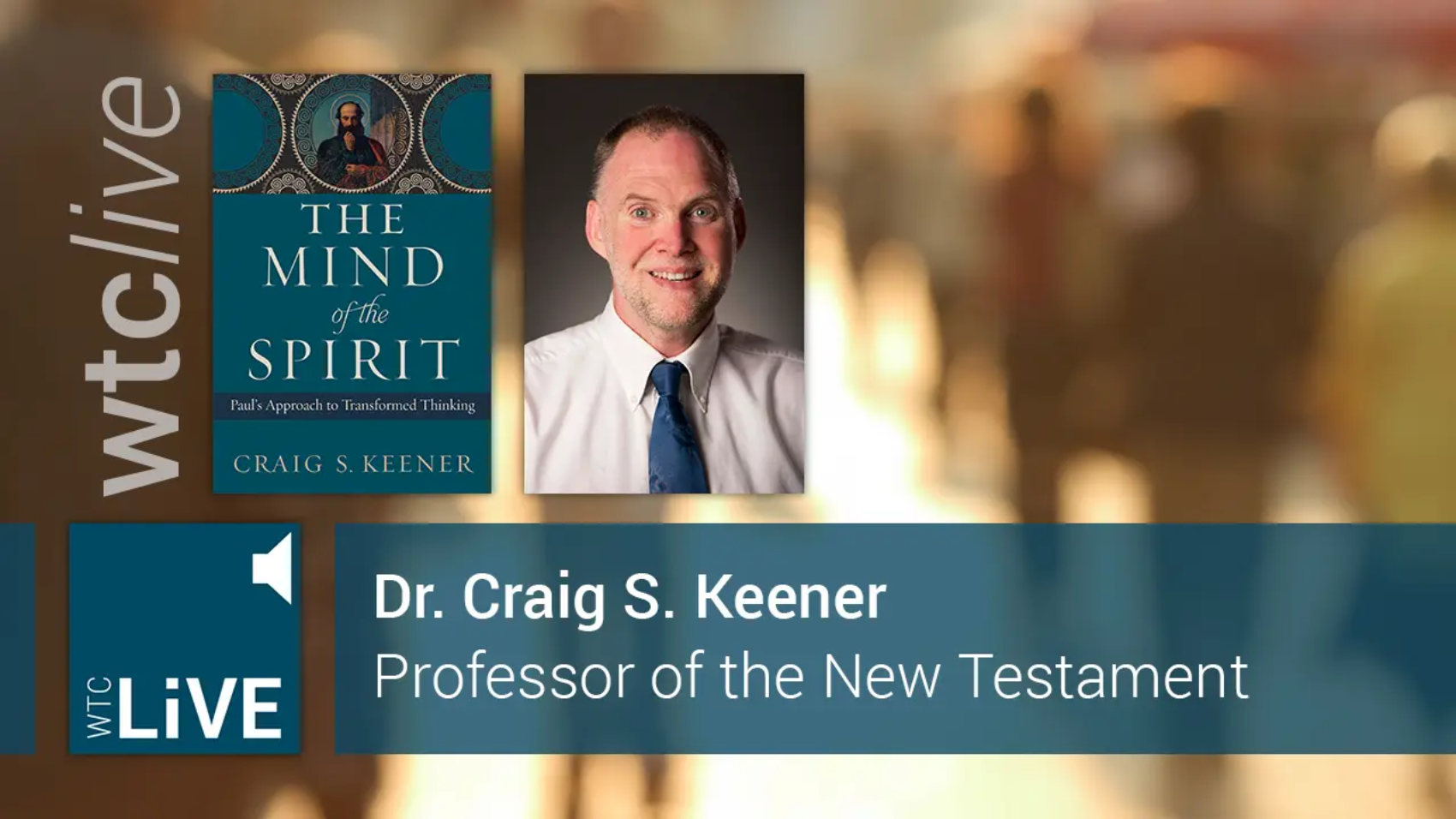
In this WTCLive episode, hosted by Dr. Lucy Peppiatt, New Testament scholar Craig Keener discusses his recent book The Mind of the Spirit: Paul’s Approach to Transformed Thinking (Baker Publishing Group, 2016) in which he looks at how the Holy Spirit functions from Paul’s perspective in the New Testament. Keener also discusses how the Holy Spirit has impacted his own life in a very personal way.


Guest:

Craig KeenerCraig Keener
Asbury Theological Seminary

Dr. Craig S. Keener (PhD, Duke University) is a professor of the New Testament at Asbury Theological Seminary. He is especially known for his work as a New Testament scholar on Bible background (commentaries on the New Testament in its early Jewish and Greco-Roman settings). His popular-level IVP Bible Background Commentary: New Testament (now available in a number of languages) has sold over half a million copies.

Craig has authored 18 books, four of which have won awards in Christianity Today. His recent books include Miracles: The Credibility of the New Testament Accounts (Baker Academic, 2011); The Historical Jesus of the Gospels (Eerdmans, 2009); The Gospel of Matthew: A Socio-Rhetorical Commentary (Eerdmans, 2009); Romans (Cascade, 2009); 1-2 Corinthians (Cambridge, 2005); The Gospel of John: A Commentary (Hendrickson/Baker Academic, 2003).


Buy the book here:

The Mind of the Spirit

Share on Social: