Augustine of Hippo

Review of Peter Brown, ‘Augustine of Hippo: A Biography’ by Steve Watts

Peter Brown, Augustine of Hippo: A Biography, Forty-Fifth Anniversary Edition (University of California Press, 2000, originally published in 1967), pp. 548.

Steve Watts profileSteve Watts teaches Church History and History of Spirituality at WTC. He is passionate about the creative relationship between Christian belief and culture. Steve completed his PhD in Mediaeval History at the University of St Andrews, and believes there is much to be gained today from an informed understanding of the Medieval Church.

Augustine of Hippo…

There is admittedly something strange about posting a review of a book whose first edition was published fifty years ago. Even its second edition will soon be turning twenty. My initial thought was that Peter Brown’s classic biography of Augustine (d. 430), bishop of the North African port city of Hippo Regius, might provide one way of engaging with the surprisingly little-marked five-hundredth anniversary of the Reformation’s “first year”.[1] Augustine had, of course, departed for greener pastures over a millennium before Johann Tetzel first cast his unseemly shadow upon the backwater town of Wittenberg. But as students of the Reformation will know, Augustine’s writings and––perhaps more importantly––his authority carried no small weight during the proceedings. Both Roman Catholics and the Magisterial Reformers were determined to keep the venerable Church Father on “their side”.  And was it not, after all, a cantankerous Augustinian friar that is credited with causing all that fuss in the first place?
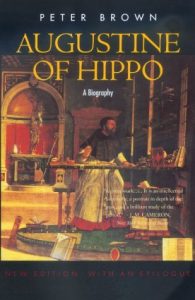
Augustine of Hippo book coverMartin Luther was Augustinian in more than one sense, however. Evidently he belonged to an order that among other things followed a rule traditionally attributed to the North African bishop. But he was also Augustinian insofar as aspects of his thought were shaped, or perhaps empowered, by encountering Augustine’s work directly––especially the latter’s anti-Pelagian writings. Yet it is a further sense of Luther’s Augustinianism that perhaps best explains why Augustine is important not only for grappling with the legacy of the Reformation but also for understanding the very trajectory of the western intellectual tradition.

Luther, simply put, was Augustinian in the same way that pretty much any other medieval person was Augustinian. The most succinct way of explaining why, is two-fold: 1) Augustine was a prodigious thinker and voluminous writer, whose breadth and depth of erudition were unmatched during his lifetime and well beyond; and 2) the collapse of Roman civilization in the West produced conditions in which his writings, and those of a select number of others, would be ascribed a remarkable degree of authority. In the latter case, it was as if Augustine’s opinions were like so many stones chosen from among the imperial rubble, now repurposed to provide a foundation upon which a discernibly medieval cultural architecture could arise. As a result, right through the Middle Ages to the Reformation and then well beyond, his influence can be detected in so many areas of philosophy and theology, from human psychology to Just War theory and from soteriology to ecclesiology.[2] Such, then, is Augustine’s undeniable importance within the western tradition. And yet, however ironically for an author of the highly personal Confessions, this very “importance” has often succeeded in obscuring the man himself.

Augustine has suffered from a way of retelling history that latches onto great figures of the past, such that their monumental personalities come to dwell in some metaphorical pantheon to which all students must display at least a passing awareness. So grand in the imagination, looming in all their authoritative grandeur over the course of history, he––like too many others––has become prone to caricature. And this is why Peter Brown’s study is so valuable. Brown seeks to understand Augustine, not as the monumental “Great Church Father of the West”, but as a North African pagan-turned-bishop who grappled with fundamental questions of human existence as the sun began its rapid descent on the western Roman Empire. In short, Brown offers a person in place of a façade.

It is the second edition of Brown’s book that I have had the great pleasure of reading. The first edition was composed in the 1960s and by Brown’s later admission was discernibly influenced by such sixties’ concerns as power, psychology, and sociology––though, interestingly enough, not so much by sex. That text actually remains unrevised in the present volume. Brown explains in the foreword that he thought it best not to modify what he had written some thirty-odd years’ earlier. Too much scholarship had been produced in the intervening years to incorporate it feasibly. And, even more importantly, there was the substantial discovery of a number of Augustine’s letters and sermons in the interim that had shed new light on his pastoral activity. These had the result of softening Brown’s perception of the bishop, leading him to doubt his earlier judgement that Augustine’s personality had progressively hardened with age.

And then there is the perspective that comes from experience. When Brown first published the book he was already an accomplished, if relatively junior, scholar. In the following decades, his reputation would only continue to grow as a historian of the highest order. He has been recognized for decades now as one of the foremost authorities on religious culture in Late Antiquity (dating roughly, in his estimation, from the mid 3rd to the early 8th century)––a field he has done much to define at the expense of the periodization known in impolite society as the “Dark Ages”. On the basis, then, of the intervening scholarship, the discoveries, and his own thirty years’ worth of experience, Brown chose to add two substantial chapters (“New Evidence”; “New Directions”) to the end of the original work. Considering the subject matter, this is entirely fitting. Toward the end of his life, Augustine also cast his mind back upon his previous works and issued his own Retractions.

Brown charts the course of Augustine’s life, from his birth as Aurelius Augustinus in Thagaste, a town in Roman North Africa, now Algeria, to his death in Hippo Regius (“Royal Port”), during the Vandal siege of the city. He generally follows the lead of the Confessions when covering his subject’s first decades. Augustine is an exceptionally bright student, who, while not being the most virtuous of young men, was nevertheless able to gain both an excellent education and, finally, an impressive teaching position in Milan. Along the way, his restless spirit led from one philosophical or religious system (at the time, there was not much of a difference) to another until it finally found its rest in a garden, sobbing in surrender to the God of his mother Monica.

Following Augustine’s conversion, Brown continues to trace a historical trajectory but increasingly devotes chapters to major literary offerings (The City of God; On Christian Teaching), controversies (Donatism; Pelagianism), and fundamental aspects of Augustine’s thought (“people of God”; “origin of grace”). Throughout, Brown’s lucid prose carries the reader across a cultural landscape that is at times both strange and eerily familiar.

There are too many important revelations in the biography to enumerate here, so I’ll just choose one that might be of some interest: a contextual rendering of Augustine’s fascination with sexual desire.[3] As Brown points out, in the Confessions it is not Augustine’s pre-conversion sex-life, but that episode as a youth in which he and his friends steal pears for the sheer joy of it that continues to haunt him. Indeed, relative to the heroic asceticism of some of his peers, who lived in the shadow of the martyrs’ self-renunciation, Augustine was a moderate when it came to sex. His sermons show a surprisingly sympathetic concern for the love lives of ordinary married people. The more ascetically-minded had imagined Adam and Eve as chaste angels, with sex being but a product of the Fall. Augustine, on the other hand, envisioned Adam and Eve as engaging in a kind of pure sexual intimacy, flowing from perfect friendship. The trouble, from his perspective, was that only a shadow remained of that ideal, now haunted and haunting by an often uncontrollable lust. So then, while Augustine positively acknowledges the importance of sex in the lives of his married congregation, he nevertheless continues to attend to it as both the evidence of, and the means by which, Adam’s guilt is passed down through the generations. Not any more palatable to a “sexually liberated” modern audience, perhaps, but hardly evidence that Augustine is the prime mover behind Christian sexual repression as he is too often misrepresented.[4]

Augustine’s fascination with “the pear episode” might seem evidence of an all-too-sensitive conscience, made all the worse for it being forged into a cynical doctrine of human incapacity. But Brown will not allow us so convenient a way out. He points to Augustine’s attentiveness to the fact that for all the goodness in the world––and he does acknowledge it!––human beings, even babies at the breast, have more than a habit of enjoying things that, on a better day, the watching world acknowledges to be wrong, even evil. That is to say, we so often do the things we know we ought not to do. The human will, in Augustine’s view, is incapable of seeking its own good without help.

It is, therefore, on the basis of experience that Augustine concludes that human beings, whatever their best efforts and intentions, are fundamentally incapable of attaining fullness of love and life without receiving God’s unmerited grace. This underlies so much of Augustine’s thought, especially his participation in the principal controversies that dogged his pastoral and theological career. In his view, Donatists abused the grace of God by setting themselves up as a “perfect” church, counter to the “traitorous” Catholic church in North Africa. Similarly, Pelagius denied the gift of grace as a result of his calls for a more ascetically “perfect” Christian, insofar as he believed that human beings were naturally endowed with the capacity. Pelagius, it could be said, speaks fluently to the liberal mind––but he could not have been a pastor, and was clearly not a parent. And yet, in the bitterest of ironies, these conflicts over the nature of grace were too often marked by its absence.

Where Brown’s initial edition falters, his later additions typically offer a satisfying remedy. There is a little too much of the bishop at the expense of the pastor, too much of the Neoplatonist at the expense of the Christocentric theologian. His chapters on the Confessions and On Christian Teaching are at turns both illuminating and frustrating. The former suffers from the aforementioned imbalances, missing the broader pastoral implication of the work––a stunning testament to God’s gracious redemption of human frailty, as given by a rising star who would rather air out his dirty laundry before the watching world than bask in the glow of his achievements. The latter identifies Augustine’s educational platform but not its intended theological significance––a loving knowledge, learned and taught. But these criticisms do little to take away from the greater whole, which is simply masterful.

Peter Brown’s biography of Augustine is, therefore, a faithful representation of its subject matter in content and in form. Like Augustine, Brown is less interested in the heroic, in the monumental. He recognizes that the truth is in the details, laboured over and attended to. His book offers nuance, not as a show of cleverness, but for the sake of empathy. You do not need to like Augustine, but Brown will make sure that you have come some way in understanding him. The result, in the last analysis, is both an excellent introduction to Augustine and a superb example of historical scholarship. I could not recommend this book more highly.

[1] The degree to which this is true––at least in North America––is a story for another time.

[2] Don’t just take my word for it, see https://plato.stanford.edu/entries/augustine/#Leg

[3] Brown develops this side of Augustine in greater depth in his landmark work The Body and Society: Men, Women, and Sexual Renunciation in Early Christianity, but his most recent analysis––in the chapters of the second edition––casts Augustine in a more favorable light.

[4] See Stephen Greenblatt’s recent article in the New Yorker as perhaps the most recent example of this unfortunate phenomenon: https://www.newyorker.com/magazine/2017/06/19/how-st-augustine-invented-sex. It should be noted that Greenblatt is neither a historian of Late Antiquity nor a scholar with expertise on Augustine. He mostly works on Shakespeare.

Share on Social:
crucifixion of the warrior god

Crucifixion of the Warrior God, by Gregory A. Boyd – Review Part 3 (on Crucicentric Perfection)

[This is part 3 of a 4 part review of Boyd’s book. HERE is part 1, and HERE is part 2]

Crucifixion of the warrior God - CoverIn my earlier post on The Crucifixion of the Warrior God, I discussed Boyd’s insistence that the cruciform hermeneutic requires us to interpret the OT in light of the cross. We can imagine that happening in different ways. For instance, we might look at how a given text paves the way for the cross. We might explore the relationship between the sacrificial system and the language NT writers use to explain the cross. But for Boyd, Crucicentrism means that all texts must conform precisely to the non-violence of the cross. If a given portrait of God in the OT doesn’t look like Jesus’ non-violence, it must be re-read until it does.

Thus, Boyd consistently argues that when confronting an OT text of violence, the cruciform hermeneutic ‘requires us to consider Scripture’s violent divine portraits to be accommodations that conceal God’s true character on their surface while revealing his true cruciform character in their depth’ (683). So Boyd’s re-readings of OT narrative aren’t really interpretations. He already ‘knows,’ by the requirements of his hermeneutic, that anything we read in the OT will come out looking like the cross. If the surface looks violent—dig until you find non-violence. If you don’t find it, re-read, spiritualise, or allegorise until it looks like the cross.

For Boyd, the impetus for this strong brand of Crucicentrism (which some call ‘Christo-monism’, yet see pp. 134-137) is the Bible’s own claim that ‘God was pleased to have all his fullness dwell in [Christ]’ (Col 1:19), and the idea in Hebrews that Jesus is ‘the exact representation of [God’s] being’ (Heb 1:3). Moreover, Paul resolved while among the Corinthians to ‘know nothing … except Jesus Christ and him crucified’ (1 Cor 2:2). Of course Paul did preach other things, but Boyd will point out repeatedly in his book that the cross most fully reveals God, full stop.

Boyd’s use of a Crucicentric reading of the Bible exhibits an ideological/rhetorical tendency called ‘perfection’ that is common in theology, and worth exploring briefly, since its potential impact on our theology and interpretation of Scripture is massive.

Perfection

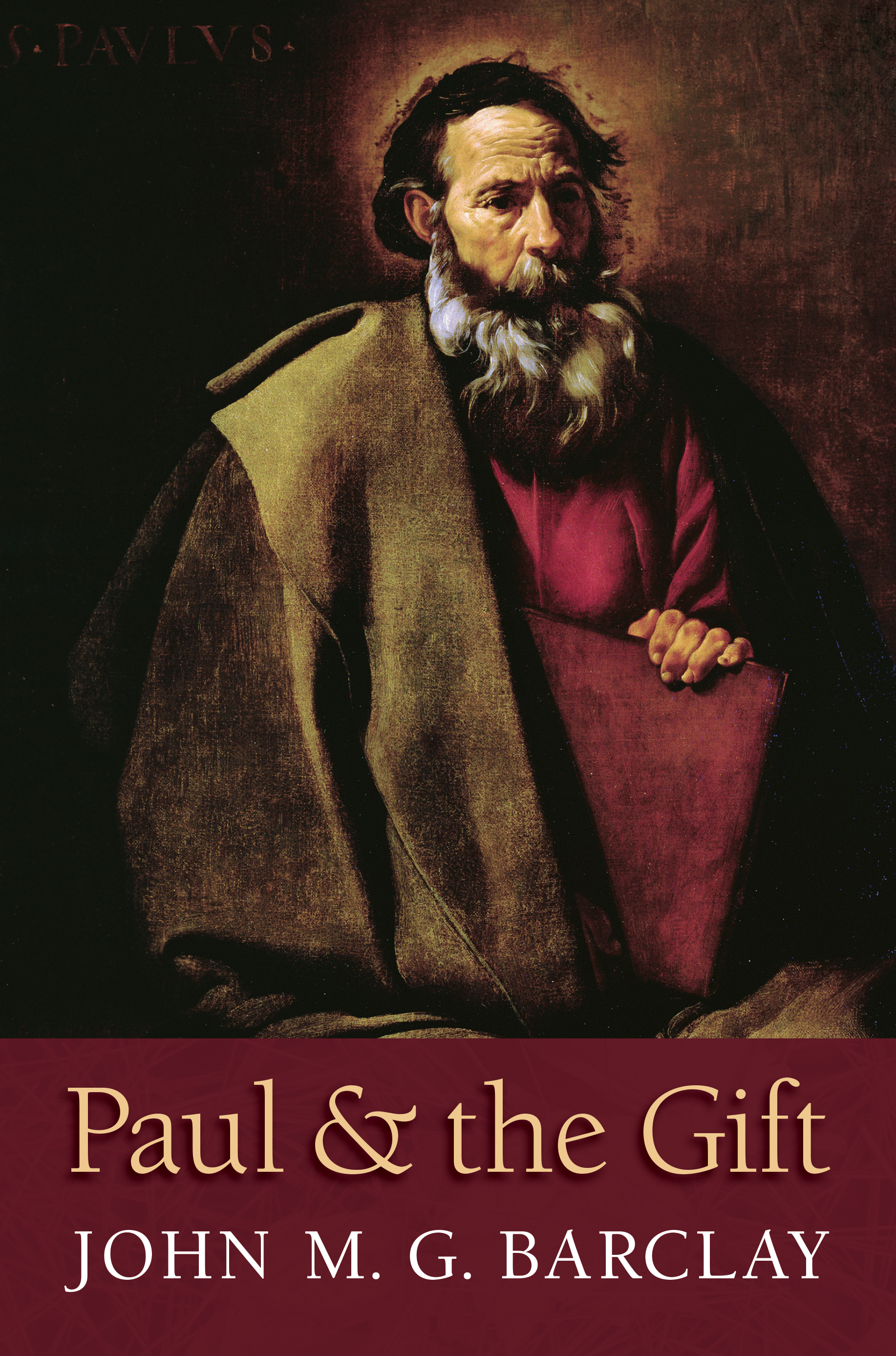
In his landmark book Paul and the Gift, John Barclay discusses the notion of ‘perfection’—a concept he drew from Kenneth Burke. ‘Perfection’ refers to a tendency ‘to draw out a concept to its endpoint or extreme, whether for definitional clarity or for rhetorical or ideological advantage’ (Barclay, Paul and the Gift, 67). So for instance, a Christian might claim that living by faith means never asking for money, not working, not going to doctors, and never making any plans so as to allow for God’s leading. In this example, faith is ‘perfected,’ or taken to its extreme—one that goes well beyond the examples and meaning of faith in the Bible. In the Bible, faith is embedded within a network of ‘other balancing and limiting concepts, which inhibit their extreme expression’ (67). The point here is not that faith is not extreme, but that it gains its meaning in relation to other important concepts. A ‘perfected’ concept (or symbol) is usually lifted out for ‘definitional clarity or polarizing rhetoric’ (68).

Because God is, in Christian theology, the most perfect entity, there exists an almost irresistible tendency to draw out concepts related to God to their ‘nth degree. In so doing, scholars and theologians extract concepts from their web of related concepts or narratives and allow other ideological systems to fill them with meaning. In Barclay’s study, he shows how theologians through the ages ‘perfected’ (and thereby distorted) grace. Thus the emergence of ideas like ‘sheer grace’ and ‘pure grace’ that are ‘totally gratuitous’ and the like (69). For instance, theologians through the ages have argued that divine grace is given without any expectation of a return favour, which as Barclay points out, is totally contrary to the biblical picture where grace is a merit-free gift that nonetheless expects a response of obedience.

Perfection in Marcion

Barclay also demonstrates how Marcion, the early church heretic who rejected the OT, ‘perfected’ the concept of divine goodness and benevolence. In Marcion’s reading of Paul, for instance, he ‘not only emphasizes Paul’s association of the Christ-event with the grace and mercy of God, but perfects this association in the direction of singularity … distancing the God who is purely and entirely good from any hint of the exercise of judgment’ (83). This is a ‘paradigm case of the rhetoric and ideology of perfection: a single notion (here the benevolence of God) is radicalized, purified, and made internally consistent, forming a polar opposite to its negative foil,’ which in his case, was the OT (and parts of the NT) and its texts portraying a God who judges (83). Thus, Marcion radicalizes the concept of goodness (influenced by Greek philosophical ideas of what actions are ‘befitting’ a god) to an extreme point, such that any non-conforming texts were excised.

Crucicentric Perfection

While I don’t think Boyd drives in the same lane as Marcion, he does clearly exhibit this urge—present in all of us—to perfect a concept or symbol that plays a key role in his theology. For Boyd, that concept is the cross—influenced by the ethical ideals of non-violence—which he perfects to its logical extreme. That perfection involves an extension of (a) the idea of Jesus as the full representation of God, (b) the emphasis on preaching the cross in Paul, and (c) the principle of non-violence. These theological ideas are combined, radicalised, and extended into a pan-biblical ‘hermeneutic’ that involves a re-interpretation of the very texts that lend the cross meaning and sense. My primary concern with Boyd’s perfected Crucicentrism is not that it prioritizes the cross, emphasizes non-violence, or that he sees the OT pointing toward the cross. My concern, instead, is that Boyd’s system does not allow the OT to function as an interpreting lens for the cross (which is precisely what we see as the dominant pattern in the NT). That lack of two-way traffic leads to a kind of hermeneutical tyranny,[1] where the perfection of non-violence in the cross becomes the benchmark for whether or not we can ‘accept’ the plain sense of a text in the OT. In the process, the story of Israel, with all of its rich (and often troubling) symbols, is fragmented into its acceptable parts.

There are several by-products of Boyd’s Crucicentric perfection. I’ll mention a two of them here.

  1. Hyper Discontinuity – Boyd’s perfected Crucicentrism leads him to the conclusion that the God of the OT does not regularly look like the God revealed on the cross. Rather than explaining away the differences, Boyd maximizes the contrast between the portrait of God in the OT and the revelation of the non-violent cross in the NT. For instance, Boyd insists that Jesus and Paul ‘repudiate’ the lex talionis (eye for an eye) principle in Matt 5:39-45 and Rom 12:14-21 (p. 725). However, as I’ve suggested in a different post, Jesus is clearly not repudiating lex talionis, but challenging a misreading of the law that would posit ‘eye for an eye’ as an ethical ideal (which it never was). Moreover, the foundations for Jesus’ ideal of love for enemies and non-retaliation are within the OT itself (e.g., Exod 23:4-5; Prov 25:21; 2 Kgs 6; cf. Rom 12:20).[2] A corollary of such hyper discontinuity is the need to demonstrate that anything that smacks of divine violence in the NT is not what it seems. Oddly, Boyd does not advocate spiritualising re-readings of the NT. He never calls NT portraits of God ‘fallen,’ ‘macabre,’ ‘beguiling,’ or ‘twisted,’ as he does the OT.[3]
  2. Selective Reinterpretation – Boyd refers regularly to the idea that while God in the OT ‘wears the mask’ of a typical Ancient Near Eastern Deity, the mask sometimes slips. In these moments, the mask slips and the spirit ‘breaks through.’ Here’s Boyd on Amos 9:7 – ‘While God stooped to wearing the mask of an ANE deity who favours and fights for one nation as opposed to others, we can nevertheless discern the Spirit breaking through in a number of passages to reveal that the true God is the impartial, universally concerned, loving Father’ (728). Elsewhere, Boyd writes, ‘Though God had for a long while accommodated his people’s unfaithful reliance on the sword, thereby leaving their “twisted” view of him as a warrior deity in place, in this passage we see the Spirit breaking through to reveal the true peace-loving character of the heavenly missionary’ (737). I don’t doubt the involvement of God’s Spirit in the formation of Scripture. My point here is that Boyd’s perfected Crucicentrism leads him to select as Spirit-endowed only those passages that conform perfectly to his ‘form,’ and to relegate the rest to cultural conditioning and divine accommodation. A consequence of Boyd’s approach is that texts are extracted from their network of narratives, themes, and ‘other balancing and limiting concepts, which inhibit their extreme expression’ and enable them to speak with their own voice (Barclay, p. 67). The cross thus acts as a coloniser of meaning.

Moderation?

My criticism of perfection in Boyd’s study is not meant to suggest that we moderate our talk about the cross, or consider it less radical than previously thought. Instead, I’m suggesting that the cross needs to be understood as part of a wider network of narrative symbols and Christological considerations that enable the message of Christ, and him crucified, to emerge in all of its culturally and narratively conditioned colours. It cannot function as a naked hermeneutic, as though its meaning is self-evident. The writers of the New Testament are at pains to show that Jesus’ crucifixion was consistent with, as well as the fulfilment of, Scripture’s testimony about Yhwh, even if they couldn’t see it at first. This is why Jesus chides his disciples for not seeing beforehand that the Messiah needed to suffer before his enthronement. They should have known that on the basis of the OT (Luke 24:26). This is why Peter, Paul, and the other apostles could argue from Scripture that Jesus was the Messiah (Acts 17:3). To that end, I submit that the radical story of the cross was, according to the NT, the surprising yet consistent fulfilment of Israel’s scriptures. Those scriptures provided the interpretive grid for understanding the cross, and more broadly, Jesus birth, life, death, resurrection, and enthronement. They revealed a Jesus who was high priest, sacrificial lamb, purifying sacrifice, Davidic king, Isaiah’s Immanuel and suffering servant, Daniel’s Son of Man, the fulfilment of the law, the Temple itself, and indeed, Israel’s God.[4]

[1] A phrase I’ve borrowed from Lucy Peppiatt.

[2] For Boyd’s hyper-discontinuity regarding sacrifice, see p. 711.

[3] Though Boyd does recognise Paul’s imperfections that come through in his letters (pp. 589-91).

[4] Thanks to Steve Watts for some of the wording in this last paragraph.

Share on Social:
Follow WTC Theology's TheoMisc Blog:
Follow TheoMisc on WordPress.com
crucifixion of the warrior god

Crucifixion of the Warrior God, by Gregory A. Boyd – Review Part 2

In the previous post I noted several of Boyd’s hermeneutical starting points, as well as his expressed and tacit assumptions about Scripture. After this post, I’ll stick with his second volume, where he develops four principles for understanding the ‘cruciform’ God revealed in both the Old and New Testaments. But for now, I want to consider the cruciform thesis itself, and whether it yields enough explanatory power to solve the riddle of violence in Scripture. As a caveat, Boyd’s book does a nice job raising and responding to possible objections to his thesis, so I highly recommend that readers of this review get his book to see his responses to other parts of his argument.

The Cruciform Thesis

As noted in my last post, Boyd’s proposal is crucicentric. According to Boyd, the cross reveals most fully what God is like—even more than other aspects of Jesus’ life. He’s non-violent and self-sacrificial in his love. All other (biblical) portraits of God pale in importance to the revelation of the non-violent love of God on the cross, even if they are God-breathed portraits.

Boyd ties his cruciform thesis closely to a doctrine of inspiration. Because (a) the cross is the fullest revelation of God, and (b) all Scripture is God-breathed, (c) we should expect a cruciform God across all the pages of Scripture … if we look deeply enough. Moreover, (d) any portrait of God that seems to conflict ‘should never be allowed to undercut, compromise, or qualify in any way the portrait of God we are given in the crucified Christ’ (p. 280).

Thus, as one interprets the OT—even its ‘dark side’—the driving concern should be to discern ‘how it [the OT] bears witness to this very portrait’ of the crucified Christ (p. 280), and to reject all portraits of God that hint of violence. This task is easy for Boyd when reading of God’s covenantal love for Israel—often portrayed as a marriage—and his overwhelming commitment to show mercy and grace to his people, which Boyd beautifully details (pp. 281-285).[1] Boyd calls those texts ‘direct revelations.’[2] But it proves immensely challenging when peering into the heart of ‘damnable texts’ (p. 287).[3] In these cases, OT texts confront us with portraits of God that contradict the portrait of God in the crucified Christ.[4]

This puts the interpreter in a bind. The OT is God-breathed, but when interpreted in its literal, or even literary (i.e., in accordance with its presentation in the literature of the OT) sense, the Warrior God of the OT is not the Slain Lamb of the NT. Abiding with the literal sense of the text would require a Marcionite rejection of the OT, according to Boyd. But while he is sympathetic to Marcion, he parts ways. He writes:

To be perfectly honest, I have a certain respect for Marcion and his followers who decided it was better to “cast away the Old Testament than tarnish the image of the Father of Jesus Christ by mixing in traces of a warlike God.”[5] Given their mistaken belief that they had to choose between Jesus and the OT, I admire their bold choice. But it is this false either-or proposition that I strongly reject. (p. 344)

So what options does an interpreter have?

Literary Crucifixes

To work out of that bind without succumbing to the Marcionite temptation, Boyd sides with Origen and other church fathers who pursued more admirable images of God in the OT. For Origen, the OT was to be read allegorically to conform to the image of Christ, and often in striking agreement with Greek philosophical and moral concepts.[6] Of course Origen also sought to discern the spiritual meaning of the whole Bible, including the NT, when the literal made no sense.[7] His pursuit of meaning beneath or beyond the surface was not a specific mode of OT interpretation.[8]

While Boyd rejects the allegorical method he perceives in Origen, he embraces Origen’s effort to resist literal readings of violent texts. Boyd’s particular method is abductive. Though critical of interpreters who try to put the ‘best spin’ on the OT,[9] Boyd assumes the best of the whole OT by suggesting that God allows himself to be misrepresented, and in that allowance, we see—as a literary crucifix—the God who ‘became sin,’ and ‘bore’ humanity’s sin on the cross.

We can, in a word, discern in these violent portraits that God was bearing the sins of his people and was thereby taking on an ugly literary semblance that reflected that sin, just as he did in a historical way for all humanity on Calvary. (p. 457)

In other words, he ‘postulates a hypothetical scenario that, if true, … [renders] otherwise puzzling data intelligible’ (631). While the OT’s texts ‘conceal God’s true nature on their surface, they reveal God’s true nature in their depths’ (650). Those depths, however, are not native to OT texts. Instead, they come from elsewhere, from the NT. When adopted as an interpretive grid, finding that deeper meaning proves easy to predict, since the outcome is always the same—a cruciform image of God.

7 Questions & Critiques

In light of what I’ve just sketched, I want to offer a few reflections, critiques, and questions. I realised once writing the 7 points below that each relates to my distrust of approaches to extremely complex issues that resolve all tension. The danger, by my reckoning, is that there are always hidden costs when we do this. I’ll discuss those later, but for now, a few questions/critiques:

  1. To what extent is the cruciform hermeneutic really a hermeneutic? Boyd insists that cross can function like a ‘magic eye’ to make sense of otherwise horrific OT texts. But in practice, those violent OT texts are simply re-written so that they look like the cross. I don’t see this as a reading of the OT so much as it is a case of finding what one needs to find. I wasn’t always sure why Boyd went through all the trouble of interpreting OT stories (e.g., the conquest) when he knows what he’ll find anyway, namely, a crucifixion-like image of God. Boyd says as much. For instance, when, according to Boyd, Israel projected its own violent plan for conquest onto God (pp. 979ff.), we see that ‘the presence of these plans within the canon confirms what the cross leads us to expect—namely, that the depictions of God ordering his people to annihilate others as an act of worship to him are sin-bearing, literary crucifixes’ (p. 980).
  2. To what extent is allowing oneself to be misrepresented like ‘bearing sin’? Allowing oneself to be depicted as a malevolent bully (in Boyd’s estimation) would only be 1 of 10 steps toward actually ‘bearing sin.’ To even look like ‘bearing sin,’ wouldn’t there need to be some actual move to deal with that sin? Sin-bearing and atonement are about actually dealing with sin, removing it, and cleansing its stain. In Boyd’s rendering, the God of the OT does no such thing. He only allows himself to be misrepresented. So how does Boyd gain access to the true state of affairs to know that the misrepresentation is actually a crucifix, and part of a fully reality leading to the cross? Falling back on the idea that the cross requires us to see things this way does not work, unless you see the cross as a static and timeless (and wholly transparent) revelation of God, which I’ll address later. This leads me to my next question.
  3. Why should Boyd’s hypothetical scenario/solution commend itself more than any other? Boyd believes that God not only accommodated so as to allow violent misrepresentations of himself, but that those misrepresentations are ‘literary crucifixes’ that point the way toward the sin-bearing God revealed in Christ. If Boyd’s concern was to somehow stay with the OT as God-breathed (even though as a misrepresentation in many places), why couldn’t the OT texts of terror just be literary foils that God inspired to allow the cross to shine ever brighter? Or, why couldn’t the OT texts of terror be about how the cross enables us to put to death the deeds of the flesh? (I’m not actually suggesting those as options). Boyd’s model has no anchor holding it to the OT itself (it’s a cruciform re-interpretation), I see no text-driven reason to choose the particular benefit-of-the-doubt scenario he posits.
  4. Boyd’s thesis requires us to read decidedly against the grain of the OT. To the best of my knowledge, allegorical and/or spiritualizing interpretations of the OT always try to read along the grain of the OT. For instance, even when Origen critiqued violent passages of the OT, they always ended up being—somehow—about putting to death the passions or some such act.[10] By contrast, Boyd’s proposal requires us to read vast portions of the OT as (a) straightforward misrepresentations of God that are simultaneously (b) revelatory of a God who is willing to be misrepresented. In other words, the deeper reality runs directly cross current to the surface reality. I wonder, then, what brings together the surface and deeper realities of the text, besides some kind of yin and yang balance of opposites.
  5. Boyd’s cruciform hermeneutic ends up flattening the full witness of Scripture. For Boyd, if anything in the OT does not meet the criterion of enemy-love, it requires reinterpretation (p. 475). If it looks like enemy love, then it can be left alone. As a result, the OT ends up chopped into bits, with one pile that can be read according to its surface meaning, and another pile that is read against itself. This is part of the collateral damage of solving one problem. Boyd loses the tension and difference between different acts of God in history.

The NT itself assumes difference between (or narrative development) between the cross and other acts of God. For instance, in Peter’s sermon in Acts 3, Peter distinguishes between the way Jesus treated those who crucified Jesus in ignorance, and the way he would judge those who knew Jesus as exalted Lord and yet rejected him (v. 23; cf. 13:40-41; Heb 2:2-3). Paul also recognizes that God treated him differently when he was, unwittingly, a blasphemer: ‘I was formerly a blasphemer, a persecutor, and a violent man; yet because I had acted in ignorance and unbelief, I was shown mercy’ (1 Tim 1:13). Or take Jesus’ own imprecation against Judas in John 13:18 (cf. Ps 41:8-10), who knew him and yet betrayed, or the disciples’ treatment of the same (Acts 1:16-20; cf. Ps 69:25; 109:8). My point here is not to overplay the contrast between crucifixion and other acts of God, but to observe that God’s response to enemies is not exactly and always the same (insofar as we can tell, but I’m up for surprises!). The examples I’ve given suggest that God treats ignorant enemies different than those who possess fuller knowledge yet act against him.

  1. Boyd renders timeless the revelation of God on the cross. For Boyd, the cross shows us that God only and always deals with his enemies non-violently (hence the strong re-reading of other texts). But would this timelessness still obtain for other dimensions of the cross? E.g., does God only and always wield power through suffering?[11] Does God only and always remain (mostly) silent in the face of enemy aggression? I don’t think Boyd would say yes, but on what basis?
  2. Boyd underplays the extent to which the NT writers anchor their interpretation of the crucifixion in the OT. In other words, the NT writers are at pains to demonstrate that what God revealed in Christ is consistent with, and not in direct opposition to the revelation of God in the OT. But what, in Boyd’s analysis, gives the cross its meaning? Boyd is choosing some interpretive framework for making sense of the crucifixion. What I didn’t see in the book was a clear sense of how NT interpreters consistently looked back to the OT to make sense of the cross. At least four lament psalms, for instance, shape Mark’s passion narrative. Matthew’s passion narrative, including the very stories the narrator chooses to tell, are clearly influenced by the events of Ps 22. The Passover shapes John’s understanding of the cross. This is not to mention the way that the sacrificial system shaped Paul’s and the author of Hebrews’ understanding of the cross. How, then, can the cross function as a lens for re-interpreting the texts that give it meaning?

I am sympathetic to some of Boyd’s concerns over violence in the OT, and have made attempts myself to try to wrestle through it. But unfortunately, the way Boyd unfolds his cruciform hermeneutic pulls the OT-shaped legs out from under the NT’s presentation of the cross. To that extent, it doesn’t give adequate privilege to the entire kerygma—or core teaching about Jesus, which begins with the story of God and Israel, and moves through the incarnation to the life, death, resurrection, and ascension of Christ, and presupposes the unity of divine revelation.[12] Nor does he give adequate attention to the discreet witness of the OT, including its nuanced and complex wrestling with the problem of violence itself.

But more on that in the next posts.

See here for part 3.

[1] Of course the specifics of that covenant, which involve threats against disloyalty, would not meet Boyd’s cruciform standard.

[2] See my previous post for examples of this phrase in use.

[3] Boyd, Crucifixion, 287 quoting Thom Stark, The Human Faces of God, 218.

[4] E.g., p. 327.

[5] Quoting Harnack, Militia Christi, 47

[6] See Provan, The Reformation and the Right Reading of Scripture, 179. F

[7] Cf. p. 122 for an interesting parallel in Luther.

[8] See especially Origin’s On First Principles: Book IV, pp 178ff in Rowan A. Greer trans. Origin (Classics of Western Spirituality; Paulist Press, 1979).

[9] Cf. xxix, xxxi-xxxii, 333.

[10] Origen recognizes the problems of divine vengeance and anger in the OT that his opponents address, and claims that the problem is ‘quite simply that they understand Scripture not according to the spiritual meaning but according to the sound of the letter’ (On First Principles 2.2)

[11] My thanks to Matt Bates for that question.

[12] Matt Bates raised a question to this effect in our podcast interview with Boyd.

Share on Social:
Follow WTC Theology's TheoMisc Blog:
Follow TheoMisc on WordPress.com
CrucifixionCover_FINALvol1

Crucifixion of the Warrior God, by Gregory A. Boyd – Review Part 1

The Warrior God…

Like most kids from Christian backgrounds, I grew up hearing the stories of flood, conquest, and war that we find in the Old Testament. These flannel-graphed (fuzzy-felt for Brits) stories captivated my imagination, and formed me in important ways. As I grew older, I learned the paleological arguments for a literal global flood, and the archaeological arguments for the destruction of Jericho. Those arguments built my faith, and gave me confidence—within a literalistic framework—that the Bible was true.

It never occurred to me that the same stories that built my faith were also horrifically violent. Perhaps it was the abstraction of violence in children’s Bibles, or the ‘moral of the story’ approach to the Old Testament, which shifted the focus elsewhere, but I didn’t ever mind the violence. That didn’t happen until later. I can’t remember the first time I grew uneasy with biblical violence, but I do remember that reading Richard Hays’ Moral Vision of the New Testament at the end of my undergraduate studies made a deep impression on me. Hays makes a powerful case for non-violence in the New Testament. I found it convincing at the time, and as a consequence, the radical non-violence of Jesus and the early Church caused me real problems as I read backward toward the Old Testament. The violence suddenly seemed at odds with Jesus’ teachings, and most significantly, his death for, and forgiveness of, enemies on the cross. This sent me on a challenging and difficult search through the Old Testament, looking for ways that the Old Testament might at least point toward Jesus.

Greg Boyd

In his Crucifixion of the Warrior God, Greg shares a similar story. Not all parts of his story are the same, but he describes how he became increasingly drawn toward Jesus’ radical non-violence. This experience prompted his first attempt to ‘put the best possible “spin” on the OT’s violent portraits of God’ (xxix). His hope was that this would resolve the tension Jesus ‘affirmation of the OT as divinely inspired’ and Jesus’ ‘nonviolent revelation of God’ (xxix). But unable to put a positive spin on the OT, he went back to the drawing board to propose something different. The result is a 1,445 tome. It’s a hard-hitting, astonishingly well-read, and deeply creative work.

Key Points

I don’t plan to rehash all the arguments in Greg’s book. At 1,445 pages, it’s too large for that. Greg covers a wide range of topics, to say the least. I suspect that some will fizzle out before reaching Volume 2, when Greg actually interprets OT texts, limiting the impact of some of his richer insights. This isn’t a comment on his writing, but instead on the simple challenge of reading a long book.

Here are a few key insights from Volume 1. I’ll offer some comment, but will save most evaluation for later posts:

On Scripture
  1. The Old Testament is inspired. Boyd insists that he cannot dispense with the Old Testament. His commitment to the idea that Scripture is God-breathed will not allow for him to dispense with it. The specific entailments of that claim are not determined, Boyd points out, and need to be considered along with the Church Fathers who employed allegorical methods of reading. Boyd prefers the term theopneustos (following 2 Tim 3:16) to ‘divine inspiration’ because the latter tends to place the locus of inspiration on the individual author rather than on biblical texts as such, where Boyd locates revelatory activity. I think this is a helpful distinction.
  2. Cloudy with patches of sunshine, or, direct revelation in the OT is episodic. On countless occasions Boyd says that amidst the fog and horrifying ugliness of violence in the OT, one can often witness the Spirit ‘breaking through.’ He says this too many times to count, but just to give a few examples from one section of the book: On p. 738 he says that ‘we see the Spirit of the cruciform God breaking through with remarkable clarity and beauty,’ in reference to God’s hatred for war in Ps 46, 120, and 140. On p. 745 we read about the ‘Spirit of the cruciform God breaking through’ again, within the conquest narrative (Josh 5:13-15). We ‘discern the influence of the Spirit’ (p. 752), the ‘Spirit further breaking through’ (p. 753), the ‘Spirit breaking through even further’ (p. 754), and so on. And this was just within 20 pages! Each of these ‘breakthroughs’ have to do with some move away from either violence or so-called ‘tribalistic’ religion (e.g., animals sacrifice). The way one discerns the activity of the Spirit in Scripture, in Boyd’s system, is by degree of likeness to the cruciform picture of Christ in the NT. Presumably, then, while the OT is inspired, it is not inspired in the same way as texts that portray divine love, or ultimately, the passages about the crucifixion.
  1. Misrepresentation as revelation. The correlate of those passages where the Spirit ‘breaks through’ is that countless OT passages are said to misrepresent and distort God, to present readers with a grotesque and horrific image of God. But these images are, in an odd sort of way, revelatory of a God who is willing to be misrepresented. I will discuss this more in a future post. For now, it’s important to note that for Boyd large swathes of the OT misrepresent God. They are ‘sin-stained portraits of Yahweh as a violent warrior god’ that should be ‘forever set aside’ (p. 552). 
  1. Maximal Discontinuity between OT and NT portraits of God. When read according to what some call its ‘plain sense,’ or in its literary presentation, Scripture offers wildly different portraits of God in the OT and NT. The OT offers ‘savage’ and ‘violent’ depictions of God that are, in Boyd’s estimation, directly repudiated by the NT portrait of Christ (p. 290). This is not to say that Boyd thinks the OT and NT are incompatible, but rather that one needs to re-read the OT through the lens of the cross to come up with anything other than a monster, especially in passages like we find in the book of Joshua.
  1. The OT nevertheless foreshadows Christ. Though much of the violence in the OT is ‘directly repudiated’ in the NT, ‘there is no dimension of the Old Testament message that does not in some way foreshadow Christ.’[1] This sets up a central question driving the book, namely, how can ‘macabre’ (p. 91), ‘horrific,’ and ‘revolting’ (p. 290) portraits of God testify to Christ? To what extent does his characterization of the OT stretch the bounds of Scripture’s God-breathed quality?
Hermeneutics
  1. Abductive scriptural hermeneutics. Rather than inductive reasoning (building a ground-up picture from the data), or deductive reasoning (starting from premises toward ‘necessary conclusions’), abductive reasoning asks, What state of affairs best accounts for all the data, and specifically for this case, the puzzling violent data?[2] In other words, abductive reasoning posits a scenario to account for what we have in Scripture, but is not in Scripture directly. Greg uses a helpful (fictional!) analogy of seeing his wife beat up a homeless person (puzzling data, given Greg’s knowledge of his wife), where by abductive reasoning he posits a number of scenarios that might account for this strange behavior (staged social experiment, he was harbouring a bomb, etc.).
  1. Jesus is the definitive revelation of God. Boyd makes this point forcefully on nearly every page of his book. He argues that the NT authors read the OT in this way, and that we should too. Heb 1:3 is thus central to Boyd’s project: ‘The Son is the radiance of God’s glory and the exact representation of his being’ (Heb 1:3). To know the character of God, Boyd contends, look at Jesus! Boyd thus considers his project Christocentric. For Boyd this means that ‘the ultimate God-intended meaning of any given passage, and of the OT as a whole, [is] only found when seen in relation to Christ’ (p. 98). In this, Boyd sees himself following the lead of NT writers and later Patristic authors, and ‘preaching nothing else but Christ, and him crucified’ (1 Cor 2:2). Boyd probably means Jesus-centric, since Christocentric would encompass the universal Christ, i.e., Christ in his pre-incarnate state all the way through his ascension. Boyd doesn’t mean that.[3] 
  1. More specifically, the cross shows us what God is like. It’s important to emphasize that Boyd’s hermeneutic if crucicentric, and not just Christocentric. Boyd uses a ‘Magic Eye’ analogy to describe his hermeneutic. ‘Magic Eye’ art looks like unimpressive 2D patterns to standard observation. But if viewed correctly, a 3D picture emerges. Boyd contends that looking at the OT through the lens of the cross ‘enables us to discern the beauty of the crucified God rising out of portraits of God that on the surface appear profoundly ugly’ (xxxv). He insists that interpreters ought to give the cross the ‘unrivalled authority to reveal God that the NT gives it’ (771). Giving it that authority yields, in Boyd’s estimation, a new outlook on violent texts in Scripture.
  1. The OT revelation of God is inferior to what we see in the NT. Calling Jesus the ‘definitive revelation’ of God (a phrase he uses over 70x in the book) has a specific connotation for Boyd. He means that Jesus supersedes all previous revelations of God in the OT. His point is not just that the OT is unclear about the coming Christ, but that it is inferior in its revelation of God, at least if read according to its literal sense (pp. 38, 110). The upshot of their inferiority is that all texts that do not meet the criteria of the cross, which I’ll discuss later, need to be re-read until they meet the cruciform standard of the cross. So for instance, if an OT texts depicts God exacting vengeance on enemies, that text will need to be re-read in light of the fact that God forgives his enemies from the cross. Boyd is thus critical of approaches that treat the OT and NT as ‘two equally authoritative revelations’ (p. 115), that in the language of Hebrews privilege the ‘reality’ in favour of the ‘shadow.’ Or, as he states elsewhere, one should not privilege ‘fallen’ representations over the cross. This sets the interpreter up for a very disruptive form of re-interpretation, such that the OT needs to be read radically against its grain in many places where the Spirit doesn’t ‘break through.’
  1. We need to read the OT like NT writers. Following the lead of NT writers in how they interpret the OT has been controversial over the years,[4] but Boyd maintains that we most certainly should follow the lead of NT writers as they ‘see Jesus’ in the OT.
  1. Tension is eschewed. It should be clear that Boyd’s proposal aims to resolve tension around the problem of violence in the OT. In contrast to most other approaches I know of—which typically include some measure of … ‘I know this doesn’t resolve all the problems around violence in the Bible, but …’—Boyd moves resolutely toward a comprehensive solution to the problem of violence.

In the next posts I’ll review and evaluate several specific portions of Greg’s weighty tome.

See here for part 2. 

[1] Graeme Goldsworthy, Gospel-Centered Hermeneutics: Foundations and Principles of Evangelical Biblical Interpretation (IVP, 2010), 252 qtd Boyd, Crucifixion, 91.

[2] Boyd, Crucifixion, 631.

[3] Special thanks to Lucy Peppiatt for raising this point. Lucy notes Ian McFarland’s query on this point, from his book The Divine Image: Envisioning the Invisible God (Minneapolis, MN: Fortress Press, 2005), 13-14: ‘We see and know God when and as we look at Jesus as the one, true image of God. As the myriad images of Jesus that mark Christian literature and iconography show, however, there is no shortage of mutually inconsistent pictures of Jesus to choose from; and the fact that Jesus himself is now confessed to have ascended to heaven does not help matters.’ pp.13-14.

[4] Richard N. Longenecker, ‘Can We Reproduce the Exegesis of the New Testament?’ Tyndale Bulletin 21 (1970): 3-38.

Share on Social:
640px-Francesco_Hayez_017

The Prophetic Critique of Sacrifice

Critique of Sacrifice…

There’s a story I’ve often heard told about Old Testament prophets. I don’t think it’s true, but here’s how it goes.

God apparently gave Israel a sacrificial system. He asked for obedience. He asked for victims. And he asked for bloodshed. But in time, and as Israel’s knowledge of God matured, certain groups came to realize that God didn’t actually want this. A religious system that depends on scapegoats, victims, and bloodshed stands in opposition to the divine way of justice and love.

Who made this discovery? It was the radicals … the prophets. It took prophetic insight to imagine a religious world beyond sacrifice. The religious establishment was bent on its own preservation, and lacked the imagination to see otherwise. Here are a few examples of what the prophets came to realise:

For I desire mercy, not sacrifice, and acknowledgement of God rather than burnt offerings (Hos. 6:6).

‘The multitude of your sacrifices—what are they to me?’ says the LORD. ‘I have more than enough of burnt offerings, of rams and the fat of fattened animals; I have no pleasure in the blood of bulls and lambs and goats’ (Isa 1:11).

Even though you bring me burnt offerings and grain offerings, I will not accept them. Though you bring choice fellowship offerings, I will have no regard for them (Amos 5:22).

With what shall I come before the LORD and bow down before the exalted God? Shall I come before him with burnt offerings, with calves a year old? [Implied NO!] He has shown you, O mortal, what is good. And what does the LORD require of you? To act justly and to love mercy and to walk humbly with your God (Mic 6:6, 8).

Even the psalmist piles on:

Sacrifice and offering you did not desire—but my ears you have opened—burnt offerings and sin offerings you did not require (Ps 40:6).

You do not delight in sacrifice, or I would bring it; you do not take pleasure in burnt offerings.  (Ps 51:16)

The prophets and poets make a forceful case. God apparently wanted one thing before, and then later said that he didn’t. To resolve this apparent tension, interpreters propose that their theology matured. It is somewhat akin to a parent helping their kids bzzzzaaaap! the bogeyman under their bed before they sleep. Later, kids realise that all the bzzzzaaaaping wasn’t necessary. It wasn’t doing anything but speaking their language.

Likewise with sacrifice. God spoke the language of the day (ritual sacrifice), and then later led the people to a more mature and even corrected religious practice.

Angels stained glassBeyond Sacrifice?

Some also contend that the prophets and poets presaged the abolition of sacrifice in the New Testament. God set his sights on substitutionary sacrifice, or specifically, the scapegoating and violence of victims in the sacrificial system, marking them for elimination. The prophets caught wind of this, and argued that worship would eventually move beyond its primitive state.

Greg Boyd reflects this evolutionary view of Israelite religion and ethics in his recent Crucifixion of the Warrior God, though from a slightly different perspective. He writes:

While an earlier tradition depicted Yahweh as enjoying animal sacrifices (e.g., Exod 29:25, 41; Lev 1:9, 13, 17), later authors make it clear that Yahweh placed no value on them.[1]

He states later the ‘canonical authors begin to realize that Yahweh completely disapproves of animal sacrifices.’[2]

In a provocative post on ‘God and Genocide,’ Brian Zahnd writes:

The Old Testament is the inspired telling of the story of Israel coming to know their God. But it’s a process. God doesn’t mutate, but Israel’s revelation and understanding of God obviously does. Along the way assumptions are made. One of these assumptions was that Yahweh shares certain violent attributes with the pagan deities of the ancient Near East. These assumptions were inevitable, but wrong. For example, the Hebrew prophets will eventually begin to question the assumption that Yahweh desires blood sacrifice. Jesus was fond of quoting Hosea’s bold assertion that Yahweh doesn’t want sacrifice, he wants mercy.[3]

I agree with much that Zahnd says here. Israel’s understanding of God certainly mutates and changes. The OT can provide us with countless cases of change and development.

Problems with the Prophetic Critique

There are serious problems with this story of advancing religion beyond sacrifice. Here are a few:

  1. In the same breath that the prophets excoriate the people for animal sacrifice, they also say that God also rejects songs and prayer. For example:

Take away from me the noise of your songs; I will not listen to the melody of your harps. (Amos 5:23).

When you stretch out your hands, I will hide my eyes from you; even though you make many prayers, I will not listen; your hands are full of blood. (Isa. 1:15)

We would also have to eliminate fasting as an effective spiritual practice. Jeremiah pronounces: ‘Although they fast, I will not listen to their cry; though they offer burnt offerings and grain offerings’ (Jer 14:12a; cf. Isa 58:3-6).

To argue that the prophets were urging Israel to move from one (primitive) worship system to another (enlightened) doesn’t work when we consider all the religious practices they attack, unless we also want to displace prayer, music, and fasting as legitimate spiritual practices.

  1. The prophet’s critique doesn’t reflect God’s inherent displeasure with the sacrificial system as such. Instead, the prophets insisted that God hates injustice. When a worshipper robs from the poor, and then uses that lamb, goat, or ox to worship God, God is disgusted. When a worshipper beats their slave to a pulp, and then lifts their hands in prayer, Yahweh says, ‘[Away!] Your hands are covered in blood!’ (Isa 1:15). The primary issue is that injustice + worship = foul play. God will shut the show down.

It’s important to remember that the prophets were rhetoricians. They used shocking language to arrest listeners’ attention. When the prophets said that God rejected sacrifice (and music/prayer), they weren’t making timeless assertions. Nor were they making claims about the evolution of religion in Israel! Instead, they wanted people to treat their neighbours with dignity. Isaiah thus urges the people to cleanse themselves for worship by looking after the oppressed:

Wash and make yourselves clean. Take your evil deeds out of my sight; stop doing wrong. Learn to do right; seek justice. Defend the oppressed. Take up the cause of the fatherless; plead the case of the widow. (Isa 1:16-17)

  1. The same prophets that railed against sacrifice envision a day when God’s people would sacrifice rightly.

So the LORD will make himself known to the Egyptians, and in that day they will acknowledge the LORD. They will worship with sacrifices and grain offerings; they will make vows to the LORD and keep them. (Isa 19:21)

These [foreigners] I will bring to my holy mountain and give them joy in my house of prayer. Their burnt offerings and sacrifices will be accepted on my altar; for my house will be called a house of prayer for all nations. (Isa 56:7)

These passages show us that the prophets weren’t moving beyond sacrifice. Instead, they were moving toward wholesome sacrifice.

Even one of the most forceful prophetic critiques eventually gives way to restored worship. In Jeremiah 7:22 the prophet exclaims that Yahweh ‘did not speak to your fathers or command them concerning burnt offerings or sacrifices on the day I brought them out of the land of Egypt.’[4] Taken on its own, one could imply that upon further reflection, God decided he didn’t want the whole worship system he set up after all. However, Jeremiah 7 is a textbook case of prophetic provocation, in the context of the most damning denunciation of the temple in the whole prophetic corpus (cf. 7:12). So again, the prophet is not issuing a press release about God’s changed religious expectations. Jeremiah does circle back to say that ‘in that day’ sacrifices would be restored (Jer 33:18, 21-22).

The psalmist also comes around. After saying that God does ‘not delight in sacrifice’ (Ps 51:16), the psalmist declares that God would ‘delight in the sacrifices of the righteous’ just a few verses later (51:19). The psalmist wasn’t of two minds. Instead, he recognised that sacrifice was not delightful to God when accompanied by adultery and murder (cf. Ps 51:1). Only after confronting those issues would God again delight in sacrifice.

  1. The prophets (or NT writers) never critique sacrifice on the grounds that it was violent, bloody, or anything of the sort. That’s modern squeamishness (and alienation from our food processing) speaking, not the Bible.
 Jesus’ Critique

In Mark 12, a young scribe came to Jesus and asked him which was the greatest command. Jesus, unwilling to give one law, says that the first is to love God, and the second to love your neighbour (vv. 29-31). The scribe who asked Jesus likely observed Jesus’ quotation from Deut 6:5 and Lev 19:11. Jesus had woven together the heart of the Torah. The scribe sees that Jesus answered rightly. But notice how the scribe, who was likely pro-temple, continues: ‘And [you answered rightly that] to love your neighbor as yourself is more important than all burnt offerings and sacrifices’ (Mark 12:33).

But Jesus hadn’t said this!

Well, Jesus didn’t directly quote Hosea 6:6 (or 1 Sam 15:22), but the scribe teases out he hermeneutical implications of Jesus’ one-upmanship. He plays along with the hermeneutical game. The scribe asked for one. Jesus gave two. The scribe answered that Jesus was right, and gives three.

But notice the scribe’s answer. He says that loving God and neighbour is more important than burnt offerings or sacrifices. The OT says that God doesn’t delight in or want burnt offerings or sacrifices (1 Sam 15:22; Hos 6:6). The scribe isn’t misquoting; he’s interpreting what the prophets imply. He (and Jesus) recognise the prophets’ rhetorical point.  Love for God and neighbour take priority over the sacrificial system, and where the two clash, sacrifice must give.

Abolishment of Sacrifice & Other Means of Atonement

The early Christians did contend that that the sacrificial system would eventually be abolished. It wasn’t apparent to early followers of Jesus how this was so, and what it would mean. Even after the resurrection Peter and later Paul still worship and even sacrifice at the temple (Acts 3 & 21). Their actions complicate any attempts at an easy Supersessionism, and show the temple’s ongoing value to Jews, at least while the temple still stood.

The destruction of the temple accelerated Jewish and Christian thinking about a world without sacrifice. Note these words from Rabban Yohanan ben Zakkai, who responded to another Rabbi who lamented the loss of the temple and thus atoning sacrifices:

My son, do not be grieved. We have another atonement as effective as this (temple sacrifices). And what is it? Acts of loving-kindness (mercy), as it is said, ‘For I desire mercy and not sacrifice’ (Hos. 6:6) (Avot de Rabbi Nathan, A, 4).[5]

The book of Hebrews argued that Jesus’ death and resurrection brought an end to sacrifices at the temple. Though the temple and its sacrificial system was good, it was also provisional. From a Christian point of view, Jesus ushered in a more complete and permanent atonement.

Interestingly, Hebrews never quotes from the prophetic critiques of sacrifice. The reason, I imagine, is that the author recognised the prophetic critique of injustice (and not ritual). Moreover, Hebrews builds its argument on a ‘good-to-better’ logic, and not a ‘bad-vs-good’ logic:

For if the blood of goats and bulls, … sanctifies those who have been defiled … how much more will the blood of Christ … purify our conscience from dead works to worship the living God! (Heb 9:13-14)

The fact that Jesus brings an end to sacrifice doesn’t negate its value in the story of God and his people, or even for some of Jesus’ early followers.

Perhaps most importantly, we see that Jesus does leave his followers with a sacrifice to ritually perform—the Lord’s Supper. This meal gathers up themes, symbols, and rituals from the atonement sacrifices, grain offerings, libation offerings, and Passover meal.[6] So, ‘Let us celebrate the feast!’ (1 Cor 5:8; Deut 16:3).

[1] Gregory A. Boyd, Crucifixion of the Warrior God: Interpreting the Old Testament’s Violent Portraits of God in Light of the Cross (2 vols.; Minneapolis: Fortress Press, 2017), 11-12.

[2] Boyd, Crucifixion of the Warrior God, 754.

[3] Brian Zahnd, ‘God and Genocide,’ https://brianzahnd.com/2013/04/god-and-genocide/ accessed 31/07/2017. Emphasis mine.

[4] Thanks to Brad Jersak for this example.

[5] Qtd in Mark Turnage, Windows into the Bible: Cultural and Historical Insights from the Bible for Modern Readers (Springfield: Logion Press, 2016), loc 5548.

[6] Thanks to Dru Johnson for this insight. Cf. Christian A. Eberhart’s What a Difference a Meal Makes: The Last Supper in the Bible and in the Christian Church (tr. Michael Putman; Houston, TX: Lucid Books, 2016).

Share on Social:
Follow WTC Theology's TheoMisc Blog:
Follow TheoMisc on WordPress.com
Harvest_Community_Church_Goshen_Worship_Service_1-24-2016 (1)

A Time for Minor Chords (Part III): Objections to Lament

[This is Part III of a series on lament. Part I is HERE, and Part II HERE]

Objections objections…

Grieve, mourn and wail. Change your laughter to mourning and your joy to gloom. (Jas 4:9)

Do everything without grumbling or arguing, so that you may become blameless and pure, ‘children of God without fault in a warped and crooked generation.’
Then you will shine among them like stars in the sky (Phil 2:14)

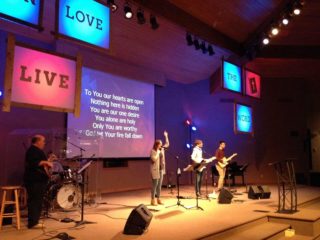
In the popular worship scene, lament songs exist. Sometimes they’re even sung. I appreciate the efforts of those with enough facility in musical style and lyric to lead God’s people in lament, and through lament, to praise.

By Scott Lucht (Own work) [GFDL -http://bit.ly/2pPqcTG]

But attempts to shift contemporary music toward substantial engagement with lament feels like trying to pull a Carnival Cruise off its course with a canoe. Even if it’s headed for rocks. The ship is just too heavy and the music too loud to hear the shouts of those paddling furiously away from the boat—the line taut between them. Those in the canoes might seem like they’re ‘working against’ the boat (big thumbs down!). It might be pointed out—rather obviously—that they’re ‘not on board.’ They’re ‘overly negative’ in all their talk about ‘sharp rocks’ and whatnot. Even more, they’re not grateful for all the benefits offered on the party ship … not to mention Paul’s insistence that we do everything ‘without grumbling or arguing.’

This reaction shouldn’t be surprising, especially since lamenters often describe themselves as isolated and unseemly to others:

Do not ignore me in my time of trouble! Listen to me! When I call out to you, quickly answer me, for my days go up in smoke, and my bones are charred like a fireplace …. I am like an owl in the wilderness, like a screech owl among the ruins (Ps 102:1-6).

The canoe tips over.

Resisting Lament

Why the resistance to lament?

Some reasons are cultural. Maybe we don’t like public displays of negative emotion. Perhaps we ought to endure our hardships quietly, with a stiff upper lip. It can be hard to hear lament.

But I think other reasons are more idiosyncratic to church cultures that emerge in the wake of the mega-ship Carnival Cruise liners. Despite the lyrical gestures toward vulnerability, brokenness, and desperation in the songs I reviewed (in the first post of this series), we’ve simultaneously exorcised the practices that instantiate those ideals—individual confession and lament.

Some Objections

Let me address just a few common objections to the use of lament in worship services.

  1. Lament doesn’t fit the tone of our worship services

It isn’t uncommon to refer to worship services as ‘Celebrations,’ and for churches to seek to create an environment where people—especially visitors—feel warm and welcome. I’m going to sidestep debates about seeker-sensitive church services, but suggest that creating a worship culture that allows people to voice their pain to God is not only welcoming (of all human emotion) but might eventually facilitate a turn toward genuine praise. Maybe worshippers are longing for that kind of environment, where real pain and suffering finds their voice and praise becomes real.

  1. Lament is for personal use

They are, but not exclusively. The psalms are replete with ‘psalms of communal lament,’ set to music. It might be hard for some to imagine … especially if you’re not connected with wider traditions (cf. the African American MAAFA service),[1] and not closely affiliated with an actively practising liturgical tradition,[2] but the biblical evidence tips strongly in favour of laments for communal use. Even individual psalms of lament were often set to music by the choir director (e.g., Ps 5, 88), giving the lonely individual worshipper an opportunity to cry out to God in a corporate environment—or perhaps more to the point, giving the community an opportunity to take up the cry of others.

  1. Lament is uttered by those without hope of the resurrection

(I have actually heard this argument) The basic premise here is that lament is an Old Testament activity, and symptomatic of life BC. But this claim is wrong on two accounts. Individuals in the Old Testament did have hope of resurrection, though perhaps not in the same way Christians would express it (‘But God will rescue my life from the power of the grave’ Ps 49:15).[3] 

But more to the point, I’d be so bold as to say that Jesus had resurrection hope. Yet, from the cross he cried out (from Ps 22:1), ‘My God, my God, why have you forsaken me?’ And by the way, Ps 22 is ‘for the choir director, according to the tune …’ In other words, it was meant for inclusion in the worship repertoire. In Gethsemane Jesus’ soul was ‘deeply grieved, even unto death’ (Matt 26:38, echoing Ps 42:5-6).  And he cried out to his father to be spared from the cross.

The author of Hebrews writes that ‘Jesus offered up prayers and supplications, with loud cries and tears, to the one who was able to save him from death, and he was heard because of his reverent submission. (Heb 5:7). For many of us, this sounds like an oxymoron. How could ‘loud cries and tears’ count as ‘reverent submission’? To this I suggest reading the book of Job, where the suffering man of God rails against God, takes him to court, accuses God, yet is declared to have ‘spoken rightly about me [God]’ (42:7). Reverent speech sounds irreverent when we lose connection with the biblical lament tradition, and sounds defeatist when disconnected from the hope of the resurrection.

  1. There aren’t any lament songs

There are. There just aren’t (m)any on the CCLI lists to which many churches subscribe, especially those that use ‘praise bands’ to lead in sung worship. Reclaiming lament requires re-education for all of us, especially those of us who have grown up in worship environments oriented toward the positive and uplifting. We might consider resources like THIS, THIS, or THIS, and songs like Dry Bones,  By the Waters of Babylon (or THIS version), or Leonard Berstein’s Chichester Psalms, or the songs listed HERE or HERE. There are enough to at least get started.

  1. People aren’t/wouldn’t be comfortable singing lament songs

See point #4 … and as an addendum, those going through terrible suffering are not comfortable singing only praise, and perhaps we might heed the words of Ecclesiastes:

It is better to go to a house of mourning than to go to a house of feasting, for death is the destiny of everyone; the living should take this to heart. (Eccl 7:2)

Or the words of Jesus,

Blessed are those who mourn, for they will be comforted (Matt 5:4).

Or Paul,

            Weep with those who weep (Rom 12:15).

[1] The ‘MAAFA Service’ remembers slaves who died in the ‘Middle Passage.’

[2] J Frank Henderson, Liturgies of Lament (Chicago: Liturgy Training Publications, 1994).

[3] See Jon D. Levenson, Resurrection and the Restoration of Israel: The Ultimate Victory of the God of Life (Yale: Yale University Press, 2006). I can’t recommend this book enough!

Share on Social:
Follow WTC Theology's TheoMisc Blog:
Follow TheoMisc on WordPress.com
Madigan - Medieval Christianity

Review of Medieval Christianity: A New History – Kevin Madigan

Kevin Madigan, Medieval Christianity: A New History (Yale University Press, 2015). 544 pages.

Steve Watts profileDr Steven Watts teaches Church History and History of Spirituality at WTC. He is passionate about the creative relationship between Christian belief and culture. Steve completed his PhD in Mediaeval History at the University of St Andrews, and believes there is much to be gained today from an informed understanding of the Medieval Church.

Why bother with medieval Christianity?

In an (apparently) increasingly secular West, where the adjective ‘medieval’ is most often employed in the public forum as an intellectual swearword. Why even ask the question? Judging from the narrative both explicitly and implicitly expounded in the wider culture, is not the medieval world and its dominant religion simply a relic of a funereal, ignorant past from which the children of the fifteenth and sixteenth centuries were reborn and from which the daring young men of the eighteenth and nineteenth centuries were enlightened?

As is often the case with such totalizing accounts, however, a different picture emerges when one pays attention to the details. For how is it that this morass of superstitious ignorance give birth to a remarkable crop of universities? How could a society apparently hampered by technological backwardness give rise to such towering monuments of architectural excellence as the gothic cathedrals and the rich symbolism inscribed into their frames and illustrated upon their walls? How could an apparently close-minded theocracy produce such landmark developments in jurisprudence as the emphasis on intention and gaining a fair hearing before a jury of your peers? Indeed, the more one attends to the medieval period––that sprawling millennium stretching from roughly 500-1500––the more one is confronted by its importance in the formation of the western world and the numerous cultures which it has impacted. In short, the Middle Ages are important. And that means the same is true of the Christianity that coursed through its veins. As Kevin Madigan points out in his Medieval Christianity: A New History, by the early middle ages “the church was the single institution that cut across… lives political boundaries, and ethnic divisions” (xvii). The Middle Ages may not have been “an age of faith”, as is commonly supposed, but it cannot be understood without the faith so closely associated with it.

So then, why a new history of Medieval Christianity? Madigan justifies his contribution on the basis of the “important new scholarly developments” in the field in the four decades and counting since R. W. Southern’s landmark Western Society and the Church in the Middle Ages (1970). By incorporating these developments into what has become something of a standard account, he shines light on number of subjects that were overlooked in earlier scholarship (notably women’s history), of particular resonance to the geopolitical present (Christians interactions and perceptions of Jews and Muslims), and misconceived in the popular imagination (the Crusades / for an example of which see: http://www.historytoday.com/jonathan-phillips/crusades-complete-history).

Madigan’s book offers a narrative account that follows a broad chronological trajectory along the more-or-less traditional periodization of ‘early’ (600-1050), ‘high’ (1050-1300), and ‘late’ (1300-1500). It does diverge from this path from time to time, but only to address broader themes, such as the often––but not always, as Madigan reminds us––harrowing treatment of Jews by their Christian neighbours. As such, we have accounts of “the Means of Christianization”, of “Saints, Relics, and Pilgrimage”, and “Parochial Life and the Proprietary Church”, alongside descriptions of the rise of monasticism, heresy, and the schisms of the later middle ages. The vast majority of the touchstones of medieval religion are therefore present and accounted for.

At its best, the work offers the student or non-specialist a more nuanced grasp of such developments as the rise of the papacy, which was generally inspired more by reform than sheer megalomania (though in the person of Gregory VII it is unclear where one began and the other ended), and the conflicts that quickly arose within the Franciscan order when Francis of Assisi’s followers emerged out from under their founder’s uncompromising shadow. Also welcome is the attentiveness to the importance of women in medieval Christianity. Typically left as afterthoughts in major histories of medieval religion, Madigan makes sure to include them in “virtually every chapter of the book”.  He also navigates some of the more contested areas within the historiography of the past few decades, such as the validity of “popular religion” (that is, distinct from literate or clerical religion) as a historical category and the purpose and extent of the medieval inquisition (not to be confused with the Spanish Inquisition, which––let the reader understand––the reader may not have expected). In the latter case, let us just say that the histrionic presentation of Bernard Gui in the film adaptation of Umberto Eco’s The Name of the Rose is sorely mistaken. On a number counts, then, the book can be considered a success. It is clearly written, generally well organized, and offers a good deal of exemplary accounts to furnish the narrative with personality.

Madigan’s book, however, is not without its problems. As a number of reviewers have already pointed out, this is really a history of western medieval Christianity. It remains most closely tied to England, Italy, France, Germany, and––to a lesser degree––Spain. Scandinavia goes almost unmentioned and the same is substantially true of eastern Europe. There is little mention of Ireland, Scotland, and the Netherlands. More problematically, Madigan’s claim to incorporate recent scholarship is not always borne out by the research upon which he depends. Indeed, the book often relies on books that are many decades old, and it comes to some conclusions (such as the authorship of the Augustinian rule) that are already outdated. The result is that while some topics are relatively flush with “new scholarly developments”, others seem strangely tied to the past.

And just as there is a geographical imbalance, so there is also disparity in its chronological scheme. The lack of material on the late middle ages, which is only a few chapters long and is populated by much that does not fall within the stated chronology, is perplexing. Perhaps a subsequent edition might trim the book’s first chapters (which deal with the early centuries of Christianity in a manner not especially helpful for understanding the medieval Church) in order to provide a better treatment of a subject more directly relevant to the book’s central concern.

Finally, and perhaps the most substantial objection, is that the book does not offer enough opportunities for the student or non-specialist to expand their knowledge further. It is not always clear what sources or even scholars lie behind some of the positions given in the text. Moreover, while a narrative account is a helpful way to tell the story of the Middle Ages, the book misses something of the broader currents or mentalités (that is, how people thought about the world) that are characteristic of a religious culture so different from what we find in the West today. What about the Church’s response to death and suffering? What of its need, especially in the twelfth century and beyond, to organize, clarify, and synthetize wisdom––both old and new? What of the continuing and ever-changing resonance of the accounts of the first disciples of Christ in the reformations of its religious life? Answers to these kinds of questions, in my view, would help to explain rather than just to describe what was central to the various ebbs and flows of medieval Christianity.

To conclude, then. On the book’s front cover, the eminent scholar John Van Engen asserts that “this will undoubtedly be the fundamental narrative account of medieval Christianity for the next generation”. For the reasons noted above, I am not so sure. To be clear, Madigan has done a great service, particularly in light of the sheer scope of the task. One thousand years of Christianity (and then some) is a massive task and is only becoming more unwieldy as the scholarship continues to mount. But from the perspective of this reviewer, the book would be better received by students and non-specialists as a transitional work. It gives a sense of direction––more confidently in some places than in others––but does not constitute a place of arrival, not at least when compared with Southern’s earlier work. Perhaps that is simply the state of our understanding of medieval Christianity. However odd it might sound to twenty-first century ears, medieval Christianity is not a closed book. Its pages are continually being opened and poured over. Sometimes its contents are newly discovered, more often they are re-interpreted. Perhaps this continued interest reflects a growing suspicion that the narratives that we have been led to believe do not hold up to closer scrutiny. Madigan’s work certainly points in this direction. It is only a matter of whether one heeds the words so famously heard by Augustine in the garden: “Take up and read”.

Share on Social:
An inmate with a jail issued cross inside the segregation unit at Pitchess Honor Rancho, one of the ten different units that comprise the sprawling Los Angeles County Jail system which houses 21,000 inmates, the world's largest jail population.

A Fresh Look at Jesus’ Final Judgment Parable

Bob EkbladBob Ekblad has spent 25 years in international mission and is particularly passionate about working with the poor and ethnic minorities, as well as teaching on Mission and Social Justice.

To read more from Bob and to find out about his work, visit his website here.

A judgment parable…

Jesus’ parable of the judgment of the nations is often presented in ways that associate our treatment of anyone who is hungry, thirsty, a foreigner, naked, sick and imprisoned as synonymous with how we treat Jesus. Many Scriptures clearly call us to care for the poor, excluded, immigrants and prisoners. But numerous details in this parable suggest a different interpretation.

Jesus here teaches on the future judgment of non-Jews (the nations=ethnos), whom he commissions his disciples to evangelize and make disciples of before he departs (see Matthew 28:18-20). This parable is not about the judgment of nation states as institutions (though they will be judged), but about Jesus’ future response to how people treat his followers who go out spreading the word.

In this parable the King, who is also a Son of the Father in Heaven, returns and is enthroned. He calls non-Jews together and like a shepherd he separates sheep from goats. He says to the sheep, identifying himself as their shepherd:

“Come, you who are blessed of my Father, inherit the kingdom prepared for you from the foundation of the world.”

“For I was hungry… thirsty… a stranger… naked… sick… imprisoned” and “you gave me food… drink… hospitality… prison visits.”

These “righteous” don’t understand when they had done this for him, this Son of Man– the shepherd King. They hadn’t recognized him or made the associations he names.

“The King will answer and say to them, ‘Truly I say to you, to the extent that you did it to one of these brothers of mine, even the least of them, you did it to me’ (Matt 25:40).

Who exactly are the King’s “brothers” and also “the least of these” in this parable?

For most of my ministry I read this as referring to anyone in the category of hungry, sick, naked, a foreigner, or prisoner. This interpretation puts permanent pressure on all non-Jews to serve everyonewho fits into these categories—or else you will be accursed and sent into “the eternal fire which has been prepared for the devil and his angels” (25:42).

Is this the motivation Jesus is suggesting we should have as we minister to the poor, immigrants, refugees and prisoners? I don’t think so. God’s abundant and tender love for the poor and excluded is the only sustainable motivation.

I think that this parable is about God’s judgment of non-Jews who receive or reject followers of Jesus as they go to fulfill Jesus’ commission to make disciples, baptize and teach.

The King states “to the extent that you did it to one of these brothers of mine, even the least of them,you did it to me.”

In Matthew Jesus consistently refers to his disciples as his brothers distinct from blood brothers/sisters (see Matt 12:48; 28:10).

A key Scripture is Matthew 10:40-42, where Jesus says to his disciples:

“The one who receives you receives me,” and “whoever in the name of a disciple gives to one of these little ones even a cup of cold water to drink… shall not lose his reward.”

Jesus also calls fellow believers to treat one another as brothers and sisters (Matt 18:15 35; 23:8) of our common Father in heaven.

Western Christians may find identifying Jesus’ followers as the hungry, thirsty, naked, foreigners, imprisoned of this parable difficult due to our distance from the ragged and persecuted state of early Christ followers and today’s persecuted believers and precarious ministry workers. Yet Christians today are marginalized, persecuted and martyred like never before in history in many places throughout the world—including inside our prison system.

Jesus’ disciples who carry on his mission were sent out in vulnerability, without money, extra clothes or even sandals (Matt 10:10), as persecuted “sheep in the midst of wolves”—a big challenge to us now. They were often strangers and even foreigners as they went from village to village and to foreign lands, fleeing persecution (Matt 10:16-23). They were dependent upon people’s hospitality (those people of peace who received them). But they were often rejected, persecuted, imprisoned and martyred (Matt 5:10-12).

In Jesus’ parable on judgment, receiving them equals receiving him—a total identification. Jesus’ identifying himself, the King with the “least of these” represents his deliberate inclusion of the humblest of his recruits who go out on mission. When we receive a humble disciple of Jesus, Jesus says we are receiving the King, the Son of the Father himself.

May we welcome, provide for, care for and advocate for those who minister in Jesus’ name. May we intercede for the persecuted church worldwide, and be inspired ourselves to join the company of Jesus’ brothers and sisters—even the “least of these,” knowing that even if the world does not always receive us, Jesus has our back.

Share on Social: