However, praise as a form of defiance is not just about declarations of hope. It is also about resisting the powers.


However, praise as a form of defiance is not just about declarations of hope. It is also about resisting the powers.
[This is Part III of a series on lament. Part I is HERE, and Part II HERE]
Grieve, mourn and wail. Change your laughter to mourning and your joy to gloom. (Jas 4:9)
Do everything without grumbling or arguing, so that you may become blameless and pure, ‘children of God without fault in a warped and crooked generation.’
Then you will shine among them like stars in the sky (Phil 2:14)
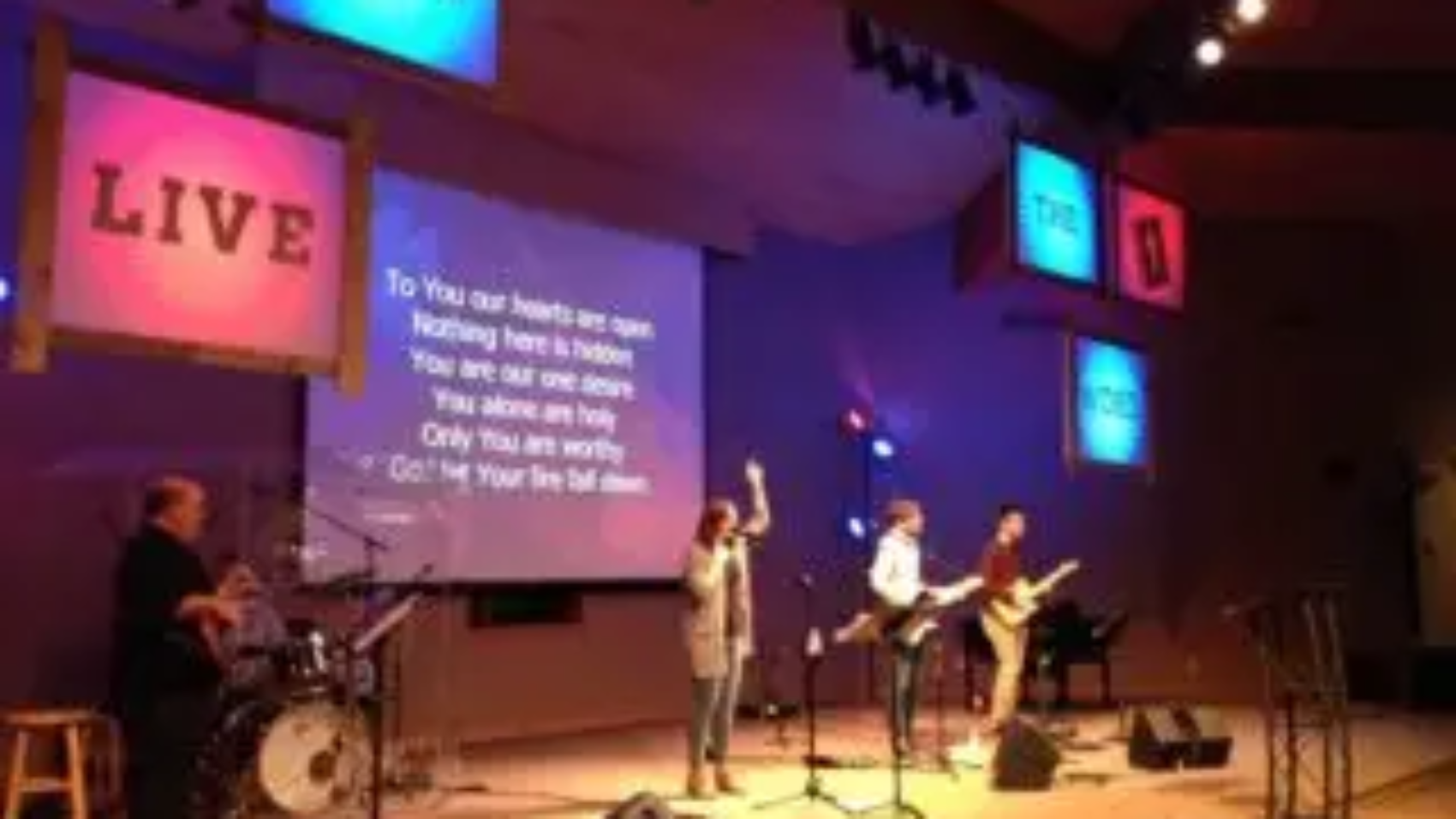
In the popular worship scene, lament songs exist. Sometimes they’re even sung. I appreciate the efforts of those with enough facility in musical style and lyric to lead God’s people in lament, and through lament, to praise.

But attempts to shift contemporary music toward substantial engagement with lament feels like trying to pull a Carnival Cruise off its course with a canoe. Even if it’s headed for rocks. The ship is just too heavy and the music too loud to hear the shouts of those paddling furiously away from the boat—the line taut between them. Those in the canoes might seem like they’re ‘working against’ the boat (big thumbs down!). It might be pointed out—rather obviously—that they’re ‘not on board.’ They’re ‘overly negative’ in all their talk about ‘sharp rocks’ and whatnot. Even more, they’re not grateful for all the benefits offered on the party ship … not to mention Paul’s insistence that we do everything ‘without grumbling or arguing.’
This reaction shouldn’t be surprising, especially since lamenters often describe themselves as isolated and unseemly to others:
Do not ignore me in my time of trouble! Listen to me! When I call out to you, quickly answer me, for my days go up in smoke, and my bones are charred like a fireplace …. I am like an owl in the wilderness, like a screech owl among the ruins (Ps 102:1-6).
The canoe tips over.
Why the resistance to lament?
Some reasons are cultural. Maybe we don’t like public displays of negative emotion. Perhaps we ought to endure our hardships quietly, with a stiff upper lip. It can be hard to hear lament.
But I think other reasons are more idiosyncratic to church cultures that emerge in the wake of the mega-ship Carnival Cruise liners. Despite the lyrical gestures toward vulnerability, brokenness, and desperation in the songs I reviewed (in the first post of this series), we’ve simultaneously exorcised the practices that instantiate those ideals—individual confession and lament.
Let me address just a few common objections to the use of lament in worship services.
It isn’t uncommon to refer to worship services as ‘Celebrations,’ and for churches to seek to create an environment where people—especially visitors—feel warm and welcome. I’m going to sidestep debates about seeker-sensitive church services, but suggest that creating a worship culture that allows people to voice their pain to God is not only welcoming (of all human emotion) but might eventually facilitate a turn toward genuine praise. Maybe worshippers are longing for that kind of environment, where real pain and suffering finds their voice and praise becomes real.

They are, but not exclusively. The psalms are replete with ‘psalms of communal lament,’ set to music. It might be hard for some to imagine … especially if you’re not connected with wider traditions (cf. the African American MAAFA service),[1] and not closely affiliated with an actively practising liturgical tradition,[2] but the biblical evidence tips strongly in favour of laments for communal use. Even individual psalms of lament were often set to music by the choir director (e.g., Ps 5, 88), giving the lonely individual worshipper an opportunity to cry out to God in a corporate environment—or perhaps more to the point, giving the community an opportunity to take up the cry of others.
(I have actually heard this argument) The basic premise here is that lament is an Old Testament activity, and symptomatic of life BC. But this claim is wrong on two accounts. Individuals in the Old Testament did have hope of resurrection, though perhaps not in the same way Christians would express it (‘But God will rescue my life from the power of the grave’ Ps 49:15).[3] 
But more to the point, I’d be so bold as to say that Jesus had resurrection hope. Yet, from the cross he cried out (from Ps 22:1), ‘My God, my God, why have you forsaken me?’ And by the way, Ps 22 is ‘for the choir director, according to the tune …’ In other words, it was meant for inclusion in the worship repertoire. In Gethsemane Jesus’ soul was ‘deeply grieved, even unto death’ (Matt 26:38, echoing Ps 42:5-6). And he cried out to his father to be spared from the cross.
The author of Hebrews writes that ‘Jesus offered up prayers and supplications, with loud cries and tears, to the one who was able to save him from death, and he was heard because of his reverent submission. (Heb 5:7). For many of us, this sounds like an oxymoron. How could ‘loud cries and tears’ count as ‘reverent submission’? To this I suggest reading the book of Job, where the suffering man of God rails against God, takes him to court, accuses God, yet is declared to have ‘spoken rightly about me [God]’ (42:7). Reverent speech sounds irreverent when we lose connection with the biblical lament tradition, and sounds defeatist when disconnected from the hope of the resurrection.
There are. There just aren’t (m)any on the CCLI lists to which many churches subscribe, especially those that use ‘praise bands’ to lead in sung worship. Reclaiming lament requires re-education for all of us, especially those of us who have grown up in worship environments oriented toward the positive and uplifting. We might consider resources like THIS, THIS, or THIS, and songs like Dry Bones, By the Waters of Babylon (or THIS version), or Leonard Berstein’s Chichester Psalms, or the songs listed HERE or HERE. There are enough to at least get started.
See point #4 … and as an addendum, those going through terrible suffering are not comfortable singing only praise, and perhaps we might heed the words of Ecclesiastes:
It is better to go to a house of mourning than to go to a house of feasting, for death is the destiny of everyone; the living should take this to heart. (Eccl 7:2)
Or the words of Jesus,
Blessed are those who mourn, for they will be comforted (Matt 5:4).
Or Paul,
Weep with those who weep (Rom 12:15).
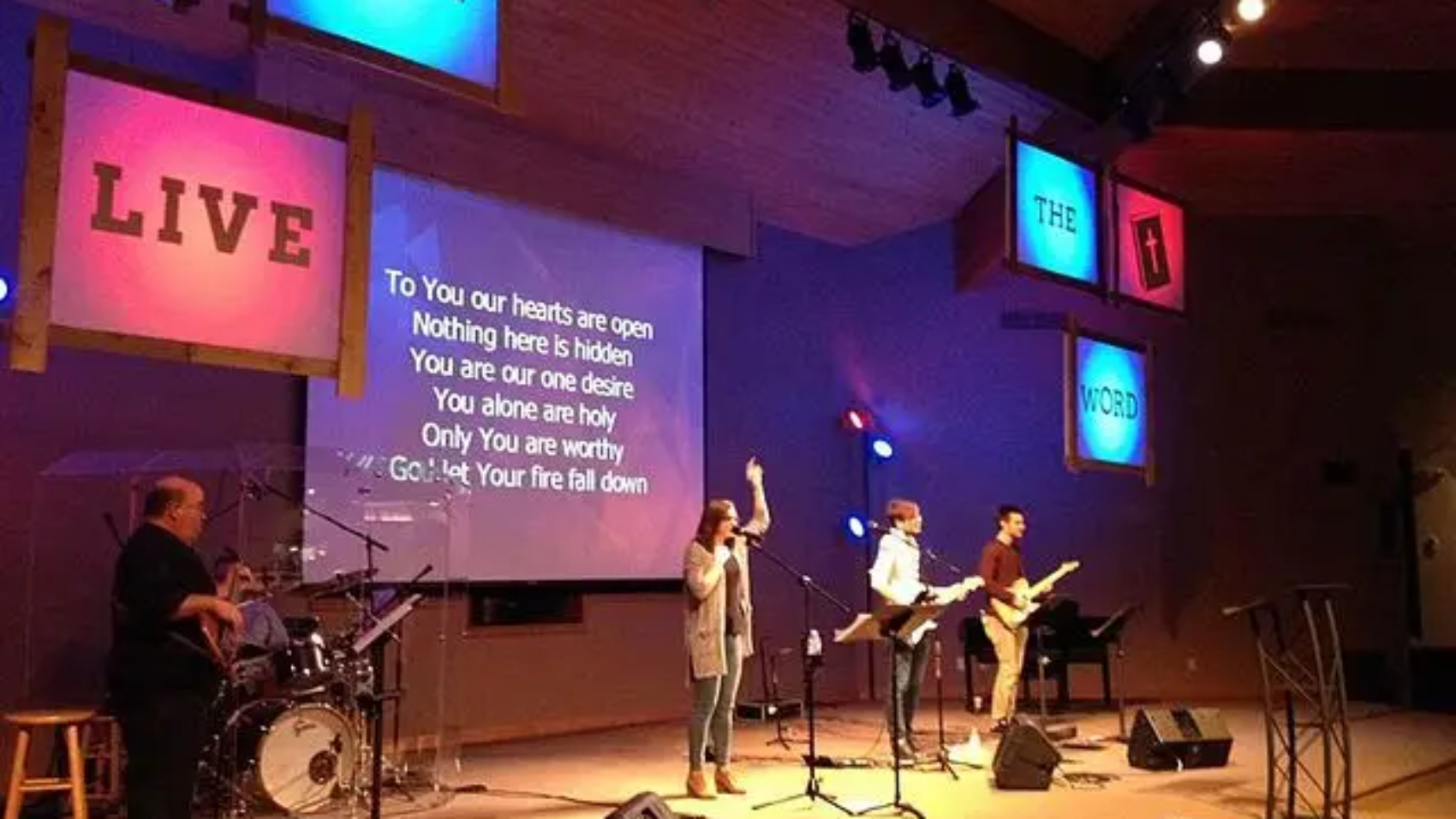
In my previous post I discussed the continued lack of lament in contemporary worship (of the ‘worship band’ variety). My point was that there’s been very little appreciable movement toward lament in the past decades among the major producers of the songs listed on the CCLI lists and the like. Because of that, the average small seeker-type church—which tends to draw heavily from the CCLI top 100—plays 99% praise, with the occasional (awkward) cry for help. I find this astonishing, especially given the tendency for said churches to read books like The Emotionally Healthy Church/Leader/Woman/Etc (http://www.emotionallyhealthy.org/).
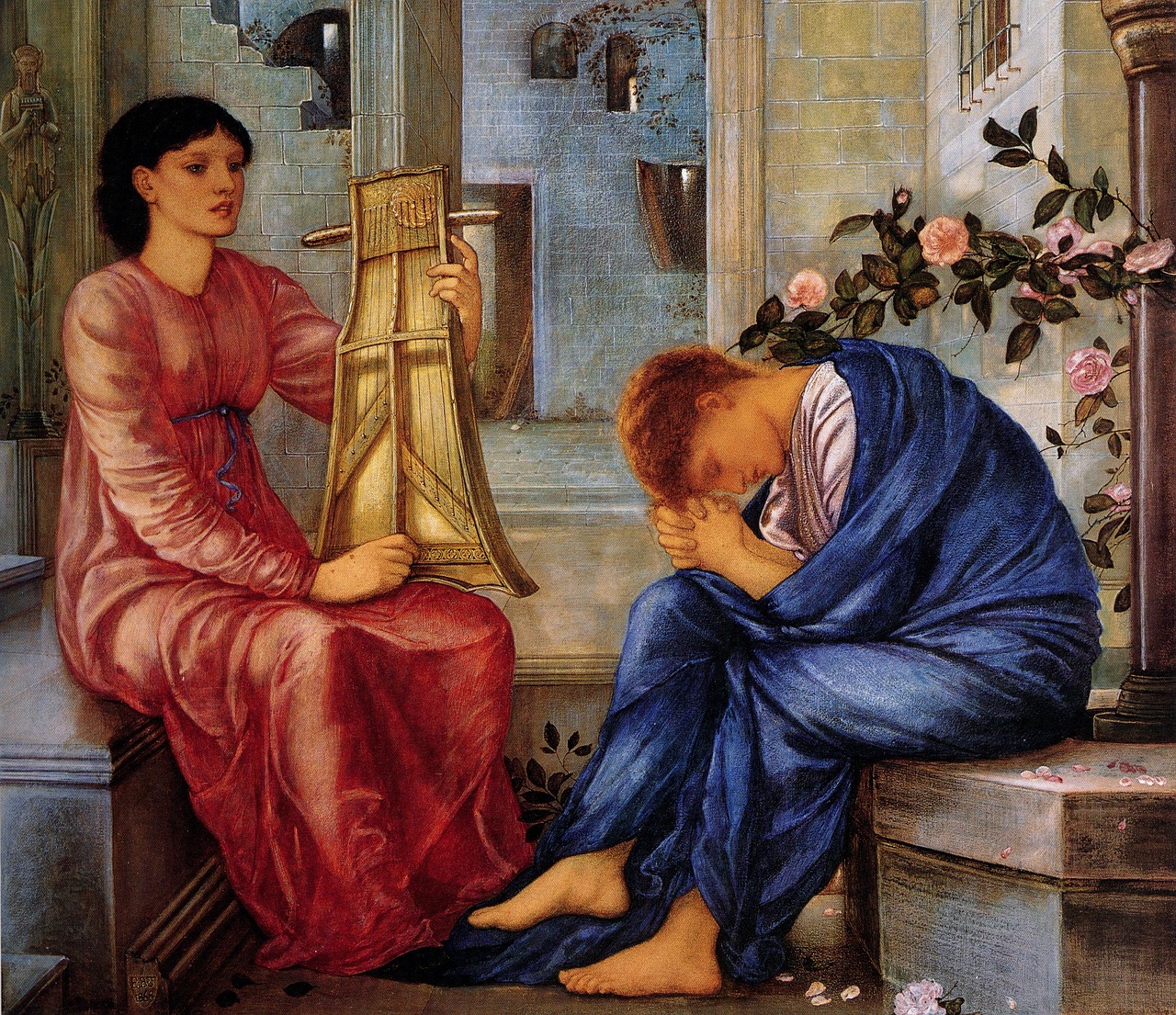 I don’t have enough perspective to evaluate the current level of discontent with the persistent optimism and cheerfulness of contemporary worship music. But if I were to sit down with the chief strategists for Contemporary Worship, Inc., I’d suggest that something in the order of Nirvana’s 1990 flannel and grunge revolution needs to take place in worship music, a clearing of air for the raw and abrasive songs of lament (and protest).[1]
I don’t like to idealise lament. Some studies I’ve seen urge lament on the grounds that it’s psychologically and emotionally healthy. This may be true, and it’s probably healthier than repression. But it must be admitted that time also heals wounds, if not all of them. So, not lamenting might leave lamenters and non-lamenters in an emotionally similar place, at least 10-20 years on. I don’t think selling lament (exclusively) on its personal benefits is what the church needs. The point is not self-expression or psychological benefit, as good as those might be.
The greatest benefit to our worshipping communities is a reclaiming of genuine relationship with God. For all our emphasis on ‘relationship’—and perhaps that word is past its sell-by date—worship often reflects a belief that ‘the chief end of man [sic]’ (glorifying God) is the ‘only end of man.’[2] Our worship often portrays a God who only permits praise, and will not allow objections. Brueggemann writes,
A community of faith which negates laments soon concludes that the hard issues of justice are improper questions to pose at the throne, because the throne seems to be only a place of praise.[3]
Treating the throne room as a place for praise alone ignores the fact that the divine palace is also a (supreme) court, a place where citizens of the kingdom press their case with confidence that the divine judge hears, listens, and responds.
The biblical tradition is rife with examples of God’s people pressing their case, either against God or against societal injustice. God seems to invite his people into the courtroom for that very reason, from Genesis onward.
After choosing Abraham ‘to accomplish righteousness and justice,’ God unveils his plans to destroy Sodom and Gomorrah. This provokes Abraham’s protest:
Far be it from you to do such a thing — to kill the righteous with the wicked, treating the righteous and the wicked alike! Far be it from you! Will not the Judge of all the earth do right? (Gen. 18:25)
 This bold approach to the throne seems to be just what God expects—and wants. Through dialogue and debate, Abraham challenges God to ensure justice for the few potential victims of God’s judgement. Put another way, Abraham urges God to limit his severity, and he does so by protesting his actions. Though God does rain down sulphur on Sodom (and some suggest Abraham could have pushed God even further), God rescues Lot and his family and preserves another small town (19:20-21) that was otherwise due for destruction. God is still God, but Abraham’s protest effected some mercy.
Protest within the divine-human relationship is not unusual in the Old Testament. In fact, one of the purposes of prayer and yes, even worship, is to ask God to limit his severity. For reasons unavailable to us, God constructed the divine-human relationship so that our pleadings persuade God to set limits on his justified use of wrath. Put another way, God invites humans into the process of fostering and exercising divine mercy. Covenant partners are not only passive recipients of mercy, but active agents in its implementation.
The next major occasion where God’s servant protests God’s actions takes place right after the golden calf (Ex 33-34), when Israel breaks the first and second commandments and nullifies the covenant that God had just made with them. God was so angered that he proposed wiping out the nation to start anew with Moses.
But Moses intervened by appealing to God’s reputation:
Why should the Egyptians say, ‘It was with evil intent that he brought them out to kill them in the mountains …’ Turn from your fierce wrath; change your mind and do not bring disaster on your people! (Exod 32:12)
God did not reprimand Moses. Instead,
The LORD changed his mind about the disaster he planned to bring on his people (32:14).
And he did so on multiple occasions where Moses protests divine action and calls God to be just, or to turn from his wrath (e.g., Exod 33:12-16; Num 11:10-15; 12:13ff; 14:13; 16:46ff; 21:7ff).
The tradition of protest continues in the words and actions of prophets like Habakkuk (1:3-4) and Jeremiah (11:18-20; 12:1-6), the psalmist (e.g., Ps 10), and the non-Israelite Job.
In sum, in failing to lament, we fail to exercise our covenant responsibility to bring matters of justice and righteousness before the divine judge. We fail in our civic duty.
Jewish novelist Chaim Potak discusses a tradition of lament during the Shabbat service:
There used to be a tradition, which may still be in existence in some Jewish communities, where if you had a complaint against God you stopped the service on Saturday. You went up to the ark, you opened the [Torah] ark, and you stood there shouting at God until the rabbi finally led you away.
Potak goes on,
You shout out of faith, not because you don’t have any faith. If you don’t have faith, you don’t have anyone to shout at.[4]
What if we saw our worship music as a means of leading people to the ark? Or the courtroom? There’s something enormously dignifying and freeing in telling people that their disputes and complaints will be heard in this court. They may feel themselves without power in the halls of human political power,[5] but not in the divine court.
Let us find the chords to bring them there, and let us enter His court with protests.
See here for Part 3.

The title of this post comes from Walter Brueggemann’s influential essay ‘The Costly Loss of Lament,’ written in 1986 (repr. in Psalms and the Life of Faith).

 Joshua and Violence (Part 6)
The book of Chronicles tells of a story where King Jehoshaphat of Judah faced an enemy coalition of some 2 million soldiers, or just a few shy of modern China’s active military. The story is clearly engaging in some hyperbole, since the size of this army alone is well beyond all human population estimates for this time. The author is painting something larger than life, with the odds stacked against Judah. The central questions driving the narrative appear in Jehoshaphat’s desperate prayer in the courtyard of the temple: ‘Are you not God in heaven? … Did you not, our God, drive out the inhabitants of this land before your people Israel?’ Based on God’s actions in Joshua, Jehoshaphat builds to his point: ‘O God, will you not execute judgment on them? For we are powerless.’ (2 Chr 20:6-12).
The inflated imagery in this story suggests that the story-teller isn’t doing historical realism. He’s using impressionism or cubism. The artist is accentuating the staggering odds, Judah’s powerlessness, and most importantly, the location. This prayer took place at the temple, the very place where Solomon had said (1 Kgs 8) that Israel should come if they ever faced trouble.
A Levitical temple singer then arose to prophesy:
This battle is not for you to fight; take your positions, stand still, and see the victory of the LORD on your behalf, O Judah and Jerusalem (2 Chr 20:17).
The ensuing scene is almost comical. The army still goes out … but only to watch. They proceed as if going to battle, when in reality, they were play-acting. By the time they reached them, their enemies had already turned on and killed each other.
But though the army had no role, the Levitical Priests took center stage. Their special duty was to accompany Yahweh into battle and announce his arrival. In the past, the Levites would have carried Yahweh’s ark, or throne. Throne or standard-bearing was a common motif in ancient Near Eastern warfare.
Since the ark had already ‘come to rest’ in the Temple (a major theme in Chronicles),[1] the Levites went forth instead as singers. Their praises formed a veritable throne for Yahweh as he went forth to fight for his people.[2] This concept is likely behind the psalmist’s claim that Yahweh is ‘enthroned on the praises of Israel’ (Ps 22:3). Rather than the ark, the priests bore Yahweh into battle on the praises of Israel.
At the beginning of this battle against the 2 million, the singers were silent … until that crucial moment, when with the army in position, the Levites lifted their song. Chronicles’ account is stunning:
At the moment they began to sing and praise, the LORD set an ambush against the Ammonites, Moab, and Mount Seir, who had come against Judah, so that they were routed (2 Chr 20:22).
Praise seems to effect something powerful here. It’s as if praise is the storm-cloud in which Yahweh comes against the enemy. Chronicles emphasizes the co-ordination between singing and Yahweh’s visitation. In the previous verse, Jehoshaphat appointed the Levites to literally ‘praise (his) holy theophany,’ or dramatic visitation. As they sang, Yahweh came in power (cf. 2 Chr 5:13). In sum, this post-exilic story paints the image of a God who achieves victory over the enemy, accompanied by the praise of the powerless.
We have strong indications that parts of Joshua were edited during the post-exilic period, during the same time that the Chronicler was writing. Though they probably weren’t study buddies, the Chronicler and the post-exilic editor of Joshua share a concern for highlighting the priestly dimensions of warfare. Priests probably highlighted and clarified an earlier edition of Joshua (a ‘Deuteronomistic’ edition, in scholarly parlance) that already put a strong emphasis on the Levites.
It’s not surprising, then, that the story of Jericho lands smack dab in the middle of the book’s account of entering the land. Elsewhere, the book flies through the battle accounts in chs. 10-12 without much specificity. But for Jericho (and Ai), the tempo slows … almost to a snail’s pace … or perhaps better, to the metronome of a Levitical procession.
Joshua 3-6 reads like a liturgical procession. It takes two whole chapters for Israel to process across the Jordan, stopping at each significant site to mark it for later re-enactment. If there’s a main character here, it’s the ark. Mentioned some 24x in these chapters, the ark is without doubt the narrator’s preoccupation. There’s a kind of mesmerizing effect as the ark proceeds before the people before they crossed the Jordan. They were forbidden to approach it within 3,000 feet, and they couldn’t move until it moved. The assumption is that Yahweh’s presence was so dangerous and unapproachable that the people needed to stand back, much as they would related to his presence in the Tabernacle itself:
As soon as you see the ark of the covenant of the LORD your God being carried by the Levitical priests, then you shall set out from your place and follow it. Yet there shall be a distance between you and it, about 2,000 cubits in length. Do not come near it, in order that you may know the way you shall go, for you have not passed this way before.” 5 Then Joshua said to the people, “Consecrate yourselves, for tomorrow the LORD will do wonders among you.” (Josh 3:3-5)
The actual battle at Jericho begins and ends at Gilgal, one of Israel’s oldest and most significant places of worship, and all along the way, it marks the priestly procession with stones used for an altar. Leading this 7-day ceremony are the priests, who carry the ark before the people. The 7 day pattern of walking around the city (Josh 6) recalls the 7-day Passover celebration in Joshua 3-4, and the distinctive 6+1 rhythm of the Jericho liturgy recalls the 6+1 story of creation. Not surprisingly, on that 7th holy day, when the city was finally encircled 7 times and destroyed, all of its valuables were given over (as herem, or sacred offering) to the sanctuary, God’s resting place (Josh 6:24).
As in the story from 2 Chronicles 20, the people were accompanying Yahweh into the land, but were in essence standing back in worshipful reverence to watch him win a victory. And like the story in 2 Chronicles 20, the Priests and people remain silent until they unveil—or proclaim—their secret weapon. The people burst forth with shouting and trumpet blasts, but Yahweh is the real actor in the story. Their joyful shout joins the priestly trumpet blast that announces Yahweh’s arrival in the city. In sum, Yahweh achieves his victory amidst the priestly procession and celebration of his people, and culminates in an offering to the sanctuary.
In the last post I explained how the books of Deuteronomy, Joshua and Kings ‘re-frame’ extermination commands in terms of differentiation. Interpretive shifts were already under way that dislodged the story of conquest from any essential association with genocide. Whether this was for reasons of moral discomfort or what we cannot be sure. But the effect is the same. The story of herem warfare was understood to mean: Don’t cavort with idolatrous nations, and even more importantly, remain true to the Torah.
I want to tentatively propose another similar shift taking place within Joshua. I’m calling it a priestly re-framing, from warfare to liturgy. Joshua is ‘liturgizing’ an earlier story of conquest, with Yahweh’s lone military action in the foreground and Israel’s participation in worship as the accompaniment.
Like Chronicles, Joshua is hyperbolizing (not falsifying! Is Monet falsifying the water lilies?) its historical sources in order to make important theological points. This is a non-controversial claim. Lawson Younger detailed the many ways that Joshua’s conquest rhetoric participates in standard ancient Near Eastern warfare rhetoric, where ‘putting to the sword everything that breathes’ basically meant, ‘winning a victory,’ and everyone knew it. I’m suggesting further that Joshua is also participating in a broader biblical pattern of liturgizing warfare—i.e., (a.) heightening the drama of divine victory, (b.) downplaying or completely eliminating any meaningful human contribution to the victory, and (c.) heightening the significance of the worship system within the battle scene. This sets the stage, I suggest, for the reception of such stories in worship settings for a totally different purpose, namely, to celebrate the power of Yahweh effected in the praise of his people.
 The effect of this liturgizing was to render an older story of conquest meaningful for a people whose land had been effectively taken away. The returnees from exile, who most likely put the finishing touches on the book of Joshua, were but a powerless and vulnerable people in the land. They had no standing army, no king, few defenses, and little political clout. But they did have a temple. They did have priests. So when they looked back on their history to ask, where is the powerful God of the past in our day? they answer, He’s present in our worship. Therein lies our strength.
According to Joshua, Israel’s army was never its source of strength. It was ‘not with your sword or with your bow,’ Joshua later reminds the people (Josh 24:12). Rather, it was the God enthroned in the praises of Israel who defeats the enemy. He was the one who ‘ordained praise from the mouths of infants, to silence the foe and the avenger’ (Ps 8:2).
So while Joshua could be read in such a way that warfare is seen as a form of worship, I’m suggesting that the momentum of the book was in the other direction, toward the idea that worship was a form of warfare. The book ‘permits’ both readings, but only one leads toward the one who later took up the name Joshua/Jesus.
[Jesus entered Jerusalem] ‘And the crowds went before him. … But when the chief priests and the scribes saw the amazing things that he did, and heard the children crying out in the temple, “Hosanna to the Son of David,” they became angry. And said to him, “Do you hear what these are saying?” Jesus said to them, “Yes; have you never read, ‘Out of the mouths of infants and nursing babies you have prepared praise for yourself [to silence the foe and the avenger]‘?” (Matt 21:7, 15-16)
Jesus’ march on Jerusalem continues the Joshua story. To the praise of children he achieved his victory.
To read part 7 click HERE.