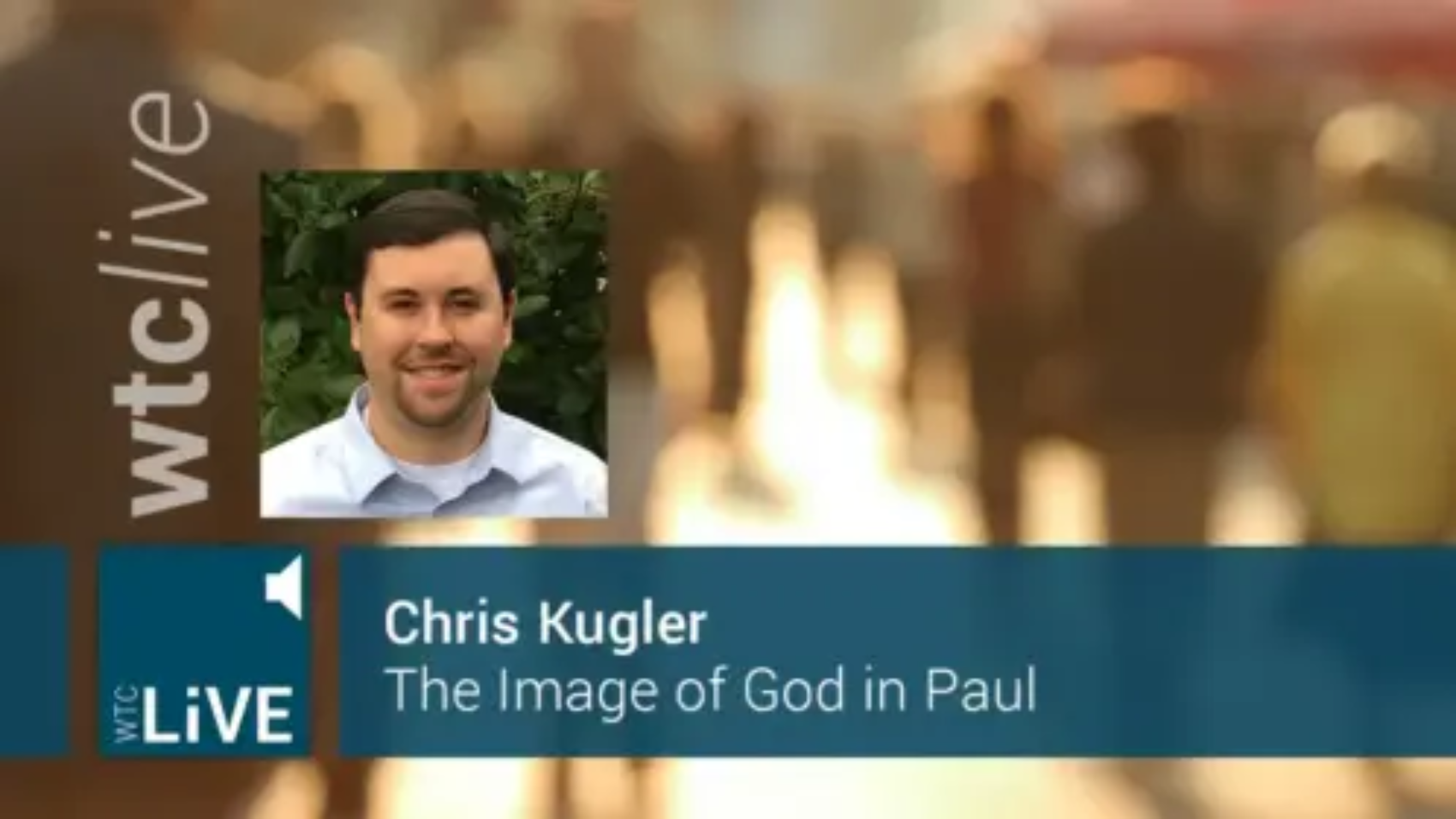
This episode of WTCLive comes to you from the student pub at WTC’s student residential (September 2016). Lucy Peppiatt, Matt Lynch and Brad Jersak interview Chris Kugler on the various aspects of his thesis, which looks at the Image of God in Paul’s writings and how that relates to a Sacramental Anthropology and Image Monotheism. Chris is also involved in a broader discussion amongst current New Testament scholars on Divine Christology and he argues for the bringing together of a high Christology and a high anthropology in Paul’s letters.
Chris Kugler holds a bachelor’s degree in Religious Studies and Biblical Languages, as well as two master’s degrees in Biblical Studies from Duke University and the University of St Andrews respectively. He is currently working on a PhD in New Testament at the University of St Andrews, Scotland, under N. T. Wright, where his research focuses particularly on Paul’s use of the Jewish and Greco-Roman imago Dei traditions in his Christology and theological anthropology. More broadly, his research interests include Jewish Monotheism, Jewish and Greco-Roman theological anthropology, Christology and Christian Origins. His primary passion is to help students encounter the New Testament in its rich and complex historical context. He is married to Katie Rae and both of them are based in Houston, Texas.
Brad Jersak (Reader Irenaeus) is an author and teacher based in Abbotsford, Canada. He teaches New Testament and Patristics at WTC. After serving as pastor and church-planter for twenty years, he now travels for Fresh Wind Christian Fellowship and serves as reader at All-Saints Orthodox Monastery. Brad’s focus today is on writing accessible theology, facilitating ‘listening prayer’ seminars, and teaching college courses. His emphases are the Gospels, Cruciform theology , and contemplative spirituality applied to prophetic justice. He is currently editor of www.clarionjournal.com and senior editor Plain Truth Ministries (www.ptm.org).
Lucy Peppiatt has bachelor’s degrees in both English and Theology. She completed her MA in Systematic Theology at King’s College, London, and her PhD through the University of Otago, Dunedin, New Zealand. Lucy is the author of Women and Worship at Corinth: Paul’s Rhetorical Arguments in 1 Corinthians. (Wipf and Stock, 2015); and The Disciple: On Becoming Truly Human. (Wipf and Stock, 2012). Lucy’s research interests are Christ and the Spirit, Charismatic theology, discipleship, and 1 Corinthians.
Matt Lynch teaches Old Testament and serves as Dean of Studies at WTC. He recently moved from Germany, where he completed post-doctoral research on conceptions of divine supremacy in Persian period biblical literature. Matt is the author of Monotheism and Institutions in the Book of Chronicles (Mohr Siebeck, 2014) and various articles on the Old Testament. Matt is particularly interested in helping students grasp the theological and literary contours of the Old Testament, wrestle through its ethical and historical challenges, and understand its ongoing significance.
Theological Miscellany is a blog where we post a variety of theological reflections on scripture, life, culture, politics, society, gender, and pretty much anything. WTC attracts a whole range of people as students and a wide range of faculty from around the world with different interests and theological leanings. What draws us all together is our commitment to a Christ-centred theology, taught in a Spirit-led fashion in partnership with the local church.
Matt and Kenny discussed passages in the Old Testament like the flood and the conquest of Canaan, that on the surface contain moments of troubling violence. But Matt contends that a closer and slower reading of passages like these can actually reveal a critique of violence and show us more of the goodness and mercy of God. We hope this episode will help bring some clarity to some of the difficult questions raised when we read the Old Testament, particularly in light of the God we see revealed in Jesus Christ.
A core tenet of Jewish, Christian, and Islamic faiths is the claim that there is only one God, not that there used to be lots of gods until Yahweh emerged victorious.
So I get that the charismatic church is messy, and can be off putting. That’s why I love 1 Corinthians. Just when you think Paul should have just shut the crazy Corinthian charismaniacs down, he tells them to ‘Eagerly desire spiritual gifts, especially that you may prophesy’! He was brave. I take heart from that.
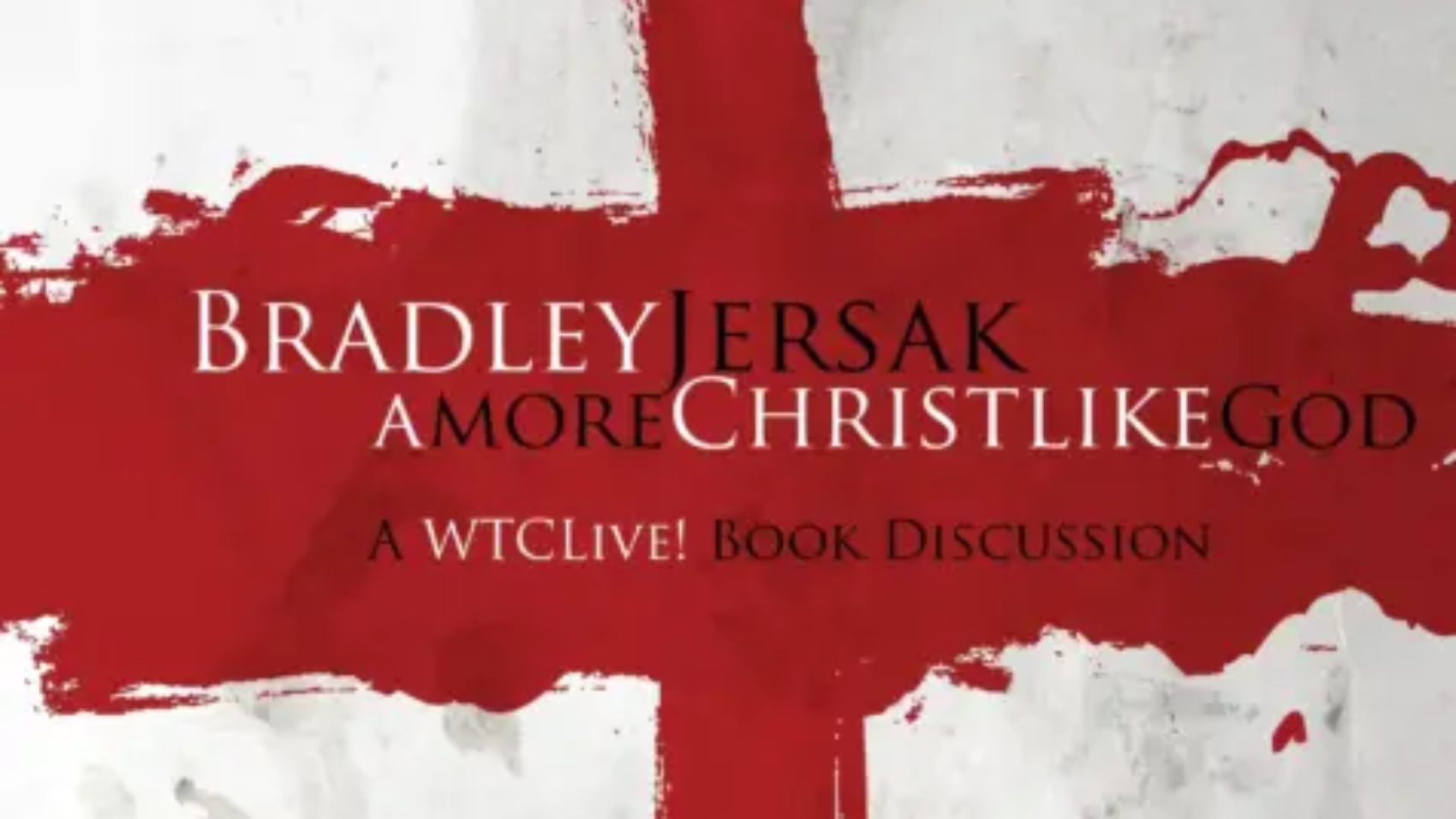
This episode of WTCLive comes to you from the student pub at WTC’s student residential (January 2016). Lucy Peppiatt and Matt Lynch discuss Brad’s recent book A More Christlike God: A More Beautiful Gospel (Plain Truth Ministries, 2015). Brad explains his journey toward writing this book, and how his perspective developed. Hear Matt, Lucy and Brad in a fun and lively discussion about Brad’s book.
Rev. Dr. Brad Jersak (Reader Irenaeus) is an author and teacher based in Abbotsford, Canada. He teaches New Testament and Patristics at WTC. After serving as pastor and church-planter for twenty years, he now travels for Fresh Wind Christian Fellowship and serves as reader at All-Saints Orthodox Monastery. Brad’s focus today is on writing accessible theology, facilitating ‘listening prayer’ seminars, and teaching college courses. His emphases are the Gospels, Cruciform theology , and contemplative spirituality applied to prophetic justice. He is currently editor of www.clarionjournal.com and senior editor Plain Truth Ministries (www.ptm.org).
Lucy Peppiatt PhD Principal, Systematic Theology
Lucy has bachelor’s degrees in both English and Theology. She completed her MA in Systematic Theology at King’s College, London, and her PhD through the University of Otago, Dunedin, New Zealand. Lucy is the author of Women and Worship at Corinth: Paul’s Rhetorical Arguments in 1 Corinthians. (Wipf and Stock, 2015); and The Disciple: On Becoming Truly Human. (Wipf and Stock, 2012). Lucy’s research interests are Christ and the Spirit, Charismatic theology, discipleship, and 1 Corinthians.
Matt Lynch PhD Dean of Studies, Old Testament
Matt teaches Old Testament and serves as Dean of Studies at WTC. He recently moved from Germany, where he completed post-doctoral research on conceptions of divine supremacy in Persian period biblical literature. Matt is the author of Monotheism and Institutions in the Book of Chronicles (Mohr Siebeck, 2014) and various articles on the Old Testament. Matt is particularly interested in helping students grasp the theological and literary contours of the Old Testament, wrestle through its ethical and historical challenges, and understand its ongoing significance.
Matt and Kenny discussed passages in the Old Testament like the flood and the conquest of Canaan, that on the surface contain moments of troubling violence. But Matt contends that a closer and slower reading of passages like these can actually reveal a critique of violence and show us more of the goodness and mercy of God. We hope this episode will help bring some clarity to some of the difficult questions raised when we read the Old Testament, particularly in light of the God we see revealed in Jesus Christ.
In this WTCLive episode: Matt Lynch interviews Lucy Peppiatt on her groundbreaking book, Women and Worship at Corinth: Paul’s Rhetorical Arguments in 1 Corinthians (Wipf & Stock, 2015).
In this book, Lucy outlines an argument for reading key texts in 1 Cor 11 and 14 as supportive of the full participation of women in the life of the worshipping Church. She suggests that in 1 Corinthians Paul quotes and then refutes the misguided views of his opponents.
Lucyhas bachelor’s degrees in both English and Theology. She completed her MA in Systematic Theology at King’s College, London, and her PhD through the University of Otago, Dunedin, New Zealand. Lucy’s research interests are Christ and the Spirit, Charismatic theology, discipleship, and 1 Corinthians. She and her husband, Nick Crawley, lead Crossnet Anglican Church in Bristol. They have four sons.
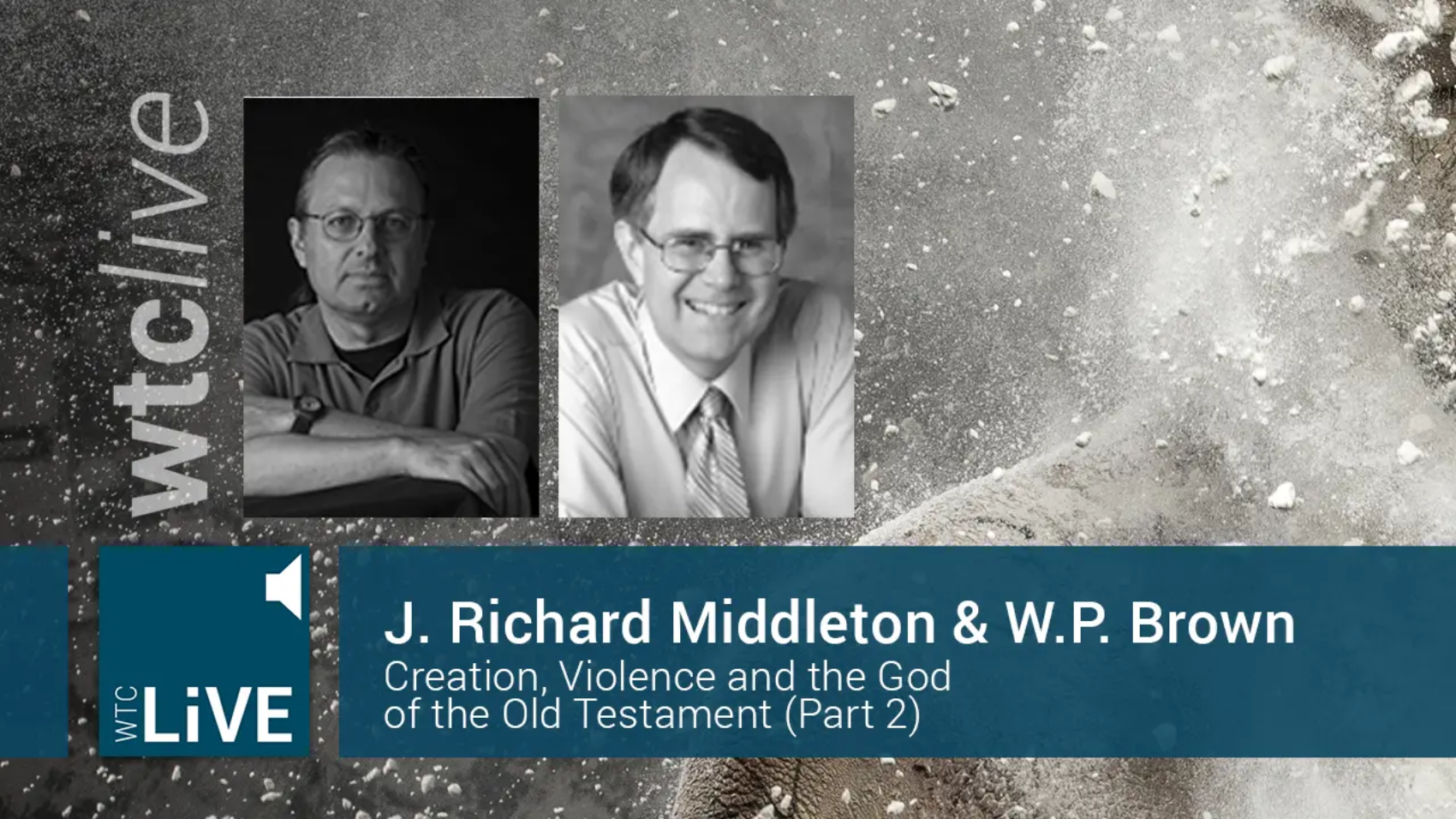
In this WTCLive episode, Matt continues the discussion on the subject of creation, violence and God with two of his favourite Old Testament scholars. Creation and the question of violence occupy an important place in the work of these Old Testament gurus. Plus, they’ve both just come out with some fantastic new books that you’ll want to read to help you navigate these topics and to open up new worlds. Middleton’s book is A New Heaven and A New Earth: Reclaiming Biblical Eschatology (Baker 2014) and Brown’s is Wisdom’s Wonder: Character, Creation, and Crisis in the Bible’s Wisdom Literature (Eerdmans, 2014).
This is the second in our series on ‘Creation, Violence and God of the Old Testament’ (see part one here.)
Speakers
J. Richard Middleton, PhD
Richard earned a Ph.D. from the Vrije Universiteit, Amsterdam, in a joint-degree program with the Institute of Christian Studies, Toronto. His other degrees include: M.A. in Philosophy, University of Guelph (Canada), 1985, and B.Th., Jamaica Theological Seminary, 1977. Dr. Middleton has done additional graduate studies in the Old Testament at Colgate Rochester Divinity School (1986-1988), and in religious studies and philosophy at Syracuse University (1984-1985).
He is widely published in religious periodicals and journals, as well as the author of four books. His most recent books are The Liberating Image: The Imago Dei in Genesis 1 (Brazos) and A New Heaven and a New Earth: Reclaiming Biblical Eschatology (Baker Academic). He has edited a volume of essays on Caribbean Theology for Pickwick Publications, and is working on a manuscript for Abingdon Press on the dynamics of human and divine agency in the books of 1 and 2 Samuel. Special areas of interest are Old Testament theology, the Christian worldview, the books of Genesis and Samuel, the doctrine of Creation, and Christianity and postmodern culture. He also serves as an adjunct professor of Old Testament at the Caribbean Graduate School of Theology in Kingston, Jamaica, and is the president of the Canadian Evangelical Theological Association.
William P. Brown, PhD
William earned his Ph.D. at Emory University, his MDiv from Princeton Theological Seminary, and his BA from Whitman College. He has abiding interests in the use of scripture in the life of the church and the world, particularly in the context of ecology and justice. Specific interests include creation theology, faith and science dialogue, the Psalms, and wisdom literature (Proverbs, Job, and Ecclesiastes). Recent books include The Seven Pillars of Creation: Bible, Science, and the Ecology of Wonder (Oxford University) and Wisdom’s Wonder (Wm. B. Eerdmans). Recently, he helped Columbia Seminary earn one of 10 grants totalling $1.5 million awarded by the American Association for the Advancement of Science to integrate science into the seminary’s curriculum.
It is the theme of glory that we spoke about in our conversation. In the preamble to his gospel, John declares of the Son, the Word made flesh, “We have seen his glory”. We explored what this glory means in relation to God, to the early witnesses of Christ, and to us today. Enjoy.
How patriarchal readings of the Old Testament have obscured the subversive nature of the Scriptural presentation of women and led to interpretations harmful to women.
With: Scot McKnight, Lucy Peppiatt and Brad Jersak.
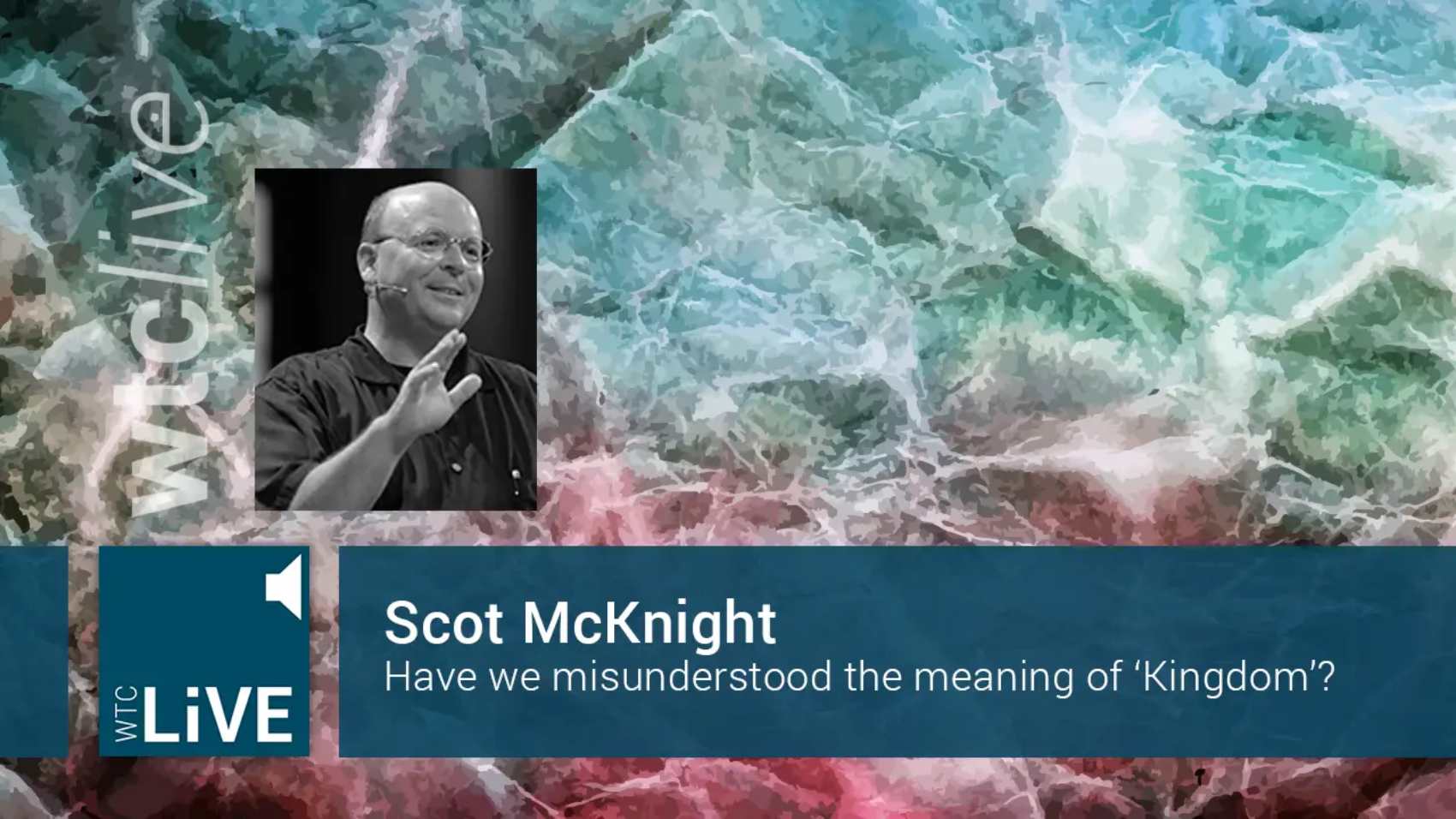
According to Scot McKnight, kingdom is the biblical term most misused by Christians today. It has taken on meanings that are completely at odds with what the Bible says and has become a buzzword for both social justice and redemption. In Kingdom Conspiracy, McKnight offers a sizzling biblical corrective on the meaning of kingdom and a fiercely radical vision for the role of the local church in the kingdom of God.
McKnight explains that kingdom mission is local church mission and that the present-day fetish with influencing society, culture, and politics distracts us from the mission of God: to build the local church. He also shows how kingdom theology helps to reshape the contemporary missional conversation. Kingdom Conspiracy will be valued by pastors, church leaders, students, and professors. Join Scot McKnight as he discusses this book with a panel of WTC faculty.
Speakers
Prof Scot McKnight earned a Ph.D. from the University of Nottingham. He is a is a world-renowned speaker, writer, professor and equipper of the Church. He is a recognised authority on the historical Jesus, early Christianity, and the New Testament. His blog, Jesus Creed, is a leading Christian blog. A sought after speaker, he has been interviewed on several radio and television programs as well as spoken at numerous local churches, conferences, colleges, and seminaries in the United States and around the world. Scot McKnight is a member of the Society of Biblical Literature and the Society for New Testament Studies. McKnight’s books have been translated into Chinese, Korean, Russian, and Portuguese. In addition to Kingdom Conspiracy, his books include The King Jesus Gospel (Zondervan, 2011), One.Life: Jesus Calls, We Follow (2010), The Blue Parakeet: Rethinking How You Read the Bible (Zondervan, 2008), A Community Called Atonement (Abingdon, 2007), and The Jesus Creed: Loving God, Loving Others (Paraclete, 2004).
Dr Lucy Peppiatt is the Principal of WTC, and a lecturer in Systematic Theology. Lucy’s areas of research are Spirit Christology and Mission. She has written The Disciple: On Becoming Truly Human (Wipf and Stock, 2012) and Women and Worship at Corinth (Wipf and Stock, 2015). Lucy lives in Bristol with her husband, Nick Crawley, where they lead Crossnet Community. She has four sons, loves pastoring young people and students, and enjoys the good things in life.
Rev Dr Brad Jersak is an author and teacher based in Abbotsford, Canada. He earned his Ph.D. from Bangor University, Wales, and has completed post-doctoral research at the University of Nottingham. He teaches Graduate Gospel Studies for WTC. After serving as a pastor and church planter for twenty years, he now attends Fresh Wind Christian Fellowship, an ‘Isaiah 58 church’, where his wife, Eden, is the lead pastor. Brad’s focus today is on writing accessible theology, facilitating ‘listening prayer’ seminars, and teaching college courses. His emphases are the Gospels, the theology of the Cross, and contemplative spirituality applied to prophetic justice. He is currently chair of the board of Soul Stream (www.soulstream.org) and associate editor of The Plain Truth magazine (www.ptm.org). Among Brad’s various books are Her Gates will Never be Shut: Hope, Hell and the New Jerusalem (Wipf and Stock, 2009), Fear No Evil: Breaking Free from the Culture of Fear (Fresh Wind, 2006), Kissing the Leper: Seeing Jesus in the Least of These (Fresh Wind, 2006), Can You Hear Me? Tuning in to the God who Speaks (Fresh Wind, 2003) and A More Christlike God, A More Beautiful Gospel (Plain Truth, 2015).
It is the theme of glory that we spoke about in our conversation. In the preamble to his gospel, John declares of the Son, the Word made flesh, “We have seen his glory”. We explored what this glory means in relation to God, to the early witnesses of Christ, and to us today. Enjoy.
How patriarchal readings of the Old Testament have obscured the subversive nature of the Scriptural presentation of women and led to interpretations harmful to women.
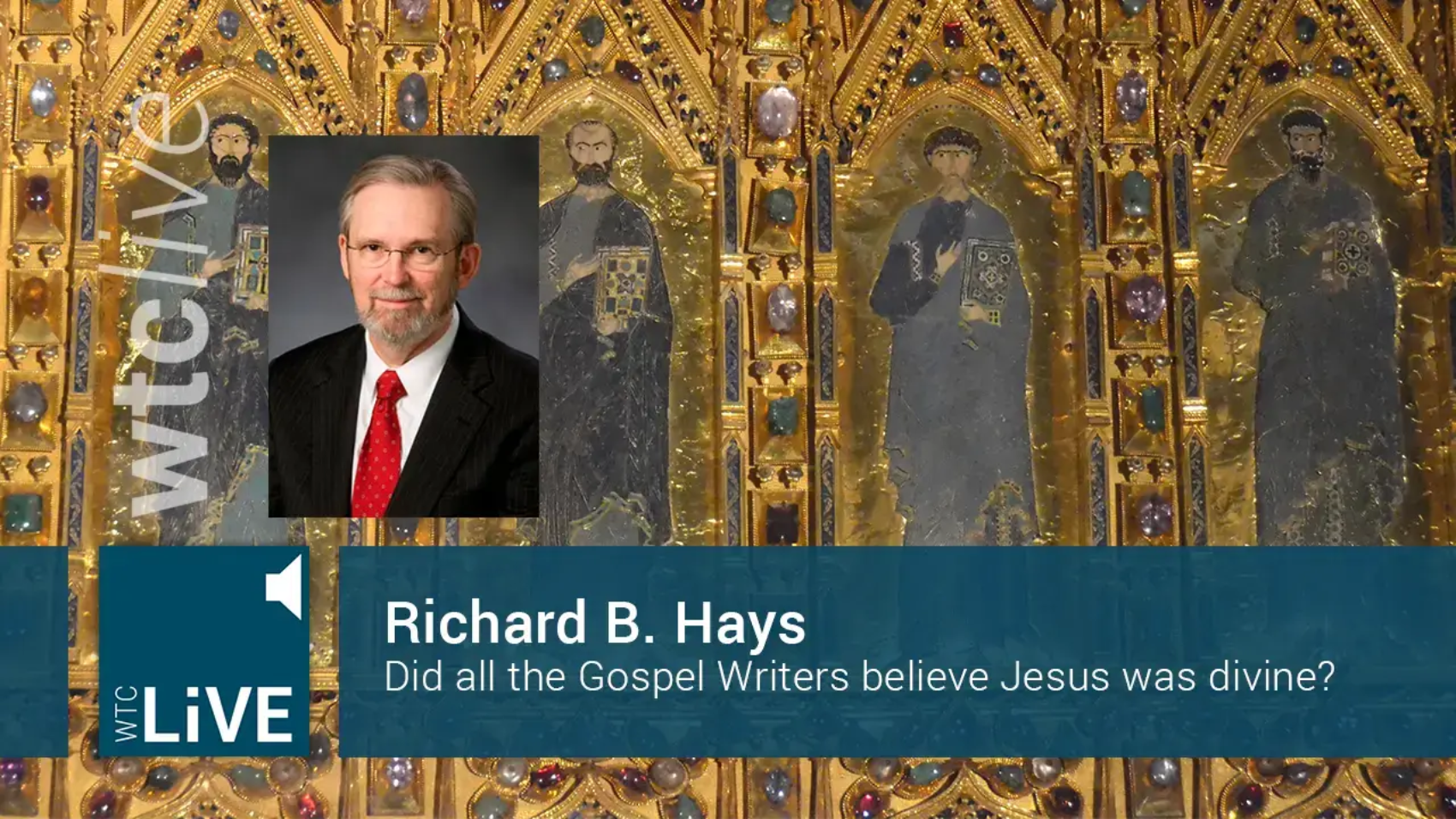
Did all the Gospel writers believe that Jesus is divine? What do we gain by viewing the Gospels’ portraits of Jesus against the backdrop of the Old Testament? Join Richard Hays as he discusses these questions on Jesus divinity in the Gospels and his groundbreaking book Reading Backwards: Figural Christology and the Fourfold Gospel Witness (Baylor, 2014).
Twenty-five years ago Richard Hays launched a quiet but highly effective revolution on how Paul read Israel’s scripture. Now he turns his attention to the four gospels …. Hays opens new and striking vistas on texts we thought we knew—and, particularly, on the early church’s remarkable belief in Jesus as the embodiment of Israel’s God – N. T. Wright on Hays’ Reading Backwards.
Speaker
Richard B. Hays, PhD
Richard is Dean and the George Washington Ivey Professor of New Testament at Duke Divinity School and is internationally recognized for his work on the letters of Paul and on New Testament ethics. His scholarly work has bridged the disciplines of biblical criticism and literary studies, exploring the innovative ways in which early Christian writers interpreted Israel’s Scripture.
His book The Moral Vision of the New Testament: Community, Cross, New Creation was selected by Christianity Today as one of the 100 most important religious books of the twentieth century. His most recent books are The Art of Reading Scripture (2003, co-edited with Ellen Davis), The Conversion of the Imagination (2005), Seeking the Identity of Jesus: A Pilgrimage (2008, co-edited with Beverly Roberts Gaventa), and Revelation and the Politics of Apocalyptic Interpretation (2012, co-edited with Stefan Alkier).
He has lectured widely in North America, Europe, Israel, Australia, New Zealand, and Hong Kong. An ordained United Methodist minister, he has preached in settings ranging from rural Oklahoma churches to London’s Westminster Abbey. Professor Hays has chaired the Pauline Epistles Section of the Society of Biblical Literature, as well as the Seminar on New Testament Ethics in the Society for New Testament Studies, and has served on the editorial boards of several leading scholarly journals. Professor Hays received an honorary doctorate (Dr. theol. honoris causa) from the Johann Wolfgang Goethe University in Frankfurt, Germany, in 2009.
It is the theme of glory that we spoke about in our conversation. In the preamble to his gospel, John declares of the Son, the Word made flesh, “We have seen his glory”. We explored what this glory means in relation to God, to the early witnesses of Christ, and to us today. Enjoy.
How patriarchal readings of the Old Testament have obscured the subversive nature of the Scriptural presentation of women and led to interpretations harmful to women.
Our guest is Iain Provan of Regent College, Vancouver. This is an opportunity for you to engage with Matt Lynch and Iain Provan on some of the difficult issues pertaining to the way violence and God are portrayed in the Old Testament. Matt will also be discussing Provan’s recent book Seriously Dangerous Religion: What the Old Testament Really Says and Why it Matters (Baylor, 2014).
Speakers:
Dr Iain Provan is the Marshall Sheppard Professor of Biblical Studies at Regent College. He received his MA at Glasgow University in Mediaeval History and Archaeology, his BA from London Bible College in Theology, and his PhD from Cambridge. His academic teaching career took him to King’s College London, the University of Wales, and the University of Edinburgh, where he was a senior lecturer in Hebrew and Old Testament Studies. Dr. Provan has written numerous essays and articles, and several books including commentaries on Lamentations, 1 and 2 Kings, Ecclesiastes, and Song of Songs, and co-authored with Phil Long and Tremper Longman A Biblical History of Israel (John Knox Press, 2003). Most recently he released Against the Grain: Selected Essays (Regent College Publishing, 2015), Seriously Dangerous Religion: What the Old Testament Really Says and Why It Matters (Baylor University Press, 2014) and Convenient Myths: The Axial Age, Dark Green Religion, and the World that Never Was (Baylor University Press, 2013), and Discovering Genesis (SPCK, 2015). He is currently writing a book on Protestant biblical hermeneutics, projected for release in 2017.
Prof Matt Lynch holds MATS and ThM degrees from Regent College and a PhD from Emory University. He also carried out postdoctoral research at the University of Göttingen, Germany. Matt then worked as Academic Dean and Lecturer in Old Testament at WTC Theology in the United Kingdom (2013–2020). He joined the Regent College faculty in summer 2020 and was promoted to Associate Professor of Old Testament in 2022.
It is the theme of glory that we spoke about in our conversation. In the preamble to his gospel, John declares of the Son, the Word made flesh, “We have seen his glory”. We explored what this glory means in relation to God, to the early witnesses of Christ, and to us today. Enjoy.
How patriarchal readings of the Old Testament have obscured the subversive nature of the Scriptural presentation of women and led to interpretations harmful to women.
With: Lincoln Harvey, Andrew Parker and Brian Brock.
What can be said about theology and sport in the same breath? As we enter another frenzied World Cup Season, should we give a rest to our theological concerns? No way! say these two theologians of sport. Sport intersects in some fascinating ways with a life of faith, work, and worship. If you think theology and sport is a strange brew, or want to see how theologians think about purportedly ‘non-theological’ subjects, join Matt Lynch for this WTCLive event (or watch it later).
Speakers:
Rev Dr Lincoln Harvey is Lecturer in Systematic Theology at St Mellitus College, and author of the recent A Brief Theology of Sport(SCM/Cascade, 2014). He studied systematic theology at King’s College London under the supervision of Colin E. Gunton, on whose theology he has edited a collection of essays with T&T Clark (‘The Theology of Colin Gunton’). He was previously Tutor for Christian Doctrine at The South East Institute for Theological Education (SEITE), and has also taught on the MA programmes at King’s College London, where he continues to contribute to the AKC programme. He is also Associate Priest at St Andrew’s Fulham Fields, having served his curacy at St John-at-Hackney in East London.
Dr Andrew Parker is Professor of Sport and Christian Outreach in the Faculty of Applied Sciences at the University of Gloucestershire, and is the co-author of the recent Sport and the Christian Religion: A Systematic Review of Literature (2014). He is also the editor of three other books on sport, sociology and Christianity. Andrew leads the University of Gloucestershire’s suite of courses (Postgraduate Certificate/Diploma/MA) in Sport and Christian Outreach. He is also founding Director of the University’s Centre for Sport, Spirituality and Religion (CSSR). Andrew is a former physical education teacher and teacher-educator and also has experience of working in manufacturing industry. His research interests include: sport and social identity, sport and spirituality, physical activity and schooling, and broader issues of organisational behaviour and institutional relations.
Dr Brian Brock is a reader in the School of Divinity, History and Philosophy at the University of Aberdeen. Brian’s teaching focuses on practical theology, ethics, and scriptural interpretation. He is the author of Christian Ethics in a Technological Age (Eerdmans, 2010) and Singing the Ethos of God: On the Place of Christian Ethics in Scripture (Eerdmans, 2007), and has edited several other books. In addition, Brian has written a recent article entitled ‘Discipline, Sport, and the Religion of Winners: Paul on Running to Win the Prize, 1 Corinthians 9:24-27,’ Studies in Christian Ethics 25/1 (2012): 4-19. Brian’s engagements with Christian doctrine and cultural hermeneutics are tied together by a third interest in the role scripture plays in God’s work of generating a people with a distinctive ethos.
It is the theme of glory that we spoke about in our conversation. In the preamble to his gospel, John declares of the Son, the Word made flesh, “We have seen his glory”. We explored what this glory means in relation to God, to the early witnesses of Christ, and to us today. Enjoy.
How patriarchal readings of the Old Testament have obscured the subversive nature of the Scriptural presentation of women and led to interpretations harmful to women.





 Richard earned a Ph.D. from the Vrije Universiteit, Amsterdam, in a joint-degree program with the Institute of Christian Studies, Toronto. His other degrees include: M.A. in Philosophy, University of Guelph (Canada), 1985, and B.Th., Jamaica Theological Seminary, 1977. Dr. Middleton has done additional graduate studies in the Old Testament at Colgate Rochester Divinity School (1986-1988), and in religious studies and philosophy at Syracuse University (1984-1985).
 William earned his Ph.D. at Emory University, his MDiv from Princeton Theological Seminary, and his BA from Whitman College. He has abiding interests in the use of scripture in the life of the church and the world, particularly in the context of ecology and justice. Specific interests include creation theology, faith and science dialogue, the Psalms, and wisdom literature (Proverbs, Job, and Ecclesiastes). Recent books include The Seven Pillars of Creation: Bible, Science, and the Ecology of Wonder (Oxford University) and Wisdom’s Wonder (Wm. B. Eerdmans). Recently, he helped Columbia Seminary earn one of 10 grants totalling $1.5 million awarded by the American Association for the Advancement of Science to integrate science into the seminary’s curriculum.

 Richard is Dean and the George Washington Ivey Professor of New Testament at Duke Divinity School and is internationally recognized for his work on the letters of Paul and on New Testament ethics. His scholarly work has bridged the disciplines of biblical criticism and literary studies, exploring the innovative ways in which early Christian writers interpreted Israel’s Scripture.