A hardening of attitudes toward immigrants and refugees is increasingly noticeable in Europe and North America of late.









A hardening of attitudes toward immigrants and refugees is increasingly noticeable in Europe and North America of late.

We could just ignore it, which I think many husbands and wives in practice, just do. It’s basically what my husband and I have done for nearly 26 years now.
God does not ‘rule over’ Christ and let’s not adopt lordship as a concept within the Trinity, because the Father is not the Lord of the Son.
In the next three posts, I’m going to explore what Paul might have meant by using the term ‘kephale’ in 1 Cor 11:3 in relation to the idea of kephale as ‘cornerstone’ from Eph 5.
A headstone or cornerstone, is usually of immense size and holds a whole building together. It acts as a foundation, and one upon which all the other stones will be set.
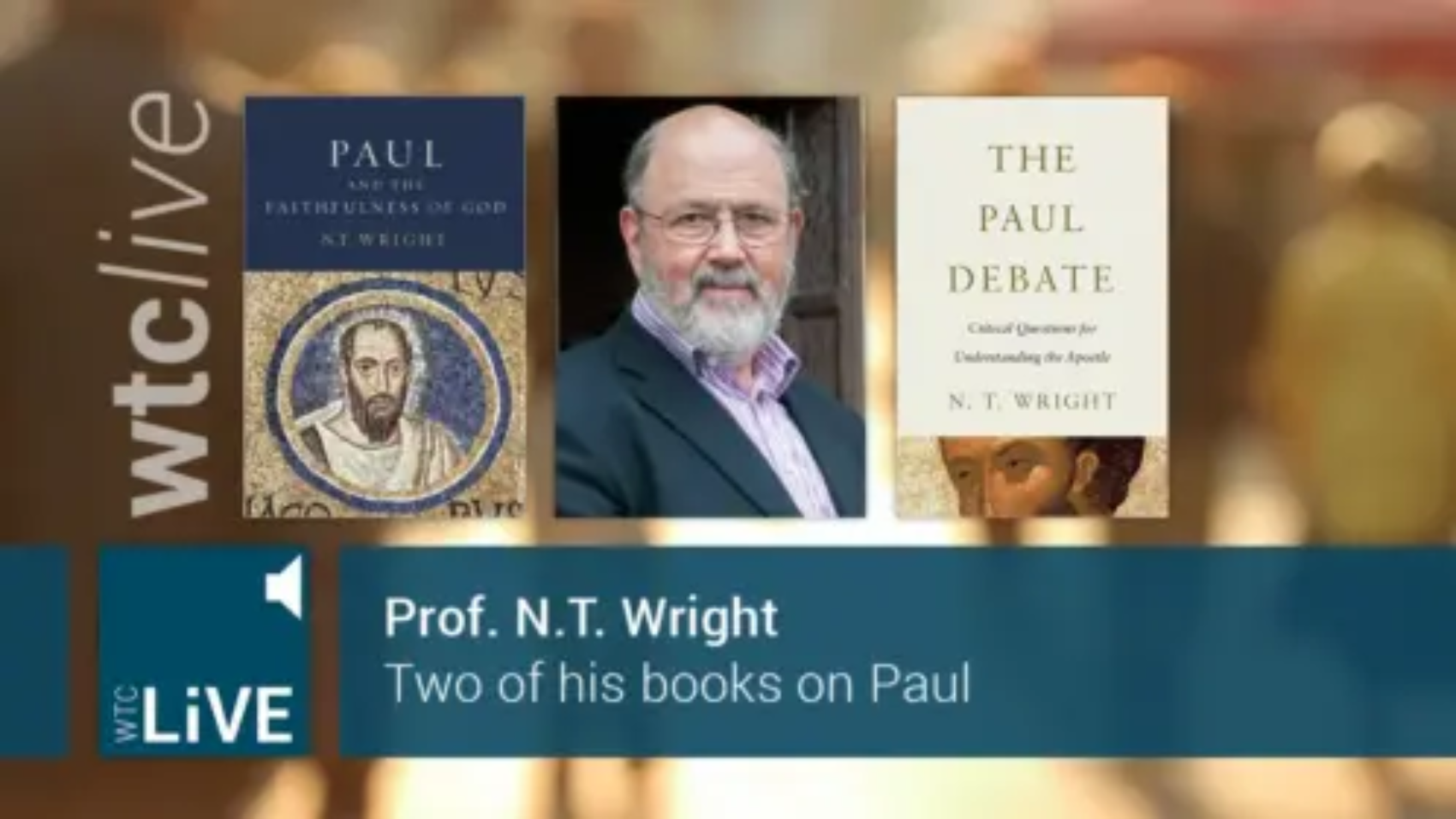

with Dr Lucy Peppiatt
In this WTCLive episode: Matt Lynch interviews Lucy Peppiatt on her groundbreaking book, Women and Worship at Corinth: Paul’s Rhetorical Arguments in 1 Corinthians (Wipf & Stock, 2015).
In this book, Lucy outlines an argument for reading key texts in 1 Cor 11 and 14 as supportive of the full participation of women in the life of the worshipping Church. She suggests that in 1 Corinthians Paul quotes and then refutes the misguided views of his opponents.

Lucy has bachelor’s degrees in both English and Theology. She completed her MA in Systematic Theology at King’s College, London, and her PhD through the University of Otago, Dunedin, New Zealand. Lucy’s research interests are Christ and the Spirit, Charismatic theology, discipleship, and 1 Corinthians. She and her husband, Nick Crawley, lead Crossnet Anglican Church in Bristol. They have four sons.

by Dr Matt Lynch
When preparing to teach on violence in the Old Testament recently I was reminded of a book review I once read. The reviewer recounted his neighbour’s efforts to remove a grease stain from his garage floor. The neighbour dumped a few gallons of gasoline on the floor and scrubbed. It worked beautifully. The stain disappeared completely. Job done!
However, there was a slight problem. The gasoline fumes filled the garage and were eventually ignited by his boiler’s pilot light. The great conflagration that ensued ended up burning his entire house to its foundations.
This story offered a warning that stuck with me: Turn off your mobile phone at the pump, you ask? Yes, but also, beware of solutions that too easily resolve. They might be highly combustible!
This is a basic, but often missed, principle that applies to thinking through all sorts of knotty problems in theology. Answers that resolve problems too neatly and easily usually have hidden costs or trade-offs that don’t surface at first glance. Only by prodding and testing do they begin to emerge.
Two of the most common problems on which interpreters reach for the gas can are divinely sanctioned violence and divine wrath (I can see you reaching for it already!).
Easy resolutions to the problem of violence often look like one of the following two approaches:
The first looks at an issue like the Canaanite genocide and says, ‘Sin is sin, so of course God is justified in his command to destroy every man, woman, child, and infant in Canaan without mercy!’ The assumption here is that the one asking the question might not take seriously enough the problem of sin, or they do not have a sufficiently high view of God’s holiness and sovereignty. If they did, the problem would disappear. I’ve even heard one person ‘resolve’ the issue using eschatology, suggesting that Joshua is a case of ‘intrusion ethics.’ God’s eschatological judgment had broken into history and wiped out a few thousand as a foretaste of the billions he would destroy at the end of time. This displaced and augmented the problem.
The second easy resolution says, ‘Well of course the Canaanite genocide never happened,’ or, ‘The conquest story is the projected fantasy of a primitive tribalistic people.’
 Both approaches pour gasoline on the problem … often with unintended consequences. The first approach ignores (or destroys) the rich tradition of protest against divine judgment that we see demonstrated in individuals like Abraham (Gen 18) and Moses (Exod 34; Num 12, 14, 16, 21). It also misses out on the rich complexity of Joshua’s message, which seems to question the fundamental division between ‘us/good’ and ‘them/bad’ that a surface reading of the book suggests (e.g., Josh 5:13-14). The second, which states the non-historicity of the Canaanite genocide, pretends to remove the problem but only shifts it. Now we’re saying that this is how God wants to be portrayed, even if it didn’t happen. And calling the ancient Israelites ‘primitive’ is just arrogant, and like the first approach, leads readers to miss much of Joshua’s theological depth.
Rather than rushing toward either resolution, perhaps we should explore the cost of doing business with them, avoid representing the biblical writers as our intellectual and moral inferiors, and adopt a posture of empathetic listening and faithful questioning. Perhaps we should read Joshua slowly. Let it disturb, surprise, and unsettle. As someone who has done this, I can only say that it repays such efforts abundantly.
Divine wrath is also a problem on which many want to pour gasoline … and they have for a long time, going back at least as far as the early 2nd century heretic Marcion (not a fan of Yahweh). Marcion wanted to do away with divine wrath, and with it, the Old Testament. He found it unbecoming of God’s goodness. In his critique of Marcion, Tertullian writes: ‘A better god has been discovered, who never takes offense, is never angry, never inflicts punishment, who has prepared no fire in hell, no gnashing of teeth in the outer darkness! He is purely and simply good’ (1.27).
But here’s Tertullian’s insight—there are always hidden costs to pictures of God that eliminate challenging tensions. In this instance, Tertullian claims that Marcion eliminates God’s ability to act as judge: ‘You allow indeed that God is a judge, but at the same time destroy those operations and dispositions by which He discharges His judicial functions’ (Adv. Mar. 2.16). For Tertullian (and many biblical texts), wrath is the emotion that animates God’s active concern for justice. Criticizing his wrath was like criticizing the instruments of a doctor. Wrath, in Tertullian’s formulation—and arguably in the Bible itself—is tied intimately to God’s exercise of justice.
Tertullian is highlighting the inseparability—or at least the complex interaction—of wrath and justice in God. In Exodus 22:21-24 for instance, God warns Israel that if his people cause the orphan or widow to cry out, ‘my anger will blaze.’ He would come in judgment upon those who cause such an outcry just as he came against Egypt. The point of these verses is not to be precise about the exact penalty for oppressing the weak, but to express the pathos of God in the face of injustice. For Israel, Mark Smith points out, God’s wrath was bound up in the idea that he was the protective father of the vulnerable—whether they be individuals or his people Israel. Wrath—like jealousy—was seen as a sign of concern for the weak against any who would put them at risk or threaten his legitimate claim to parentage. In this sense, God’s wrath toward the nations (e.g., for their mistreatment of Israel) was a deep expression of his love over and for his people.[1]
For many of us, associating wrath with love is strange. But love in the Old Testament is grounded in the idea of Israel as God’s covenant people (Deut 6:4-5). Love was the relational glue between covenant partners. And if we think of covenant in terms of ‘family substitute,’[2] love was the trusting loyalty required for healthy family cohesion, while God’s wrath was his protective rage aimed at threats to that family (internal or external).
But we can’t swing the pendulum away from mercy toward wrath, as if wrath could never become a problem. Abraham and Moses certainly recognized this on many occasions—and even challenged God to exercise mercy! Tertullian, who defended God’s wrath against Marcion, urges us to weigh God’s ‘severity’ against his gentleness and observe the imbalance (Adv. Mar. 2.17). As I tell my students at WTC, God’s character is wildly imbalanced. The coexistence of wrath and mercy is not that of equals. If we take the language of mercy vs. wrath in Exod. 34:6-7 in strictly mathematical terms (love to ‘thousands of generations’ : ‘3-4 generations’ of judgment) God’s mercy outweighs by at least 500:1!
But for important reasons, these verses—which are central to an Old Testament portrait of God—keep God’s mercy and judgment sit together, even if they are imbalanced. Perhaps we lose something when we lose judgment and wrath, and perhaps we lose something when we toss aside violent texts as purely human projections. Maybe there is an understanding of God’s character that only comes by exploring the revelatory value of the most troublesome texts and by teasing out the complex characterization of Israel’s God that Scripture offers.
The subjects of wrath and violence are uncomfortable. But I suggest that how we handle them, and not just the topics themselves, is what poses the greatest danger. We will not all land in the same place on these topics, but what if we at least stop and explore the cost of doing business with easy resolutions? Let’s keep the roof over our heads.
[1] Smith, How Human is God? Seven Questions About God and Humanity in the Bible (Liturgical Press, 2014), 46.
[2] Smith, How Human is God? 48.

I remember very clearly, in my 30’s, realizing that I wanted to study theology at degree level. I had no idea that it would end with me doing a PhD, leading a college, writing books, and teaching. It hadn’t been a “career move”! I thought I was studying theology so that I’d be a better co-pastor with my husband and because I loved it. I also thought then that these were good enough reasons for all that study and investment, and I still think they are.

In this WTCLive episode, hosted by Dr. Matt Lynch, Dr. Lucy Peppiatt, and Nick Crawley in a coffee shop in Bristol Old Testament scholar Jack

From a Female Principal & Pastor-Theologian… by Dr Lucy Peppiatt I recently attended a really enjoyable theology conference in LA. I listened to thought-provoking papers


By Nick Crawley, MA – Church Leader, founder and director of Bible for Life. Nick Crawley is an Anglican clergyman with over 25 years experience

There are some things only a mother knows – childbirth is one of them. It is raw, powerful, emotional, potentially frightening, and awesome. It is exhausting and elating at the same time – and it is kind of icky – but in a way that you just don’t care.
by Dr Matt Lynch
Rabbi Lord Jonathan Sacks has a truly ambitious vision of interfaith respect, peace, and mutual blessing in his recent book Not in God’s Name: Confronting Religious Violence. I don’t wish here to give an overview or critical review of his book, but instead, I want to share an important and tantalizingly provocative theme he explores in Genesis.
Sacks’ book sits within the stream of several recent books that use Genesis as their point of departure for reflection on the major questions of God, ethics, and morality in our time. Alongside Sacks we could also mention Leon Kass’ recent The Beginning of Wisdom and Iain Provan’s Seriously Dangerous Religion, each of which asks the ‘big questions’ using essentially the same guiding questions: What happens when we let the book of Genesis form our moral vision? What kind of people do we become? What sort of values and societies does a book like Genesis engender?
Sacks’ main concern is with religiously motivated violence. Drawing from social anthropology, biology, religious theory and history, Sacks contends that violence basically exists because as social animals, we live and find identity in groups. Group identification brings out the best and worst in us. It can lead to incredible self-sacrifice and generosity, but toward outsiders, it can result in rejection and boundary maintenance. A stronger ‘mutant form’ of group identity can erupt when a group embraces a kind of ‘pathological dualism.’ Pathological dualism is a radical splitting of the world into good and evil, which sanctions and devolves into the most severe forms of hatred and violence. While he’s careful not to state that religion causes violence (thank goodness!), he does recognize that religions can become susceptible to sharply dualistic thinking of the sort that justifies demonization and murder. In this hyper-acute form of dualism, murder can become justified because you aren’t killing human beings; you are killing a virus or cancer that threatens one’s group.
Here is where the story of Genesis becomes especially important, and where Sacks’ thesis re-embraces religion as a challenge to violence. From its fourth chapter, Genesis thematises violence, and it does so by telling an enigmatic story of sibling rivalry. This story includes the very first religious act in the Bible (sacrifice), an act that ends in violence. Rather than side-stepping the issue of religiously motivated (or at least religiously occasioned) violence, Genesis lifts it up for reflection.
Sacks also attends to the sibling stories of Genesis because that is how he sees the three monotheistic faiths. Whether or not that is the most precise way of expressing the relationship between Judaism, Christianity and Islam (and I wish here he’d engaged Jon Levenson’s critique in Inheriting Abraham), there is a kinship between them that works by analogy. They each share a similar religious and Scriptural tradition.
Previously, I’d read Genesis’ sibling stories along the lines of primogeniture subversion. By this, I mean that the Genesis story sees the younger son subverting the inheritance rights and privileges of the older son. Primogeniture subversion is indeed an intriguing thread running through the book that cannot be ignored. The younger brother Isaac was the promised and blessed son of his father Abraham. The younger brother Jacob steals the birthright of the older Esau. The older brothers bow to the younger Joseph. Jacob blessed the younger brother Ephraim rather than Manasseh. If read in isolation, this thread reinforces the value of perpetual struggle and subversion. It’s the sort of story that radicals love. And while I don’t consider myself very radical, I do revel in the upside-down nature of the biblical story. As Sacks points out, God chooses ‘those who cannot do naturally what others take for granted’ (117). Natural strength disqualifies, while God-enabled strength qualifies the weaker disadvantaged brother. To continue this line of thought, God ‘chose the foolish things of the world to shame the wise’ (1 Cor 1:27).
But perpetual subversion leads to tremendous animosity and antagonism. It leads to violence and rejection. Ishmael is cast out. Esau wants to kill his brother. Joseph’s brothers try to kill him and sell him into slavery, and so on. The story of perpetual struggle and subversion is cyclical and doomed to failure. It cannot sustain societies, nor is it a particularly helpful way of thinking through the problems facing ‘sibling’ faiths like Judaism, Christianity and Islam. When the weaker gains the upper hand by deceit and violence, the stage is set for another revolutionary.

So here is where the genius of Genesis’ sibling theme shines brightest and provides an alternative. To begin, Genesis fosters tremendous sympathy for the outsider. The obvious instance is the Patriarchs themselves, who never owned land (except a burial plot), and lived as strangers in a foreign land. This was a crucial part of their identity (e.g., Gen 23:4). But also, Genesis leads its readers to feel for the cast off sibling. Who cannot weep for the desperate Hagar, parched and helpless as she watches her son Ishmael dying of thirst in the wilderness? And what about Esau’s distress upon realizing his brother’s theft? ‘He cried out with an exceedingly great and bitter cry, and said to his father, “Bless me, me also, father!”’ (Gen 27:34) The Hebrew Bible, Sacks explains, leads us ‘to enter into the humanness of the Other: Ishmael, Hagar, Esau, Joseph and his brothers, Leah and her children’ (180). This is the outsider empathy that Genesis forms in its readers, and the character that finds resonance throughout Scripture:
You shall not wrong or oppress a stranger, for you were strangers in the land of Egypt. (Exod 22:21)
You shall not oppress a stranger; you know the heart of a stranger, for you were strangers in the land of Egypt. (Exo 23:9)
But Genesis goes further than empathy. Genesis moves its readers from empathy toward peace and reconciliation with the estranged sibling. This begins with recognizing one’s basic kinship with the outsider. The Ishmaelites and Edomites are your brother, Genesis says. Then, Sacks directs our attention to the last scene in each of the sibling stories. A beautiful picture begins to emerge from the darkness.
Things are bleak at first. With Cain and Abel, the older kills the younger. While God pursues Cain, there’s no real restitution. Next, we read that after Sarah died, Isaac went to live near Beer Lahai Roi (25:11; cf. 24:62). Beer Lahai Roi is where Hagar and Ishmael had fled (16:13-14). We don’t know why Isaac was living there, but it is suggestive that when Sarah died Isaac and Abraham went to live near Hagar and Ishmael! The Rabbis even suggest that Keturah, Abraham’s second wife, was Hagar. This might explain a further detail in the story, that at Abraham’s death Isaac and Ishmael came together to bury their father (25:8-9). The point, as Sacks explains, is that ‘neither Abraham nor Isaac made their peace with the banishment of handmaid and child’ (121). Their futures part ways, but they do so with their own blessings.
Next, we discover that the estranged Esau and Jacob reunite for a brief time (Gen 33). The extraordinary feature of this meeting is not simply that the brothers make their peace. It is what happens when they make their peace. To see it, we have to go back 22 years in the story to when Jacob stole Esau’s blessing. Isaac had blessed Jacob with two things:
But then … and here’s the twist … these are the precise things that Jacob bestowed upon his brother. Jacob returned the blessing! He went to Esau and ‘bowed down to the ground seven times’ (33:3) and urged his brother to receive abundant wealth from him, saying ‘accept my blessing’ (33:10-11) (132-33). Having held it for 22 years, Jacob gives back the blessing.
He can do so, as Sacks observes, because he’d already received his own separate blessing from his mother Rebecca (28:3-4). This blessing was more suited to the promised family. It was a blessing of land and progeny, not of wealth and power. In sum, like Isaac and Ishmael, both brothers are blessed and arrive at least at an uneasy peace toward the end of their lives.
Climactically, however, the Joseph stories in Genesis 37-50 tell the story of brothers who reconcile and reunite. Joseph refuses to self-identify as a victim, and brings his brothers to self-identify with the victim, resulting ultimately in their reconciliation and blessing for the whole world.
We thus move from fratricide (Cain and Abel) toward brothers reunited (Isaac and Ishmael), and from brothers re-united into an uneasy peace (Jacob and Esau) toward brothers fully reconciled (Joseph and his brothers). Thus, Genesis leads its reader progressively through stories of sibling hostility and subversion into the realm of reconciliation and mutual blessing. ‘Sibling rivalry may be natural,’ Sacks writes, giving a nod toward cultural anthropology, ‘but it is not inevitable. It can be conquered’ (170). This is indeed an inspiring and challenging message, and well worth reflection in our fraught and highly charged contexts of inter- and intra-religious conflict.
I remember very clearly, in my 30’s, realizing that I wanted to study theology at degree level. I had no idea that it would end with me doing a PhD, leading a college, writing books, and teaching. It hadn’t been a “career move”! I thought I was studying theology so that I’d be a better co-pastor with my husband and because I loved it. I also thought then that these were good enough reasons for all that study and investment, and I still think they are.
In this WTCLive episode, hosted by Dr. Matt Lynch, Dr. Lucy Peppiatt, and Nick Crawley in a coffee shop in Bristol Old Testament scholar Jack
From a Female Principal & Pastor-Theologian… by Dr Lucy Peppiatt I recently attended a really enjoyable theology conference in LA. I listened to thought-provoking papers
By Nick Crawley, MA – Church Leader, founder and director of Bible for Life. Nick Crawley is an Anglican clergyman with over 25 years experience